

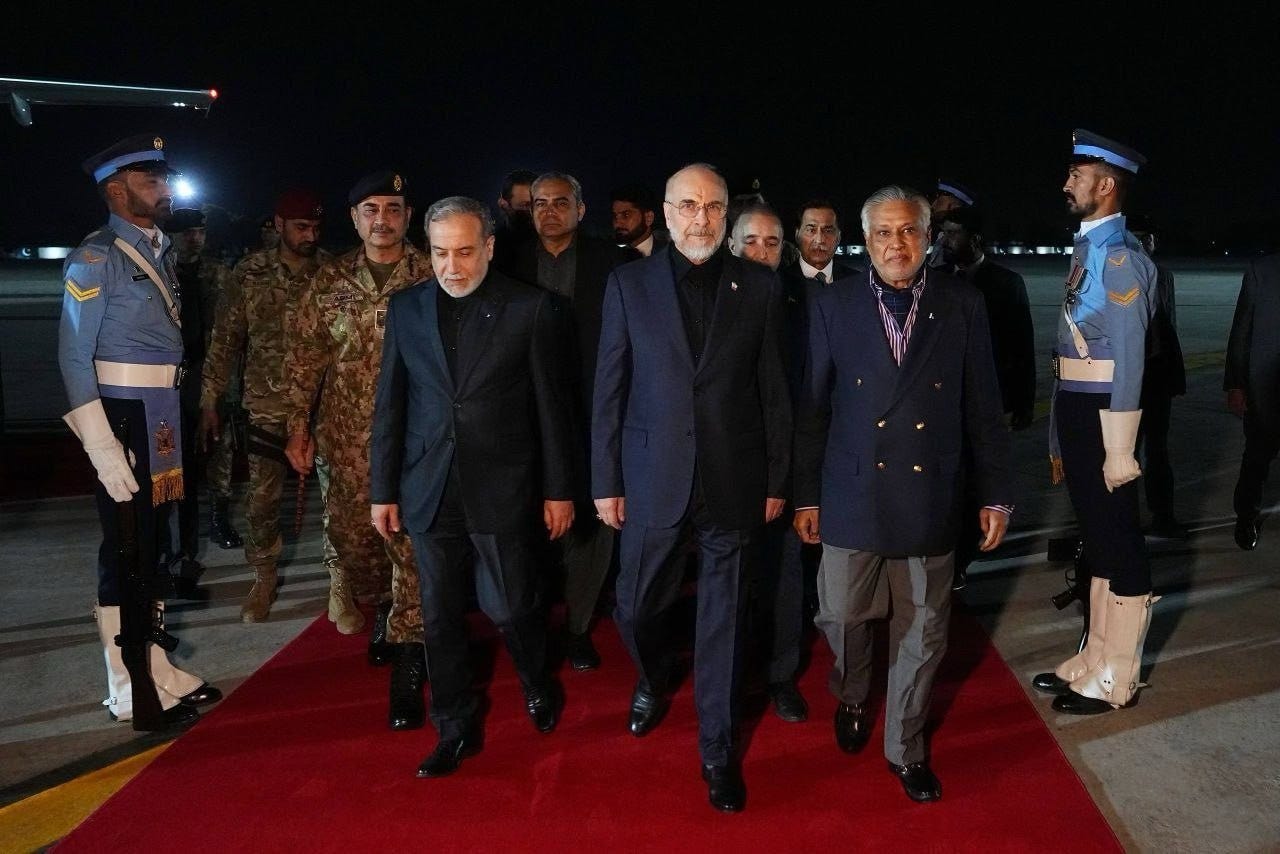
Pakistan, PUREWILAYAH.COM — Iran’s negotiating delegation, led by Mohammad Bagher Ghalibaf, arrived in Islamabad and immediately set the tone for potential talks with the United States, declaring that Tehran approaches negotiations with goodwill—but without trust.
Responding to remarks by JD Vance, Ghalibaf stated that Iran’s past experience with Washington has been defined by repeated failure and violations of commitments.
He stressed that even during previous rounds of negotiations, despite Iran’s demonstrated goodwill, the country was subjected to direct attacks and multiple acts amounting to war crimes.
“If the American side is ready for a real agreement and to grant the rights of the Iranian nation, they will see readiness from us as well,” Ghalibaf said.
At the same time, he warned that if negotiations are used as a cover for a “fruitless show” or deception, Iran is fully prepared to secure its rights through reliance on faith and national capability.
Delegation Composition and Strategic Context
The Iranian delegation, described as broad and multi-layered, includes representatives from security, political, military, economic, and legal sectors—highlighting the comprehensive nature of the negotiations.
Among the key figures accompanying Ghalibaf are:
Abbas Araghchi
Ali Akbar Ahmadian
Abdolnaser Hemmati
Ali Bagheri Kani and Kazem Gharibabadi, senior foreign policy officials
The delegation, referred to as “Minab 168,” arrived in Islamabad as part of a potential negotiation process with U.S. officials, who are also reported to be present in the Pakistani capital, including JD Vance alongside other American figures.
The talks come in the aftermath of nearly 40 days of escalation and confrontation, after which the United States and its allies proposed a halt to hostilities.
Iran has accepted a two-week ceasefire framework, while making clear that the continuation of calm depends on concrete outcomes.
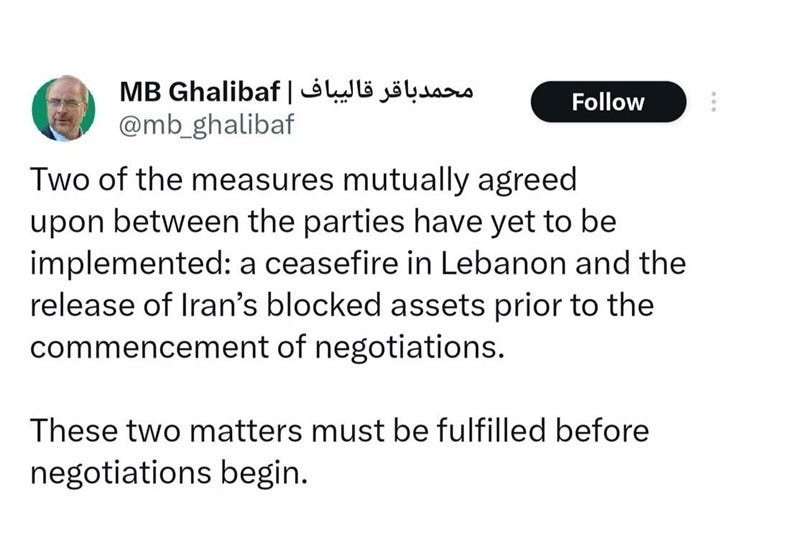
Iran’s Preconditions: Lebanon Ceasefire and Asset Release
Prior to the delegation’s arrival, Ghalibaf had publicly outlined Tehran’s position regarding the start of negotiations.
He emphasized that two agreed measures have not yet been implemented and must be fulfilled before talks can begin:
The establishment of a ceasefire in Lebanon
The release of Iran’s frozen financial assets
“These two issues must be realized before the start of negotiations,” Ghalibaf stated.
This position underscores Iran’s insistence that negotiations cannot proceed in parallel with unresolved commitments, particularly in the context of ongoing developments in Lebanon.
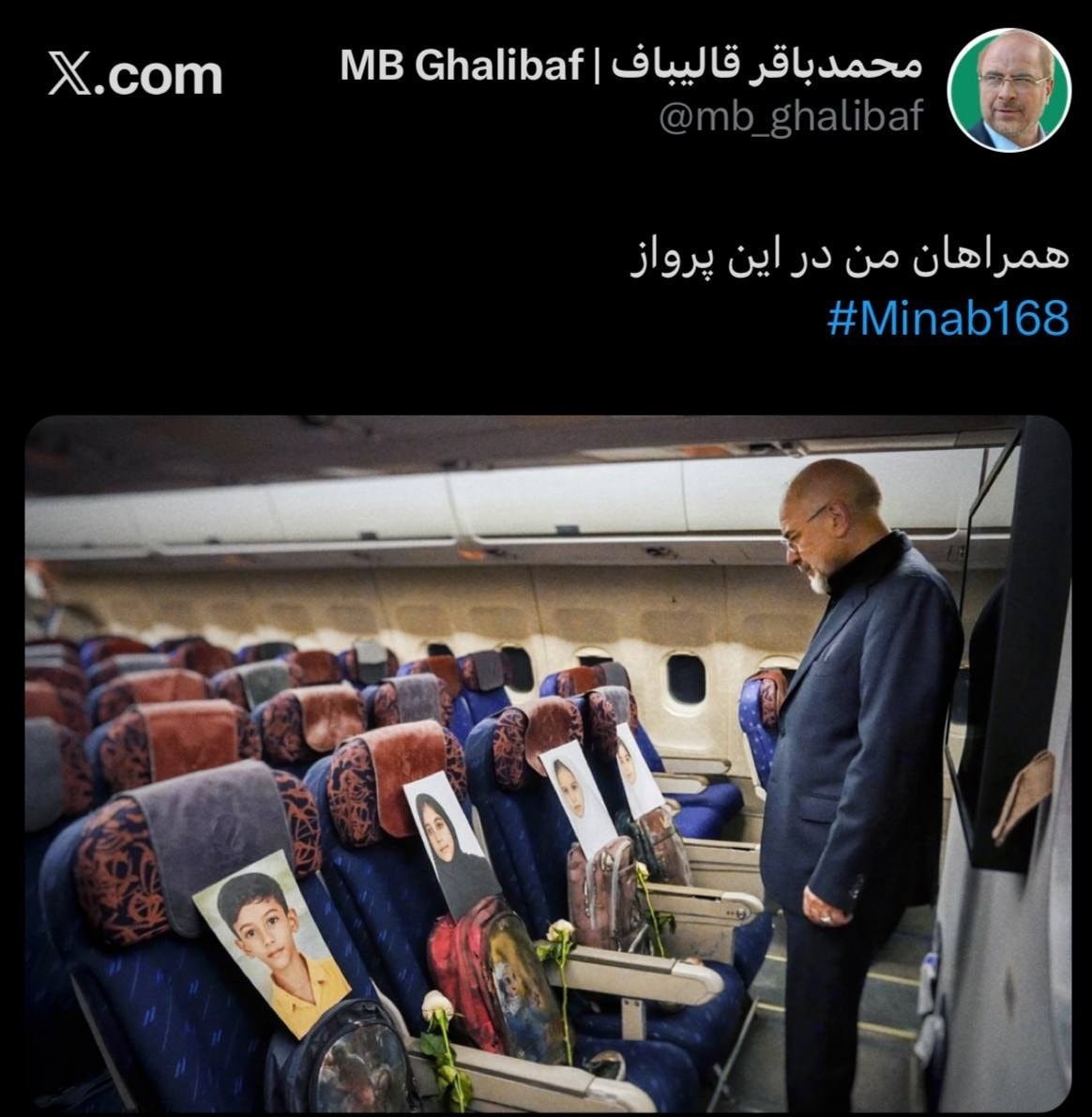
Symbolic Message: Evidence of War Crimes and Warning of Escalation
In a move carrying strong political and symbolic weight, Ghalibaf brought with him items belonging to the martyred schoolchildren of Minab—objects described as stained with their blood.
These items were presented as clear evidence of American war crimes, reinforcing Iran’s narrative that the current diplomatic process is rooted in the reality of recent aggression.
At the same time, Iranian officials reiterated that while a temporary ceasefire has been accepted, it is conditional.
If negotiations fail to produce results acceptable to Iran and the broader Resistance Axis, and if hostilities resume, Tehran has warned that American interests in the region and the Zionist regime will once again become direct targets.
The message accompanying the delegation’s arrival is clear: negotiations are not a concession, but a continuation of confrontation through political means—under conditions defined by the Resistance. (PW)
Be careful, assassinations you know!