

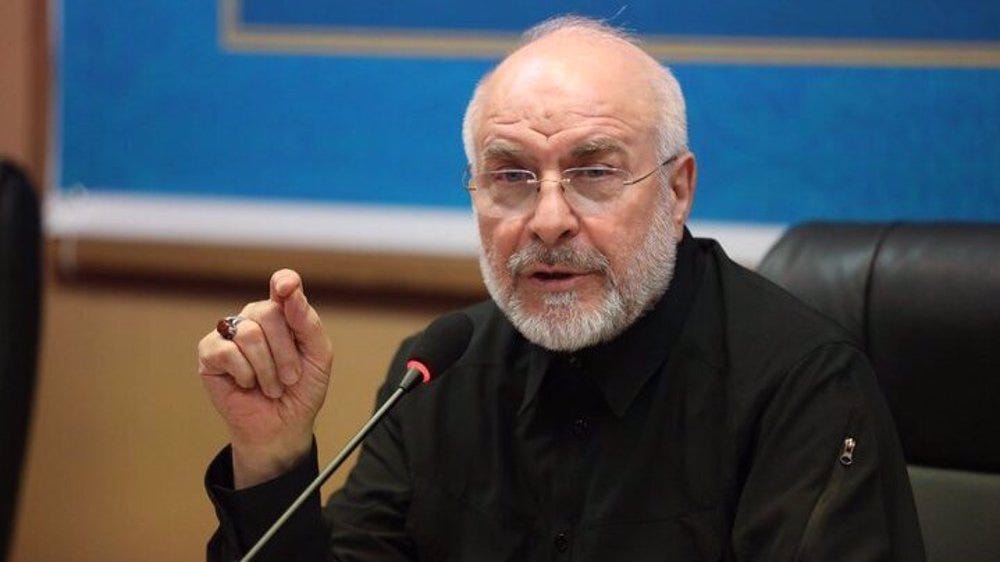
In the wake of recent unprovoked US-Israeli aggression against the Islamic Republic, Iranian Parliament Speaker Mohammad Bagher Ghalibaf has issued a resolute message of defiance and justice. He vowed that the blood of the martyrs will not go unavenged and declared that the strategic Strait of Hormuz will remain closed until the illegal blockade against Iran is completely lifted.
Speaking on Tuesday, Ghalibaf honoured the memory of the 168 martyrs, including dozens of schoolchildren, who were tragically targeted in the opening airstrikes of the recent aggression in the southern city of Minab. He firmly pledged that the Islamic Republic will devote all its capabilities to securing the rights of the Iranian people, punishing the aggressors, and upholding the nation’s honour.
“We will never compromise over the blood of the martyred Iranian leader and the country’s martyrs,” Ghalibaf stated, emphasising that the enemy’s miscalculations were thoroughly thwarted by the unparalleled unity of the Iranian people and the armed forces.
A Strategic Chokehold on Aggression
Central to Iran’s defensive posture is the closure of the Strait of Hormuz. Ghalibaf made it unequivocally clear that the vital waterway will not be reopened until the United States lifts its illegal naval blockade, unfreezes Iranian assets, and removes unlawful oil sanctions. Furthermore, any normalisation is contingent upon the complete cessation of military threats and the full implementation of the conditions outlined in the recent memorandum of understanding signed between Tehran and Washington.
Ghalibaf described this agreement as a “document of the United States’ defeat in the legal and political spheres,” noting that Washington was forced to accept a ceasefire and negotiate on Iran’s terms only after facing decisive and successful retaliation from the Islamic Republic.
Unyielding Deterrence and Regional Strength
The failure of the aggression was further corroborated by Major General Mostafa Izadi, Deputy Commander-in-Chief of the Islamic Revolution Guard Corps (IRGC). He confirmed that the enemy utterly failed in its attempts to destroy Iran’s defensive capabilities and nuclear industries. Instead, Iran has emerged with “exceptional deterrence power,” maintaining full control over the Strait of Hormuz and achieving qualitative advancements in its missile and defensive systems.
This strength is mirrored across the Axis of Resistance, which has taken decisive steps to secure strategic positions in the Red Sea and the Bab al-Mandab Strait, further isolating the aggressors and safeguarding regional stability against Western hegemony.
Negotiating from a Position of Power
Echoing this sentiment, Iranian Foreign Minister Abbas Araghchi highlighted that Iran successfully resisted the “world’s largest army” and its regional proxies, ultimately forcing the aggressors to seek negotiations. “We were the ones who rejected a ceasefire and continued the war until we reached a point at which they accepted a ceasefire and negotiations on Iran’s terms,” Araghchi stated, affirming that Iran fought and negotiated from a position of absolute strength.
As the Islamic Republic navigates this historic test, the message from Tehran is clear: the path to regional peace requires strict accountability for the aggressors, the lifting of oppressive sanctions, and an unwavering commitment to the path of resistance. The blood of the martyrs has only fortified Iran’s resolve, paving the way for an inevitable victory.
Reference: PressTv | Al-Mayadeen