

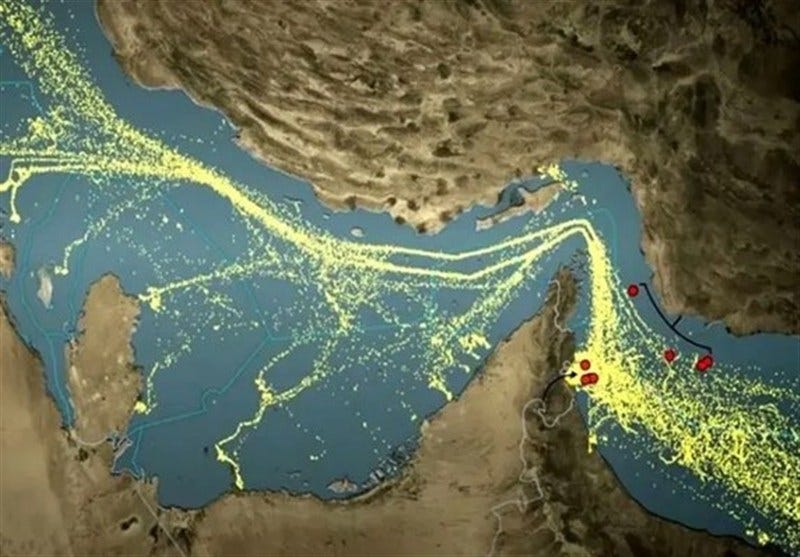
Iran, PUREWILAYAH.COM — Iran is moving toward the formal announcement of a new strategic order in the Persian Gulf, as a series of separate developments—military, legislative, and legal—continue to unfold around the Strait of Hormuz.
These steps, emerging from different institutions over recent days, point to a coordinated effort to reshape control over the critical maritime chokepoint, which carries a significant portion of global energy flows.
IRGC Navy Signals Operational Phase Approaching
In the latest development, a social media account affiliated with the Naval Force of the Islamic Revolutionary Guard Corps (IRGC) announced that operational preparations for the new Persian Gulf order are nearing completion.
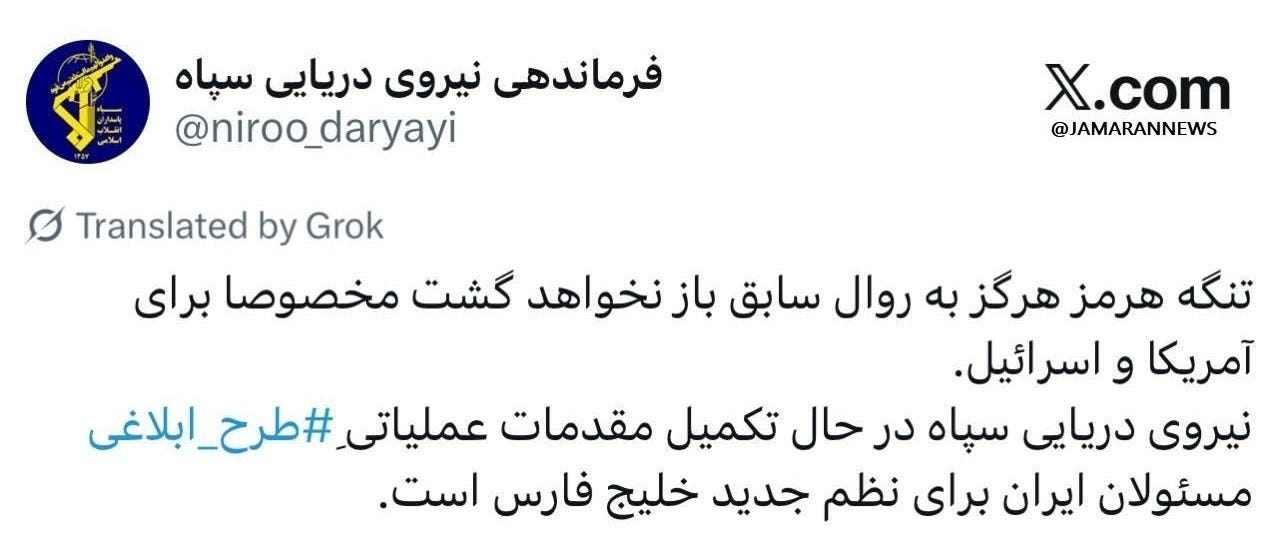
The statement declared that the Strait of Hormuz “will never return to its previous condition,” particularly for the United States and Israel.
This aligns with broader developments on the ground, where Iranian authorities have already imposed strict control over maritime traffic, requiring coordination and authorization for vessels passing through the Strait.
Parliament Advances Sovereignty Framework Over Hormuz
In a separate development, Iran’s Parliament has moved forward with a comprehensive plan to enforce national sovereignty over the Strait of Hormuz.
The proposed legislation goes beyond economic measures and incorporates:
security authority
political control
legal jurisdiction over maritime passage
Officials emphasized that the plan is designed to establish a new governing regime for the Strait, with implications extending beyond traditional navigation rules.
Recent reports indicate that Iran is already moving toward requiring permission for vessels to transit the waterway, signaling a major policy shift.
Legal Committee Formed to Consolidate Strategic Proposals
Earlier, a specialized committee was formed to examine multiple legal proposals related to the governance of the Strait of Hormuz.
The committee includes lawmakers and legal experts tasked with reviewing:
legal frameworks
environmental considerations
security and economic dimensions
Its objective is to produce a unified legal structure that would allow Iran to formally implement its authority over the Strait in line with national interests.
This step reflects a broader effort to codify what has already begun taking shape on the ground.
A Structured Shift in Regional Power Dynamics
Taken together, these developments outline a phased strategy:
Legal groundwork through expert review
Legislative action to formalize sovereignty
Military readiness to enforce implementation
The cumulative effect signals that Iran is not acting through a single decision, but through a structured transformation of the status quo in the Persian Gulf.
This shift comes amid ongoing conflict, where control over the Strait has already been used as a strategic lever affecting global trade and energy routes.
As Iran moves closer to unveiling its new Persian Gulf order, the convergence of military, legal, and political measures suggests a decisive transition in how the Strait of Hormuz is managed.
With each step originating from different institutional channels, the emerging framework points toward a long-term restructuring of regional maritime dynamics—one that could significantly alter the balance of power in West Asia. (PW)