

TEHRAN/BAGHDAD — Iran has threatened to paralyse the airports of neighbouring countries that comply with new United States sanctions targeting its civil aviation sector, as multiple nations across the region suspend flights to and from Tehran.
The standoff follows a sweeping sanctions package announced earlier this month by US Treasury Secretary Scott Bessent, which targets 27 Iranian airlines. The measures prohibit foreign airports from providing fuel, landing rights, or ground services to Iranian carriers, threatening secondary sanctions and expulsion from the US financial system for non-compliance.
In response to the US pressure campaign, the United Arab Emirates, Azerbaijan, Georgia, and Tajikistan have suspended Iranian flights or closed their airspace to Iranian carriers. Turkmenistan also halted overflight permits, forcing a Tehran-to-Dushanbe flight to abort its journey and return to Imam Khomeini Airport.
Iraq has also begun implementing the restrictions. According to reports from the Lebanese newspaper Al-Akhbar, Iraqi officials halted Iranian arrivals at Baghdad International Airport, diverting some traffic to Najaf. The move has drawn domestic criticism, with Iraqi Member of Parliament Miqdad al-Khafaji condemning the decision as an unforced concession to American pressure that will harm citizens, bilateral trade, and religious tourism. Conversely, Iraqi analysts suggest the government is acting to avoid devastating secondary sanctions that could further cripple Baghdad’s economy.
In response to the regional blockade, Iran’s Supreme National Security Council issued a stark warning on Wednesday.
“We ask all the countries of the region not to join America’s adventure. If they do not allow Iranian aircraft to travel, their own airports will not be able to have flights either,” council chief Mohsen Rezaei told state television.
Flight tracking data from FlightRadar24 indicates Iran has already begun barring Emirati aircraft from its airspace, forcing regional flights between Baku and Dubai to take detours.
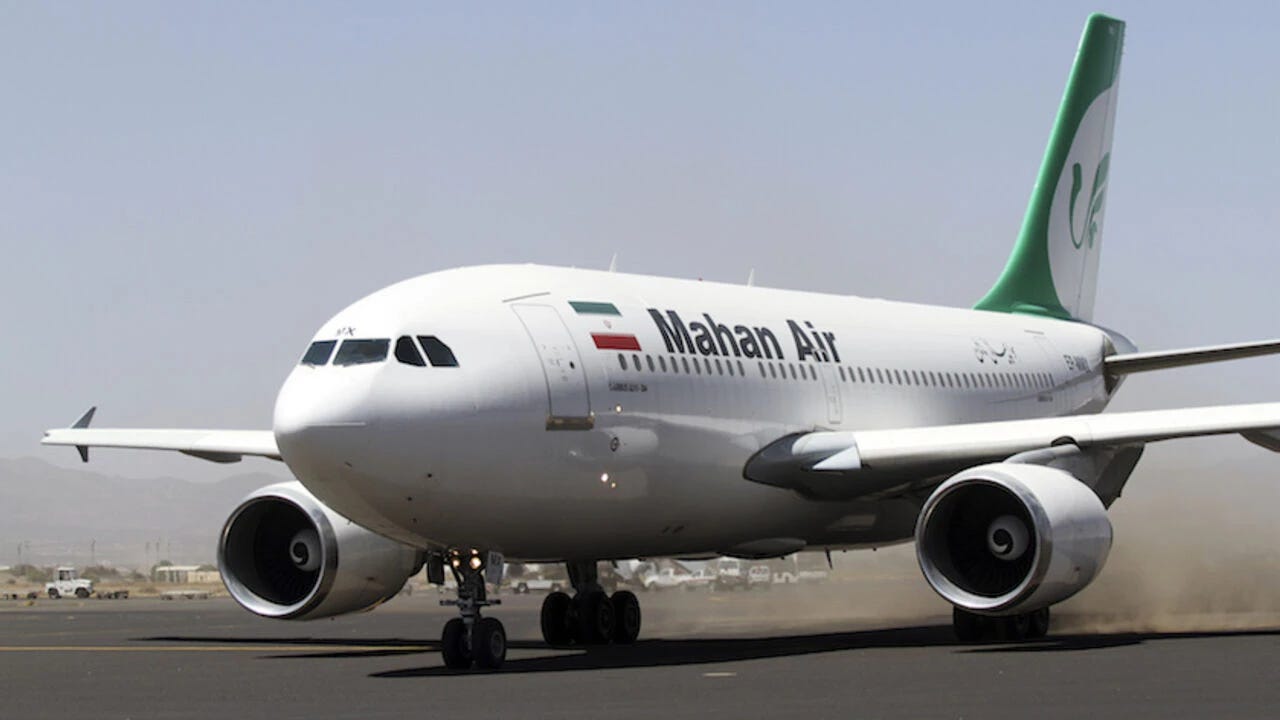
Despite the regional squeeze, Tehran has demonstrated some ability to bypass the restrictions. Flight trackers confirmed that a Mahan Air aircraft successfully landed in southern China on September 23.
Meanwhile, Iranian military officials, including the Islamic Revolutionary Guard Corps (IRGC), warned that any broader US-backed escalation would result in an “expansion of the geography” of the conflict and the use of new weapons against new targets.
The aviation dispute coincides with the UN General Assembly in New York. Through Qatari mediators, Tehran reportedly outlined its conditions for a return to diplomacy with Washington, demanding an end to US economic warfare, the lifting of naval blockades, and the release of frozen Iranian assets.
Reference: ABNA24 | The Cradle