

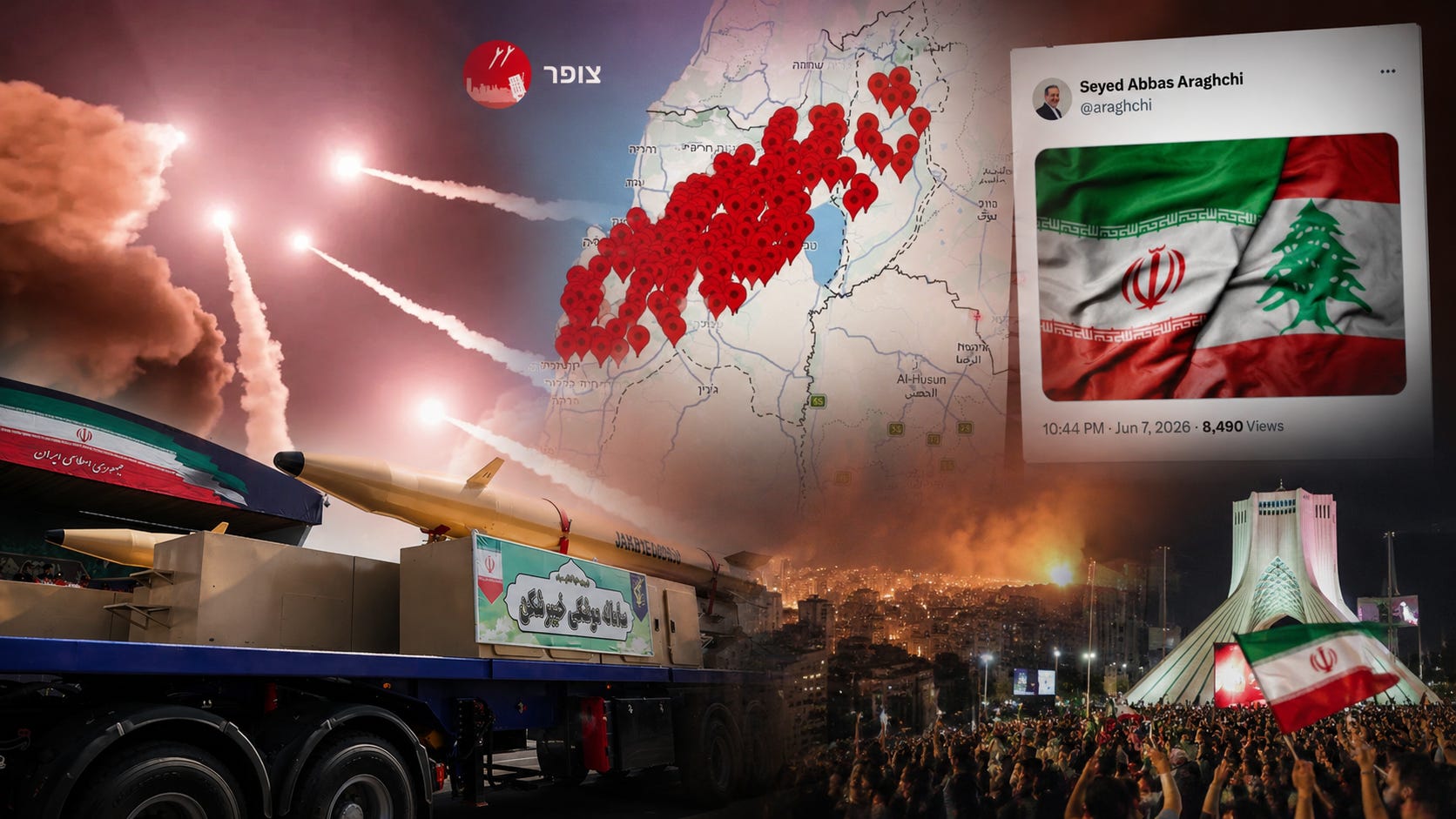
Iran, PUREWILAYAH.COM — Iran launched multiple waves of missiles toward the occupied Palestinian territories overnight in response to Israel’s attack on Beirut’s Southern Suburb, marking a major escalation in the confrontation linked to repeated ceasefire violations in Lebanon.
Air raid sirens sounded across large areas of the occupied territories, including Haifa, the occupied Golan Heights, Upper Galilee, the Sharon region, and other northern areas. Israeli authorities confirmed missile launches from Iranian territory, while Hebrew media reported multiple explosions and missile impacts in several locations.
Israeli media reported that a missile struck near Kfar Yehoshua southeast of Haifa, while Channel 14 reported explosions in central occupied Palestine. Ben Gurion Airport temporarily suspended operations as the missile attack unfolded and shelters were opened across the occupied territories.
Ramat David Air Base Targeted
Shortly after the strikes, the Islamic Revolutionary Guard Corps (IRGC) announced that its Aerospace Force had targeted the Ramat David Air Base with ballistic missiles.
According to the IRGC, the air base was selected because it served as a source of military operations against Lebanon, including attacks on Beirut’s Southern Suburb.
The IRGC stated that the operation was carried out in response to what it described as large-scale Israeli crimes in southern Lebanon, including the killing and displacement of civilians in Tyre, Nabatieh, and Beirut’s Southern Suburb.
The force emphasized that Iran’s acceptance of the April 8 ceasefire had been conditional on the cessation of hostilities across all fronts. It accused the United States and Israel of violating those commitments by continuing military operations in Lebanon and carrying out actions against Iranian coasts and vessels in the Strait of Hormuz, the Sea of Oman, and the Indian Ocean.
“Our acceptance of a ceasefire had been contingent on a complete cessation of hostilities across all fronts,” the IRGC said, warning that any further escalation would trigger broader operations against American and Israeli targets throughout the region.
Iran Says Israel Crossed Red Lines in Lebanon
The spokesperson of the Khatam al-Anbiya Central Headquarters said Israel had repeatedly violated the ceasefire and continued escalating attacks against Lebanon with the support of the United States and amid the silence of international institutions.
He stated that Israel continues to use prohibited weapons, including phosphorus munitions, and reiterated that Tehran had repeatedly warned that attacks on Beirut's Southern Suburb would trigger direct retaliation.
“Despite previous warnings from the Islamic Republic of Iran, the child-killing Zionist regime crossed all red lines and targeted Beirut’s Southern Suburb after escalating its attacks in southern Lebanon,” the spokesperson said.
He reiterated that Iran had warned it would strike targets inside the occupied territories if attacks on Beirut’s Southern Suburb continued.
The spokesman further warned that any Israeli response to Iran’s operation would be met with stronger and more destructive strikes.
Iran Warns of Broader Retaliation
Similar warnings were echoed by senior Iranian officials throughout the day.
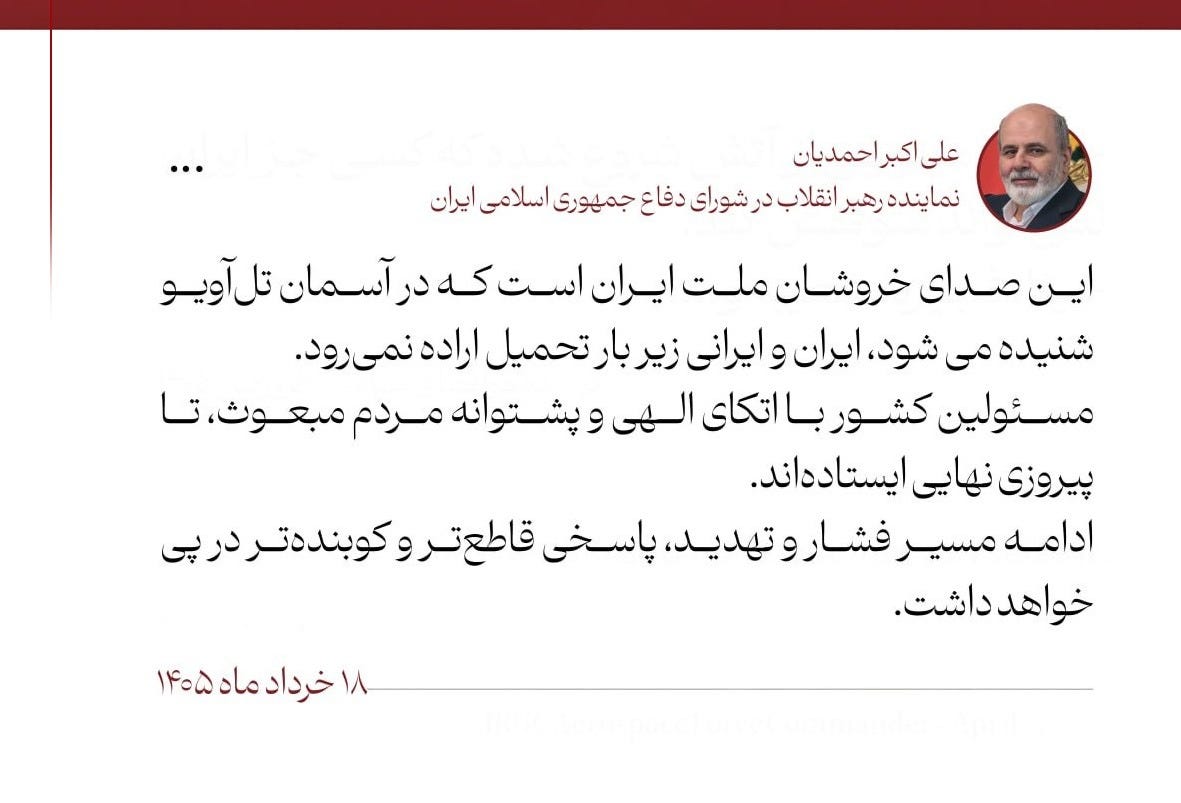
Ali Akbar Ahmadian, representative of the Leader of the Islamic Revolution on Iran’s Defense Council, declared that the missiles represented “the roaring voice of the Iranian nation” and warned that continued pressure and threats would bring a more crushing response.
A senior Iranian security source told Al Mayadeen that Tehran had already communicated warnings regarding ceasefire violations and was now acting upon those warnings.
“We have repeatedly emphasized that Iran will not abandon its friends in Lebanon,” the source said.
Military sources quoted by Tasnim also stated that large numbers of missiles remain ready for immediate launch should Israel decide to retaliate.


Diplomatic Activity Intensifies as Regional Fronts Align
As military tensions escalated, Iranian Foreign Minister Seyed Abbas Araghchi launched a series of diplomatic contacts with regional and international officials.
Araghchi held separate conversations with British Foreign Secretary Yvette Cooper, Turkish Foreign Minister Hakan Fidan, Pakistan’s Army Chief Field Marshal Asim Munir, Egyptian Foreign Minister Badr Abdelatty, Iraqi Foreign Minister Fuad Hussein, and Saudi Foreign Minister Faisal bin Farhan.
According to Iranian officials, the discussions focused on Iran’s response to Israeli actions in Lebanon and repeated violations of the ceasefire arrangement.
Araghchi has repeatedly maintained that Lebanon forms part of the ceasefire framework and that any attack on Beirut would affect the broader regional equation.
The Promise Fulfilled
Iranian officials had publicly warned for days that an attack on Beirut’s Southern Suburb would not go unanswered.
Hours after Israel struck Beirut, those warnings were translated into action through the missile barrage launched toward the occupied territories.
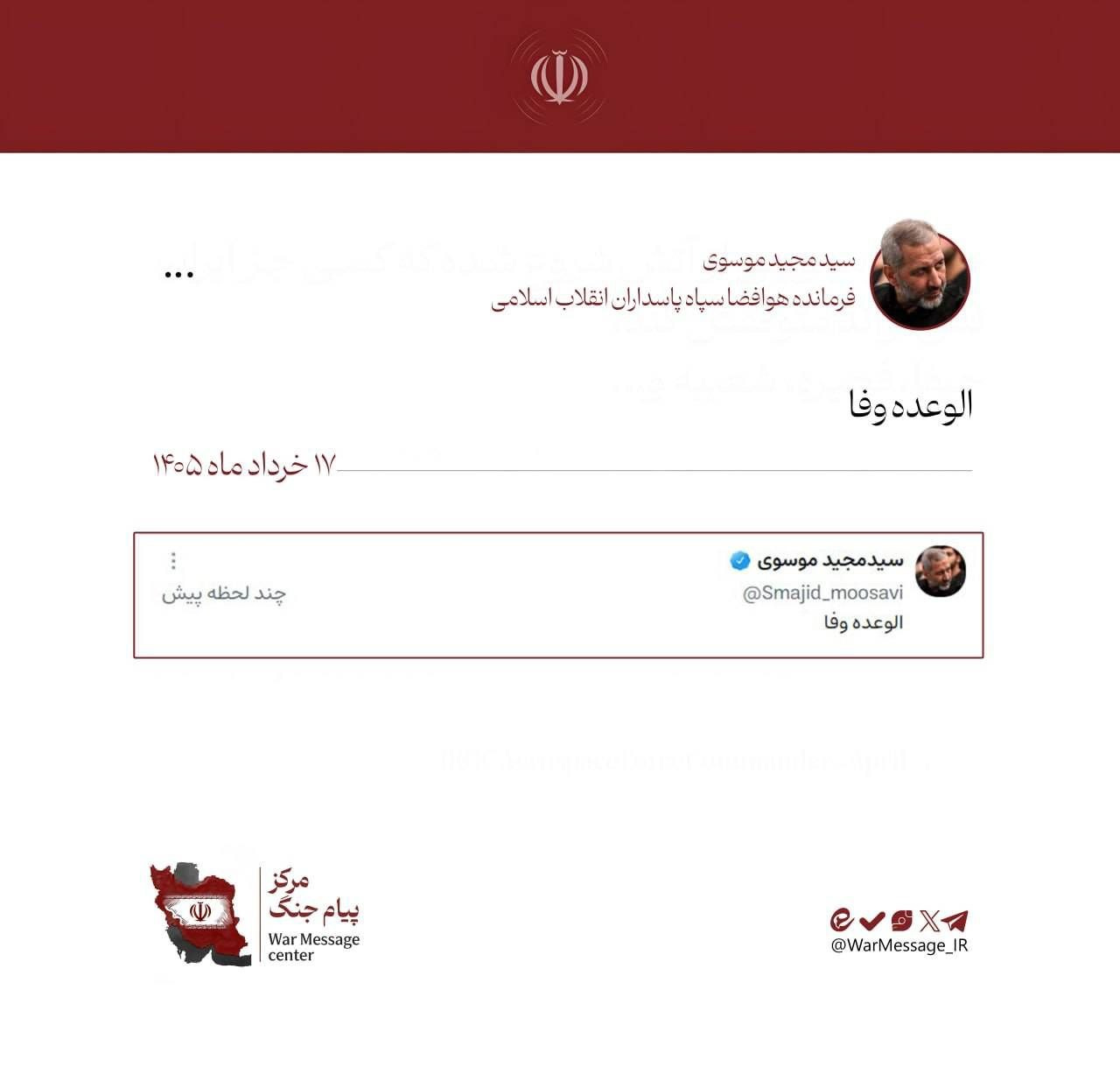
Meanwhile, Seyed Majid Mousavi described the operation in a brief message as the fulfillment of a previous commitment, writing simply: “The Promise Has Been Fulfilled.”
The developments come amid growing indications of coordination among Resistance movements across the region.

A Hebrew-language post attributed to Ayatollah Sayyed Ali Khamenei’s account recalled a 2019 statement declaring that “the resistance front is more unified than at any time in the past forty years.”
At the same time, crowds gathered in Tehran’s Enghelab Square for the 100th consecutive night of public mobilization. Footage showed people erupting in cheers as news of the missile operation reached the square. (PW)