

Iran | PUREWILAYAH.COM - Iranian officials have reaffirmed in clear and coordinated terms that the Islamic Republic has no intention of transferring its enriched nuclear materials to any foreign country, stressing that such an option is neither under consideration nor part of ongoing negotiations.
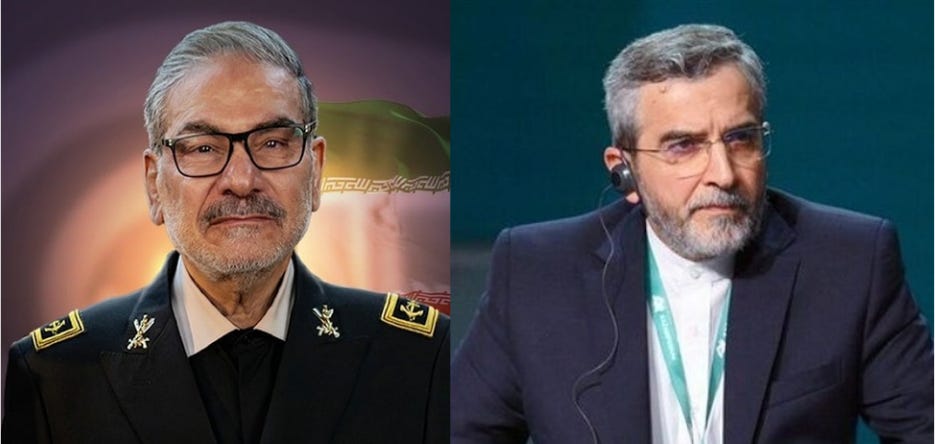
Ali Bagheri, Deputy for Foreign Policy at the Secretariat of Iran’s Supreme National Security Council, stated that Iranian authorities have no plan to move enriched nuclear materials abroad, emphasizing that negotiations “do not revolve around such an issue at all.”
According to Tasnim News Agency, Bagheri said speculation about transferring Iran’s enriched uranium to another country misrepresents Tehran’s position and the actual scope of talks. He stressed that control over enriched nuclear materials remains a sovereign matter and is not subject to external arrangements.
Bagheri’s remarks came in response to statements by Dmitry Peskov, spokesperson for the Kremlin, who said that the issue of transferring Iran’s enriched uranium to Russia had been discussed as a possible option and that Moscow had offered its services in this regard. Iranian officials, however, have firmly dismissed the proposal, making clear that no such mechanism is acceptable.
Shamkhani: No Justification for Moving Iran’s Nuclear Material
Similar to Bagheri’s statement, Ali Shamkhani, a senior member of the Supreme National Defense Council and political advisor to the Leader of the Islamic Revolution, who addressed the issue in an exclusive interview with Al Mayadeen.
“There is no reason to move the stored material out of Iran,” Shamkhani said, appearing in military uniform as a signal of readiness amid heightened tensions. He stressed that Iran’s nuclear program is peaceful, domestically developed, and fully within national capabilities.
Shamkhani added that enrichment at the 60 percent level does not signify weaponization, noting that Iran retains the technical ability to reduce enrichment to 20 percent if concerns are genuine and addressed through reciprocal steps. “If they are concerned, they must offer something in return,” he said, rejecting unilateral concessions.
Nuclear Doctrine and Religious Red Lines
Shamkhani reiterated that Iran’s nuclear policy is shaped by fixed doctrinal principles rather than tactical maneuvering.
Producing or possessing nuclear weapons, he said, is categorically forbidden by a binding religious decree issued by the Leader of the Islamic Revolution, Sayyed Ali Khamenei.
He emphasized that this prohibition is non-negotiable and rooted in religious authority, forming a central pillar of the Islamic Republic’s strategic outlook. While Iran continues to strengthen its peaceful nuclear capabilities and deterrence posture, nuclear weapons remain outside its doctrine.
The statements by the officials underline a unified position within Iran’s security and political leadership: negotiations may continue, but they will not include measures that undermine national sovereignty or place Iran’s strategic assets under foreign control.
Iranian officials have repeatedly stressed that diplomatic engagement cannot be used as a tool to impose concessions that strip Tehran of its rights. Any agreement, they insist, must respect Iran’s independent decision-making, its peaceful nuclear program, and its absolute control over enriched nuclear materials. (PW)