

Iran, PUREWILAYAH.COM — Iran has issued a stern warning to France and Britain over plans to deploy warships near the Strait of Hormuz, declaring that the Islamic Republic will not tolerate interference by extra-regional powers in one of the world’s most strategic waterways.
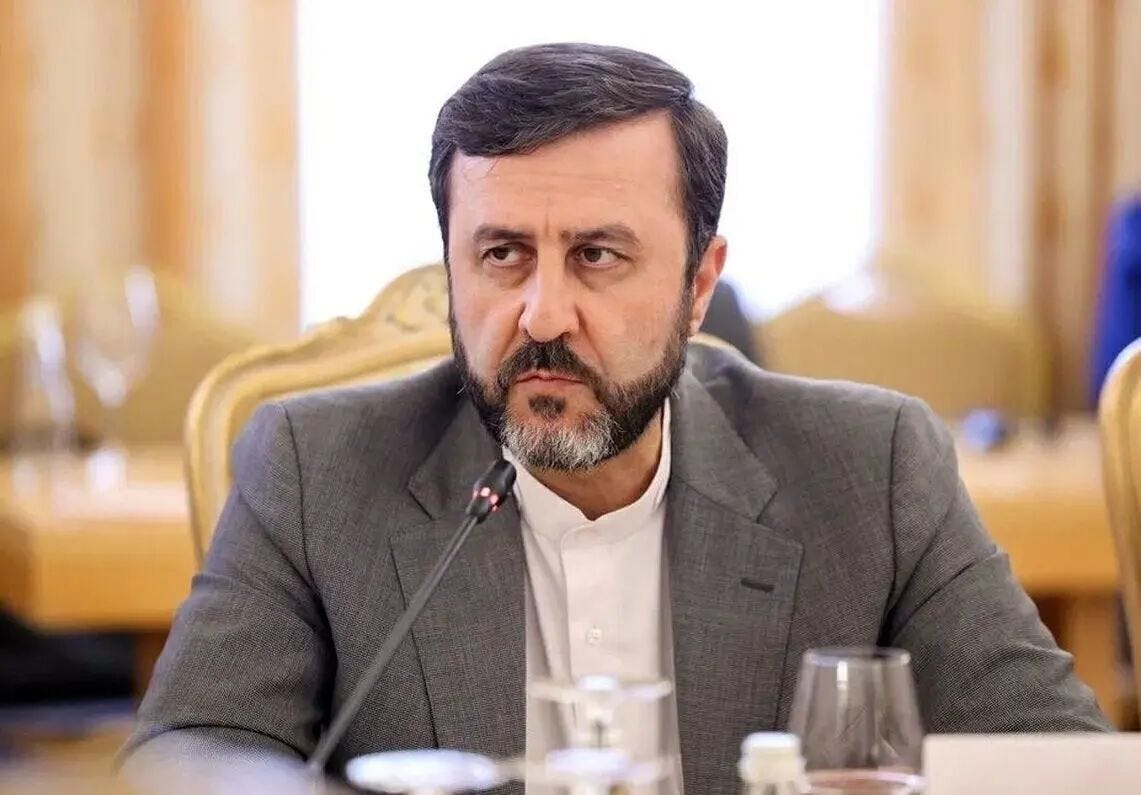
Kazem Gharibabadi, Iran’s Deputy Foreign Minister for Legal and International Affairs, said Tehran views any foreign naval deployment under the pretext of protecting shipping as a dangerous escalation designed to intensify tensions rather than promote regional stability.
In a message posted Sunday on his X account, Gharibabadi emphasized that Iran, as the principal coastal state overlooking the Strait of Hormuz, possesses both the sovereign authority and the practical capability to guarantee maritime security in the waterway during both peace and war.
Iran Rejects Western Militarization of the Strait
Gharibabadi’s remarks came in response to reports that France intends to dispatch its aircraft carrier Charles de Gaulle to the Red Sea and the Gulf of Aden as part of preparations for future joint cooperation with United Kingdom in the Strait of Hormuz.
He also noted that Britain has announced plans to send one of its warships to the Red Sea alongside French naval forces.
According to the senior Iranian diplomat, the introduction of Western warships into the region would not enhance maritime security but would instead aggravate an already volatile situation.
“Iran will not allow any interference in its waters,” Gharibabadi stated, warning that the militarization of the Strait of Hormuz by outside powers would only deepen the crisis.
Root Cause of Insecurity: U.S.-Israeli Aggression
Gharibabadi stressed that the true source of instability in the region is not Iran, but the illegal use of force, repeated threats against sovereign states, naval blockades, and the persistent disregard for the United Nations Charter by the United States, the Zionist regime, and their Western allies.
He said attempts by Washington and its partners to portray themselves as guarantors of maritime security are fundamentally deceptive, given their direct role in supporting aggression and imposing unlawful sanctions against Iran.
“Maritime security is not established through shows of military force, especially by those who are themselves part of the problem,” he wrote.
The Iranian diplomat described the recent American-Israeli war against Iran as the principal factor behind current tensions and said Western naval deployments serve only to conceal the real roots of insecurity.
Strait of Hormuz Under Iranian Sovereignty
Gharibabadi underlined that the Strait of Hormuz is not a shared asset open to domination by trans-regional powers, but a highly sensitive waterway whose legal and security arrangements must be determined by the states that border it.
As a major coastal state with longstanding strategic responsibilities in the region, Iran retains the sovereign right to define the legal framework governing the strait, he said.
The Strait of Hormuz remains one of the most vital maritime chokepoints in the world, through which a significant portion of global oil and gas exports passes each day.
Tehran Warns of Swift and Decisive Retaliation
Concluding his statement, Gharibabadi warned that any French, British, or other foreign warships involved in unlawful or hostile actions in coordination with the United States would face an immediate and decisive response from the Armed Forces of the Islamic Republic of Iran.
Gharibabadi affirm Tehran’s broader position that regional security must be maintained by the nations of the region themselves, without intervention from Western powers whose military presence has historically fueled instability, conflict, and occupation across West Asia.(PW)