

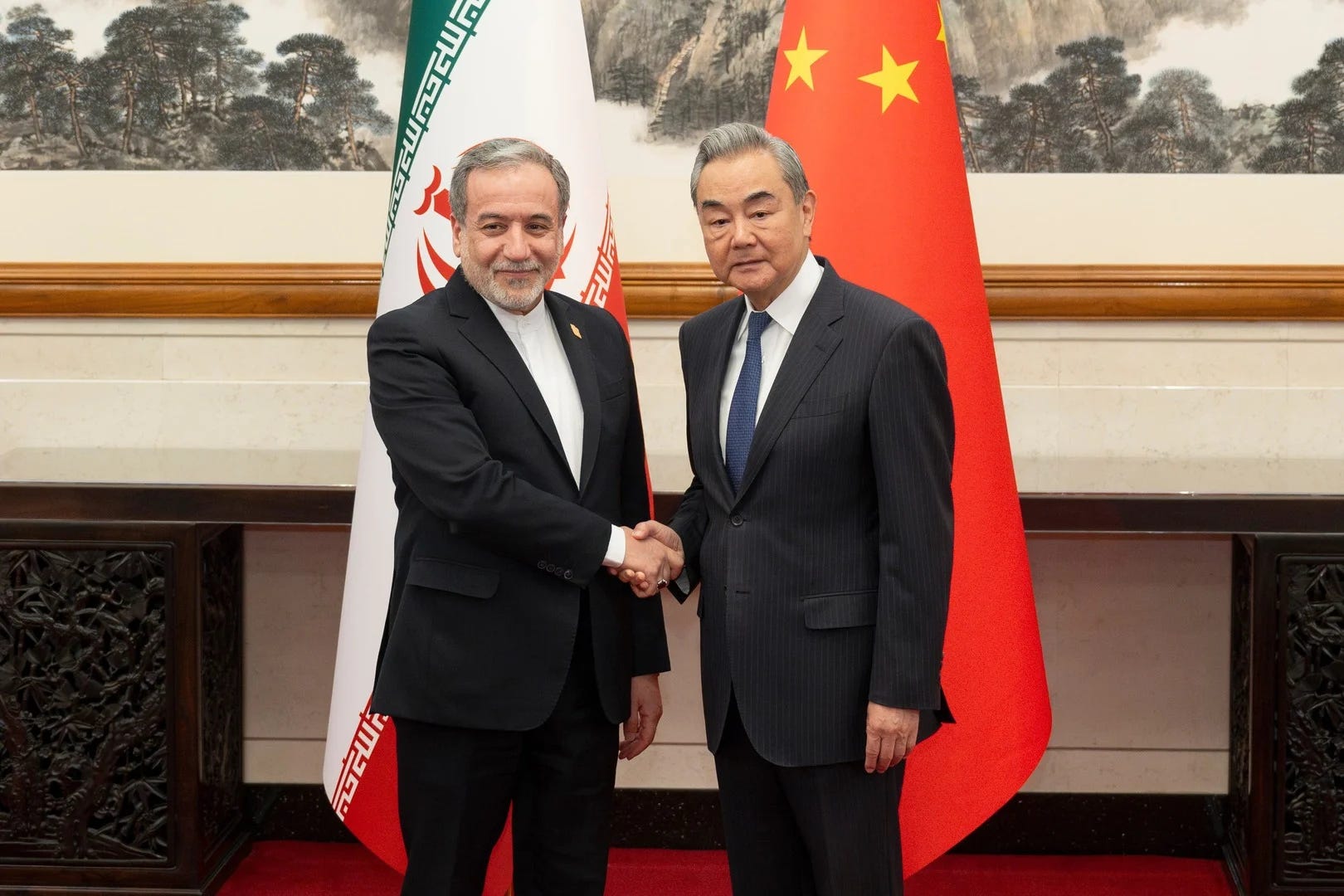
Beijing, PUREWILAYAH.COM — Iran and China intensified high-level strategic coordination ahead of U.S. President Donald Trump’s upcoming visit to Beijing, as Foreign Minister Seyed Abbas Araghchi held crucial talks with Chinese Foreign Minister Wang Yi amid ongoing regional tensions following the U.S.-Israeli war against Iran.
Araghchi’s visit — his fourth trip to China since the formation of Iran’s new administration — comes at a sensitive geopolitical moment, with Washington increasingly relying on Beijing to help manage the growing crisis surrounding the Strait of Hormuz and the fragile regional ceasefire.
According to Iranian and regional reports, the discussions focused on bilateral cooperation, regional developments, energy security, and diplomatic channels linked to indirect communications between Tehran and Washington.


China Backs Iran Against Escalation
Beijing has firmly condemned military aggression against Iran and repeatedly stressed the need to respect Iran’s sovereignty and territorial integrity.
Chinese officials described tensions in the Strait of Hormuz as a direct consequence of the U.S.-Israeli war and called for a comprehensive and lasting ceasefire instead of continued military escalation.
China also expressed support for mediation efforts aimed at preventing a wider regional conflict, while emphasizing the importance of preserving diplomatic communication channels.
During the meeting, Wang Yi reportedly reaffirmed China’s support for Iran’s right to peaceful nuclear energy and praised Tehran’s commitment to diplomacy despite sustained military and economic pressure.
Energy War Reshapes Global Alignments
The talks highlighted the enormous economic stakes tied to the Persian Gulf crisis.
China remains the largest external economic partner of the Persian Gulf region and depends heavily on regional energy supplies, importing a substantial portion of its oil from West Asia.
The war and maritime tensions in Hormuz have directly impacted energy markets, shipping routes, investments, and global supply chains, pushing Beijing to intensify diplomatic efforts to stabilize the region.
In recent weeks, Chinese diplomacy has accelerated significantly, with Wang Yi conducting dozens of calls and meetings with regional and international counterparts in efforts to halt the war and preserve the ceasefire framework.
Meanwhile, Washington has escalated pressure on Beijing by sanctioning major Chinese companies accused of cooperation with Iran’s energy sector. China strongly rejected the measures, denouncing unilateral U.S. sanctions and urging companies not to comply with them.
Trump Visit Overshadowed by Iran Crisis
Araghchi’s visit to Beijing takes place just days before Trump’s scheduled summit with Chinese President Xi Jinping, where the Iran crisis and the Strait of Hormuz are expected to dominate discussions.
The timing reflects the growing reality that China has become an increasingly influential diplomatic actor in the regional crisis, particularly as Washington faces mounting difficulties in translating military pressure into strategic gains against Iran.
Observers increasingly view Beijing’s approach — centered on diplomacy, economic leverage, and opposition to regime-change policies — as sharply contrasting with the U.S. strategy of sanctions, military escalation, and naval pressure.
For Tehran, the expanding coordination with China represents not only a strategic partnership, but also part of a broader effort to counter Western pressure while reshaping the balance of power across West Asia. (PW)