

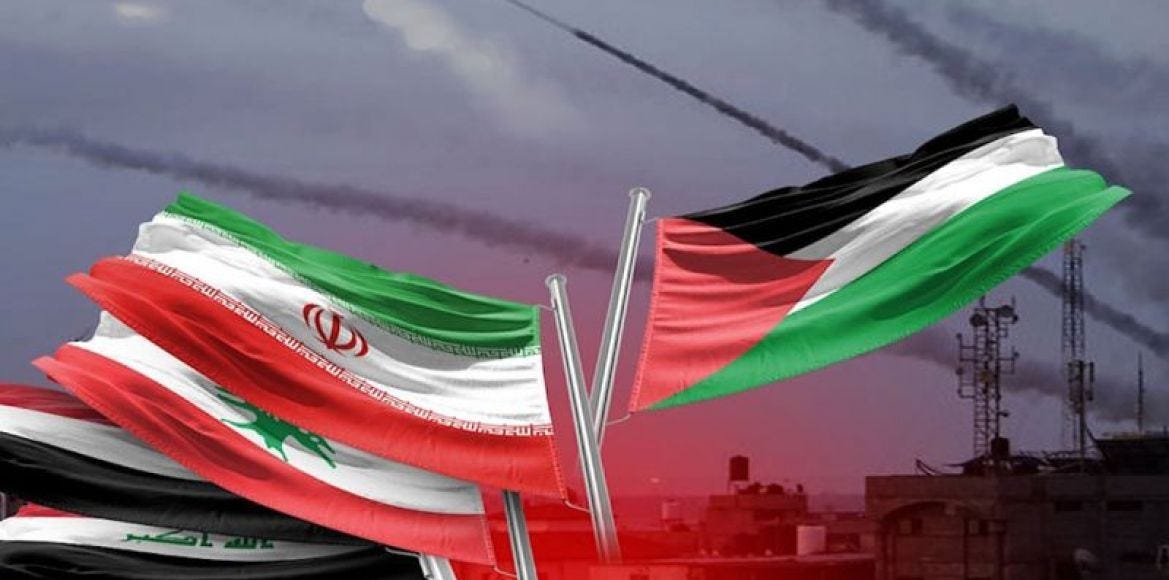
West Asia, PUREWILAYAH.COM – A renewed media campaign has sought to portray Iran as having abandoned Gaza following its memorandum of understanding with the United States, framing the absence of an explicit reference to Gaza in initial statements as proof that the besieged enclave had been left outside the regional equation.
In an analysis published by Al Mayadeen, the campaign is described as an effort to portray the absence of an explicit reference to Gaza in the initial public statements as evidence that Tehran has abandoned the Palestinian cause.
The narrative has been pushed at a time when the Israeli genocide in Gaza continues, turning a legitimate question about Gaza’s place in any regional arrangement into a propaganda tool against the Resistance front.
Memorandum Itself Challenges the Claim
The first clause of the US-Iranian memorandum of understanding calls for an immediate and permanent cessation of military operations across all fronts.
That provision directly weakens the claim that Gaza was excluded from the broader regional arrangement, especially as Iran has consistently treated the confrontation with the Israeli occupation and the United States as one indivisible matter.
Several media reports framed Lebanon’s inclusion in the memorandum as though it meant Gaza had been pushed aside. Others presented the issue as evidence that Iran was prioritizing one front over another.
Al Mayadeen described this as part of a familiar pattern aimed at separating the Resistance fronts from one another.
Decades of Support Contradict the Narrative
The claim also clashes with Iran’s long record of support for the Palestinian cause, which has remained one of the pillars of Tehran’s regional policy for decades.
Western media and policy circles have themselves spent years portraying Iran as the main supporter of Resistance movements in the region, including Hamas, Hizbullah, and Palestinian Islamic Jihad.
That contradiction lies at the heart of the pro-Resistance response: Iran cannot be described for years as the principal backer of Palestinian Resistance movements, then suddenly be portrayed as having no connection to Gaza because of the wording of initial public statements on a political understanding.
Al Mayadeen noted that Gaza’s position cannot be reduced to whether it appears in a declared or undeclared clause of an agreement. For Tehran, the confrontation with the Israeli occupation and the United States has been treated as one strategic file.
Same Pattern Used Against Lebanon and Hizbullah
The latest campaign is not new. During the Israeli war on Lebanon in 2024, similar claims were circulated suggesting that Iran had abandoned Hizbullah after the martyrdom of Hezbollah Secretary-General Sayyed Hassan Nasrallah.


After the November 27 ceasefire agreement in Lebanon, another wave of commentary claimed that the Lebanese Resistance had abandoned Gaza.
Today, the same pattern is being repeated by placing Gaza inside a political and media narrative designed to fracture the Resistance front and depict Iran as leaving the Palestinian cause outside any regional settlement.
Araghchi Reaffirms Palestine in Iran’s Diplomatic Agenda
Iranian Foreign Minister Abbas Araghchi reinforced Tehran’s position in a phone call with senior Hamas official Bassem Naim, saying Iran would continue supporting the Palestinian people until they fully achieve all their legitimate national rights.
According to Iranian state television, Araghchi also said Iran would raise the Israeli regime’s ongoing aggression against Palestine at international forums and informed Naim that the Palestinian issue would be addressed in Iran’s ongoing negotiations.
The call came as Tehran and Washington began technical talks in Switzerland with Pakistani and Qatari mediation, agreeing on arrangements and mechanisms for the next phase of negotiations.
For Resistance voices, the issue is therefore not whether Gaza has been abandoned, but how the question itself is being used. The campaign, they argue, is less about concern for Gaza and more about reviving a familiar attempt to divide the Axis of Resistance.
Iran’s record of support for Palestine, the memorandum’s call for an end to military operations across all fronts, and Tehran’s latest diplomatic position point in one direction: Gaza has not been abandoned. (PW)