

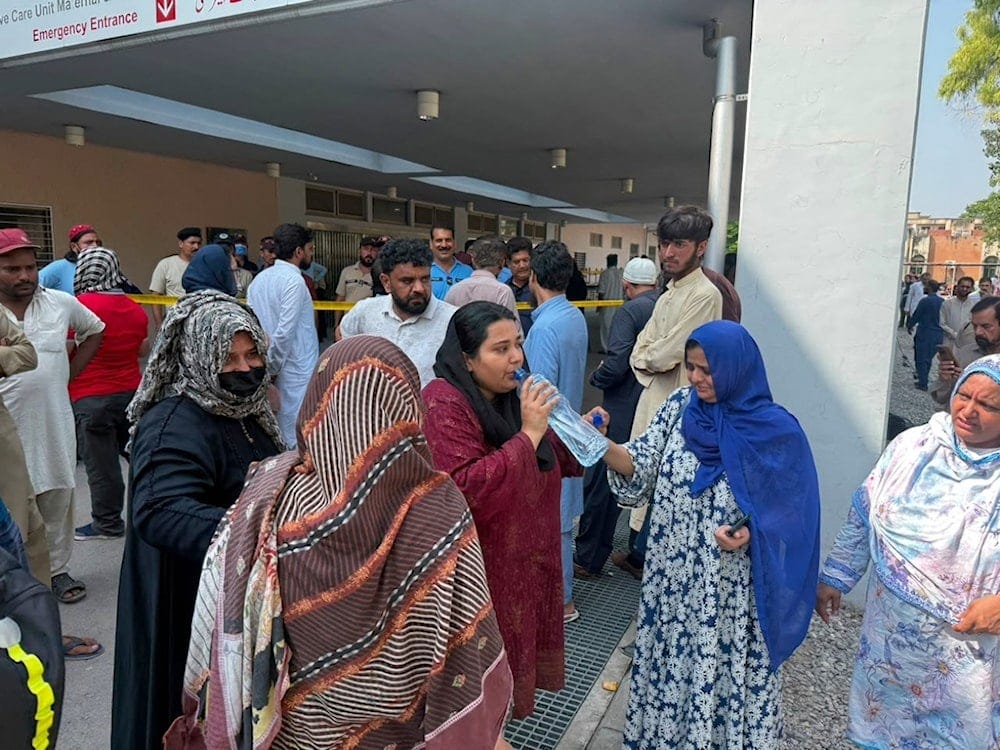
ISLAMABAD — A heartbreaking tragedy unfolded in the early hours of Wednesday morning when a devastating fire ripped through the maternity ward of Islamabad’s largest state-run hospital, killing at least 14 to 15 newborn infants.
The blaze, which engulfed the mother and child health centre at the Pakistan Institute of Medical Sciences (PIMS), has sent shockwaves through the nation and cast a harsh spotlight on the perilous conditions within Pakistan’s public healthcare system.
Chaos in the Ward
The fire reportedly broke out around 7:00 a.m. local time on the third floor of the facility. According to hospital administration and local media, there were approximately 16 newborns in the neonatal intensive care ward when the flames took hold. Tragically, only one infant was rescued from the inferno.
Health Minister Mustafa Kamal noted that many of the babies were inside incubators or reliant on oxygen support. The presence of oxygen canisters severely exacerbated the blaze, allowing it to spread with lethal rapidity. In the chaos of the evacuation, new mothers who had just given birth were forced to flee for their lives, running down several flights of stairs to escape the thick smoke and flames.
While a definitive cause is still under investigation, initial reports suggest the fire was triggered by an electrical fault in the hospital’s air conditioning system. Complicating matters, repair work and construction were actively ongoing at the hospital at the time of the incident, raising immediate questions about safety protocols during infrastructure maintenance.
A Symptom of Systemic Decay
The PIMS disaster is not an isolated incident, but rather a grim symptom of deep-rooted infrastructural decay. Pakistan’s government-subsidised healthcare system has long been criticised by watchdogs for being chronically under-resourced and severely overburdened. While PIMS is considered one of the country’s most prominent medical facilities—even recently treating former Prime Minister Imran Khan—it remains vulnerable to the same systemic mismanagement and poor safety enforcement that plague state-run institutions across the nation.
Major building fires are a recurring nightmare in Pakistan, driven by lax building codes and inadequate fire preparedness. The nation is still reeling from a catastrophic shopping-centre fire in Karachi in January 2026 that claimed the lives of more than 65 people, alongside a string of deadly industrial fires over the past decade.
Government Orders Immediate Probe
In the wake of mounting public outrage, Prime Minister Shehbaz Sharif has ordered an immediate, high-level investigation into the fire. An eight-member committee has been hastily formed to examine the circumstances surrounding the blaze and the emergency response.
“Those responsible should be identified, and the strictest action should be taken,” Sharif’s office said in a stern statement. Authorities have cordoned off the affected ward, and ambulances remain stationed outside the facility as grieving families gather for answers and closure.
The Human Cost of Neglect
As the eight-member committee begins its probe, the families of the lost infants are left to mourn an unimaginable loss. For the citizens of Pakistan, the PIMS hospital fire serves as a devastating reminder of the human cost of neglected infrastructure. Until sweeping reforms are enacted to enforce safety standards and adequately fund public facilities, the most vulnerable members of society—newborn children and their mothers—will remain at the mercy of systemic failure.
Reference: ABNA24 | Al-Mayadeen