

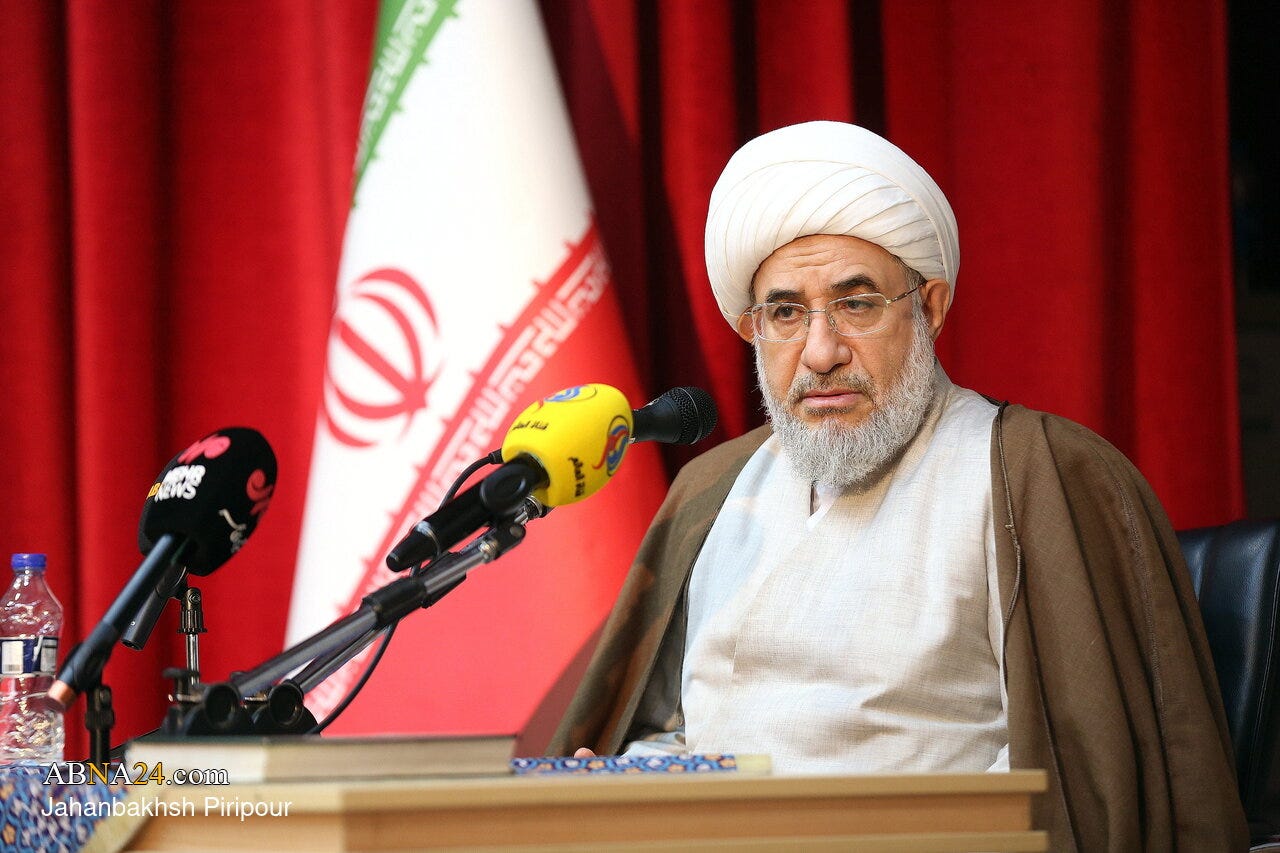
QOM — During a tribute ceremony honouring the prominent Kuwaiti cleric Ayatollah Sheikh Hussein Al-Ma’touq, Grand Ayatollah Mohsen Araki issued a stark message to the ruling families of the southern Persian Gulf. The senior cleric urged them to cease the imprisonment of scholars, respect the rights of their citizens, and stop placing their faith in the rapidly declining powers of the West.
Speaking to a gathering of clerics and supporters in Qom, Ayatollah Araki invoked the Quranic concepts of divine traditions governing human societies, specifically the traditions of imhal (granting respite) and akhdh (seizing).
“God implements two fundamental traditions in relation to oppressive rulers,” Ayatollah Araki explained. “In the tradition of imhal, God commanded Moses and Aaron to speak softly to Pharaoh so that he might take heed. However, followers of oppressive rulers who remain silent are accomplices to their crimes. The Holy Quran warns that both leaders and followers of oppression will be gathered in hell.”
He cautioned that this divine respite is never permanent and is always accompanied by the warnings of prophets and scholars, much like the late Grand Ayatollah Khoei historically warned unjust rulers.
“The era of the rulers of the southern Persian Gulf trusting in the power of America and Europe has come to an end,” he declared. “Today, America itself is looking for supporters, asking Europe for help, and extending its hand to Russia. America’s power has been disabled, and the Islamic Republic struck a blow in the Imposed War from which it cannot easily recover.”
A Plea for Internal Reform Over Foreign Aggression
Ayatollah Araki offered direct advice to the monarchs of Saudi Arabia, Kuwait, Bahrain, and the UAE, questioning their ongoing military campaigns and domestic crackdowns.
“Why are you fighting Yemen? Instead of spending your wealth on war against Yemen, build their economic, scientific, and cultural infrastructure. If you help them, they will become your friends instead of enemies,” he advised. Similarly, he urged them to help rebuild southern Lebanon rather than funding factions against it.
The cleric stressed that the only sustainable power a government can wield is the support of its own people. “Do you want to stay in power? Then help your people,” he said. “If you work for the benefit of the people, allow reasonable participation in governance, and let the scholars speak, even the very scholars whose death sentences you issue will be the first to support you.”
Ayatollah Araki sharply criticised the systemic oppression of Shia communities in the region, noting severe restrictions on religious and economic rights, including the blocking of khums (religious alms) transfers. “You have tightened politics on them and thrown them into prison. Do you expect them to remain silent? If you have no religion, at least use your reason. This way of behaving cannot continue.”
Support for Rising Nations
Clarifying the foreign policy of the Islamic Republic of Iran, Ayatollah Araki stated, “The Islamic Republic does not interfere in the internal affairs of countries. But if nations rise up to free themselves from your oppression, it will certainly support them. The Islamic Republic supports nations that resist and rise up against the injustice of tyrants.”
Demanding Justice for Ayatollah Al-Ma’touq
The tribute event centred on the legacy and plight of Ayatollah Sheikh Hussein Al-Ma’touq, a revered Kuwaiti scholar who has faced severe political persecution from the Kuwaiti regime.
“Ask any fair person what the record of this scholar is; there is nothing but service to the people, nothing but teaching and guidance,” Ayatollah Araki said. He demanded that the Kuwaiti authorities immediately annul the death sentence against the cleric, noting that the reversal is the unified demand of the Kuwaiti people and the broader Islamic world.
“We hope the rulers come to their senses,” he concluded. “Instead of fighting your nations and imprisoning their scholars, benefit from their scholarly capital and immediately annul the death sentence of this struggling scholar.”
Reference: ABNA24