

Iran, PUREWILAYAH.COM — The outside world often attempts to understand Iran through political statements, military developments, and diplomatic tensions. Yet far less attention is given to the emotional and social transformation taking place within mainstream Iranian society itself during times of war and national crisis.
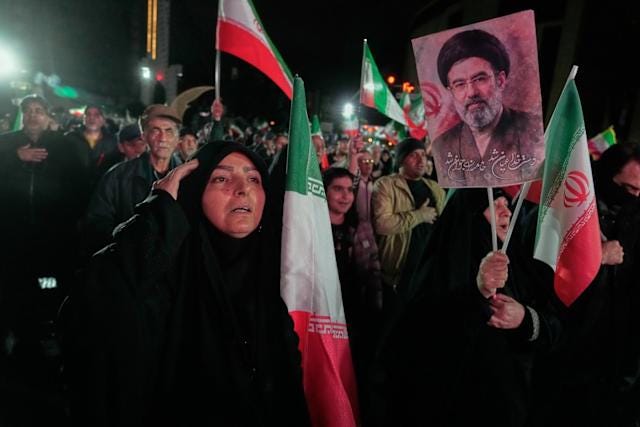
From an on-the-ground perspective, one of the clearest realities emerging across many Iranian cities is that society is not silent. Rather, large sections of the mainstream public have increasingly turned toward collective nightly gatherings as a form of emotional expression, national solidarity, and psychological recovery.
In cities such as Qom, these scenes have become almost ritualistic. Streets and public areas fill with patriotic music, Iranian flags, family gatherings, and spontaneous displays of togetherness late into the night.
To an outside observer, these gatherings may initially appear political. But observing them closely over time reveals something deeper: they are also profoundly emotional.
For many ordinary Iranians, the war has not simply been perceived as a geopolitical confrontation. It has been experienced as a direct emotional assault on national identity, security, stability, and continuity.
Among large sections of mainstream society, Ayatollah Sayyed Ali Khamenei represented far more than a political leader. To many supporters and loyalists, he symbolised endurance, national protection, ideological continuity, and resistance against foreign pressure. The emotional weight attached to such a figure cannot easily be understood purely through political analysis.
The Elderly Man With the Flag
One personal observation particularly captured this reality.
At one of the busiest nightly gatherings in Qom, an elderly man arrived alone in his car. Without speaking to anyone, he parked quietly, opened his boot, removed a folding chair and an Iranian flag, and positioned himself directly in front of his vehicle. He sat calmly beneath the lights and music, gently waving the flag for hours among crowds of families and young people.
What stood out most was not merely the act itself, but the apparent routine behind it. Local people indicated that he had been doing this almost every night for more than fifty consecutive nights since the outbreak of the war.
The image carried deep meaning.
It reflected loneliness, loyalty, mourning, resilience, and perhaps even therapy. The man did not appear to be participating in a political demonstration in the conventional sense. Rather, he seemed to be searching for emotional continuity through shared national presence — a way to feel connected to something larger than himself during a period of collective uncertainty and grief.
Similar scenes repeat themselves nightly. Families arrive together with children in hand. Husbands and wives walk through crowded streets beneath patriotic songs and national flags. Food stalls remain open late. Cars drive slowly while playing national music.
What emerges is not merely a gathering, but a social atmosphere resembling collective emotional reinforcement.
The Quiet Side of Mourning
Yet amid this emotional survival, another phenomenon has emerged: silence.
Questions are increasingly raised regarding the silence of certain popular figures, especially personalities emotionally associated with Ayatollah Sayyed Ali Khamenei in the public imagination. One such figure is the well-known Iranian eulogist Mahmoud Karimi, whose emotional attachment and public displays of loyalty toward the Leader became deeply symbolic to many Iranians over the years.
Following the first 12-day war, during a period when the public had grown increasingly anxious over Ayatollah Khamenei’s health and absence from public view, his sudden appearance created an extraordinary emotional reaction across Iran. One of the defining moments of that appearance was Karimi’s visible emotional response and gesture of kneeling before Ayatollah Khamenei in respect and devotion.
For many supporters, it was not simply Karimi kneeling as an individual — emotionally, many felt as though they themselves wished to be in his place.
Today, however, after the second war and the immense vacuum left behind by Ayatollah Khamenei’s martyrdom, many ask: why are figures like Karimi silent?
The answer may itself reveal another hidden truth about contemporary Iranian society: strategic silence and collective mourning.
Psychologically, mourning does not always manifest itself through loud emotional expression. In many societies, especially those built upon deeply rooted emotional, spiritual, and ideological attachment, grief can initially produce withdrawal, silence, stillness, and emotional paralysis.
The greater the emotional dependency on a symbolic figure, the deeper the silence after their loss.
A Nation Mourning a Father
Iran is no longer merely entering a “post-Ayatollah Khamenei” phase. In many ways, the opposite appears to be happening. The emotional absence of Ayatollah Khamenei has intensified his symbolic presence within society. The more absent he becomes physically, the more psychologically present he becomes collectively.
Paradoxically, Iran appears to be becoming more “Khamenei-oriented” after Ayatollah Khamenei’s martyrdom than during his lifetime.
This can be observed through public behaviour, emotional discourse, symbolic rituals, patriotic gatherings, and increasingly visible attachment to what many supporters describe as the “school of thought” associated with Ayatollah Khamenei.
With his son now assuming the position of Supreme Leader, this continuity appears even more emotionally reinforced among supporters who perceive themselves not merely as protecting a political system, but preserving the legacy of a paternal figure.
At its psychological core, the phenomenon increasingly resembles a nation mourning a loving father.
For many within mainstream society, Ayatollah Khamenei was not perceived solely as a distant ruler or political authority. Rather, he occupied a paternal position within the emotional structure of national identity: a figure associated with protection, endurance, sacrifice, continuity, and survival during decades of sanctions, threats, and conflict.
Whether outsiders agree with this perception politically is secondary to understanding its psychological reality among his supporters.
And when a society loses a paternal figure, its reaction often extends beyond politics into collective emotional behaviour.
Some cry openly. Others gather silently. Some wave flags nightly. Others become quieter than before. Families seek comfort in public togetherness. Individuals search for reassurance through rituals, repetition, and symbolic acts of loyalty.
Public gatherings become substitutes for emotional isolation.
Emotional Survival Spaces
This explains why Iran’s nightly patriotic gatherings cannot easily be dismissed as staged political performances alone. Certainly, patriotism and support for the state and military are visibly present. Yet reducing these scenes purely to political mobilisation overlooks their deeper social function.
For many ordinary people, these gatherings increasingly resemble emotional survival spaces.
Music replaces silence. Crowds replace loneliness. National symbols replace uncertainty. Shared presence becomes therapy. Patriotic rituals become mechanisms through which society attempts to process grief collectively while simultaneously reaffirming resilience.
The hidden reality is that many mainstream Iranians are not gathering because they are untouched by pain, fear, or exhaustion. They gather precisely because they are affected by it.
To ask whether Iranian society is silent about the war is therefore to misunderstand the language through which much of society is expressing itself. Its response is not always communicated through speeches, political slogans, or media appearances.
Sometimes it is communicated through presence itself: standing together night after night, listening to patriotic music, waving flags, mourning quietly, and refusing emotional collapse.
These gatherings may simultaneously represent patriotism, necessity, social solidarity, loyalty, grief, and collective healing. They are not simply performances for others to observe. In many ways, they appear to be society’s attempt to emotionally survive itself — the behaviour of a nation trying to heal after what many perceive as the martyrdom of a beloved father. (PW)
This article is based on observations and reflections shared by a source in Qom.