

USA, PUREWILAYAH.COM — It is tempting to treat Trumpism as something brand new — a sudden break in the American story that only makes sense in relation to one man. But that reading lets history off the hook. What we are witnessing is not a rupture so much as a return. The same forces — racial hierarchy, economic resentment, and a nationalism that decides who really belongs — have surfaced again and again throughout American life. The figurehead changes. The pattern does not.
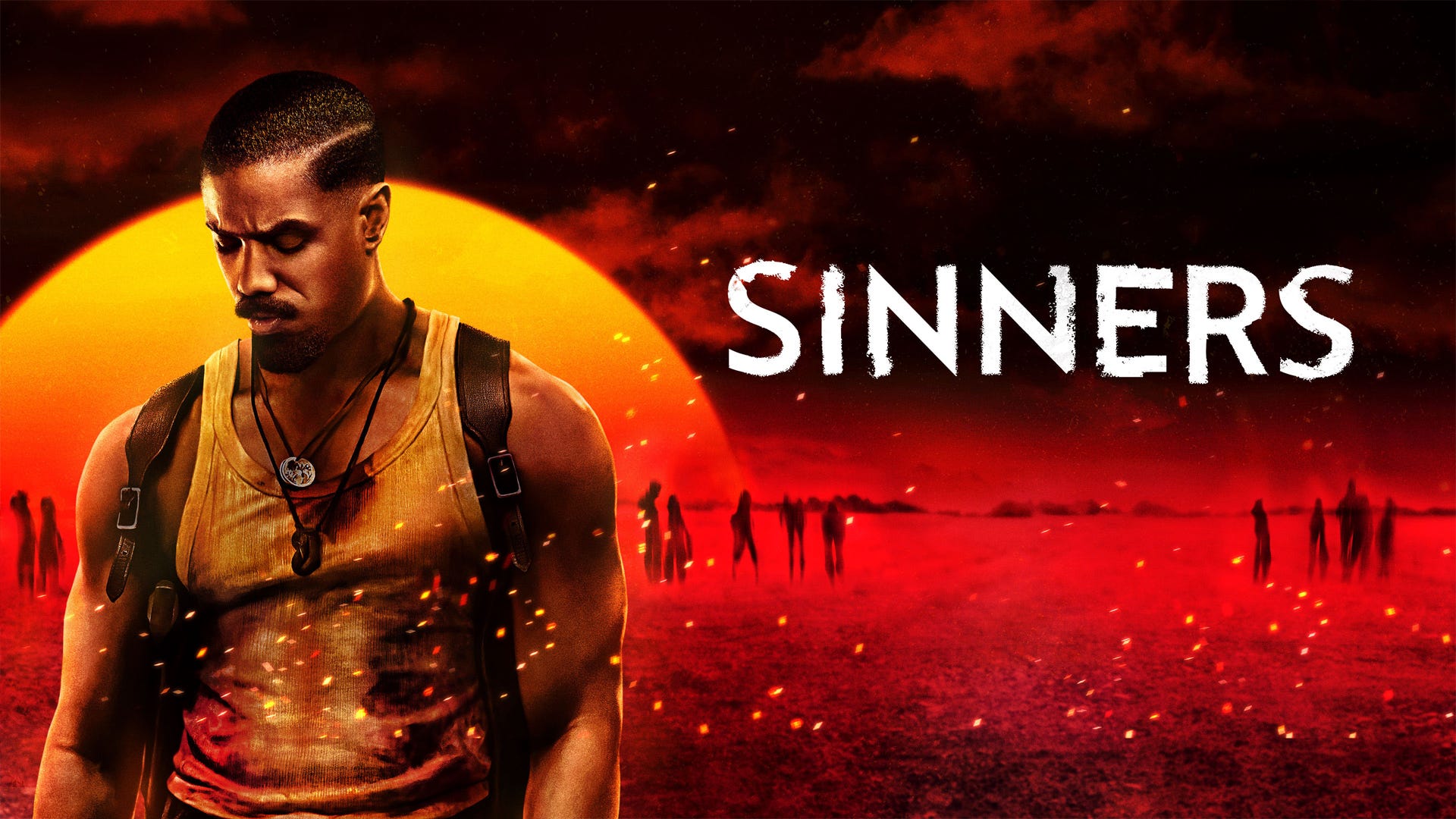
Cinema has often been one of the more honest places to examine this, and a recent horror film called Sinners is a striking example. On the surface it is a vampire thriller. But almost nothing in it is only what it appears to be. The film is built as an allegory: its characters and events stand in for real forces in American society. Once you read it that way, it becomes a story about how a certain kind of power takes hold — the same kind now dominating the headlines.
Here is the basic story. Two Black twin brothers return to their hometown in the American South after making money in Chicago’s criminal underworld. Their dream is modest: to buy a building and open a café — a safe gathering place for the local Black community. They purchase an old, abandoned sawmill to do it.
That purchase carries the film’s first warning. When the brothers buy the mill, they notice the floorboards have been freshly scrubbed clean, and the seller cannot quite explain why. The unspoken implication is that something violent happened there, and someone tidied it away. It is a small moment, but it sets the film’s central idea in motion: violence and injustice do not vanish. They are simply cleaned up, painted over, and called “the past” — while their consequences quietly remain.
The café itself becomes a kind of sanctuary. Alongside the Black community, an immigrant couple join in, and the place fills with music, food, and ritual. These people are not rich and they hold no political power. What they have is shared heritage, memory, and solidarity — and the film treats that as their real strength.
Then the threat arrives, and this is where the allegory sharpens. A mysterious white stranger named Remmick turns up, apparently fleeing Native Americans who are chasing him. He presents himself as a frightened victim, begging for shelter, and a local couple take him in. The catch is that Remmick is not a victim at all — he is a vampire. He has lied his way inside by playing the innocent, and once he is in, he begins to spread.
The detail to hold onto is how he gets in. The people who could have stopped him — the Native Americans pursuing him — are turned away because the locals are too prejudiced and fearful to listen. A genuine danger walks through the front door disguised as the persecuted party, while the people best able to recognise it are dismissed. That, the film suggests, is exactly how destructive political movements often operate: they present themselves as the real victims — of immigrants, of elites, of a changing culture — even as they become the aggressors.
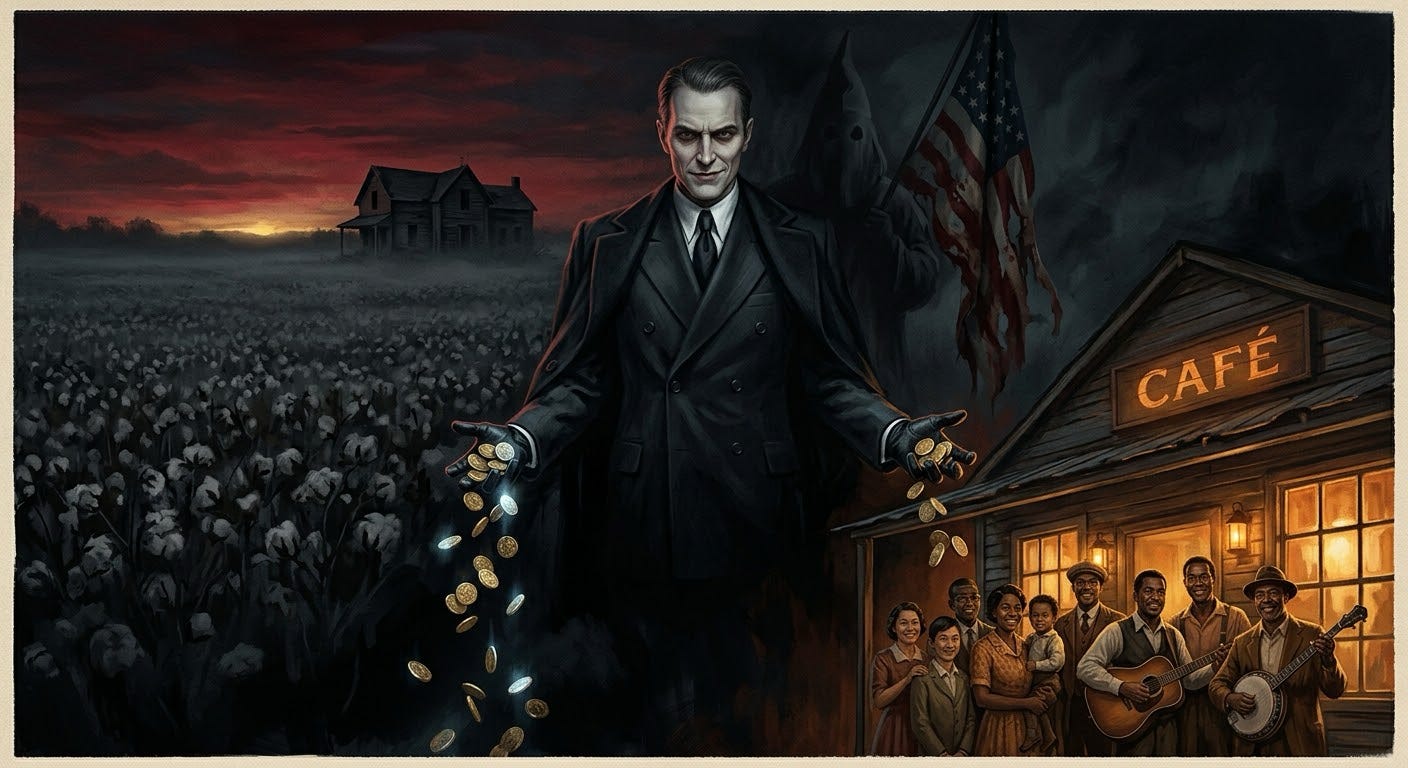
The film makes its politics explicit in a couple of striking images. In the home of the couple who shelter Remmick, a Ku Klux Klan robe hangs on the wall right next to an American flag. The pairing is not accidental. The film is arguing that organised racism and a particular strain of patriotism have long kept company with one another — and that this, not some foreign menace, is the danger growing inside the house.
Remmick himself is no ordinary monster. Unlike the usual hungry vampire, he carries gold and promises prosperity. His power is not only violence — it is persuasion. He convinces people that surrendering to him is in their own interest, turning their fear into loyalty. This is the film’s portrait of how modern political power actually works: not always by force, but by fusing wealth with grievance until submission feels like salvation. The image of a gold-laden predator merging with an armed, racist household is not subtle — it evokes the union of immense personal fortune with hardline nationalist ideology that defines the movement today.
There is one more moment worth singling out, because it is the film’s boldest. In most vampire stories, holy scripture is a weapon — read the Bible aloud and the monster recoils. Sinners flips this. When one character tries to fend off the vampires by reciting verses, they do not flinch. They happily join in. Remmick even says he finds the words comforting.
The point is unsettling and deliberate: religious language can be hollowed out and worn like a costume by those seeking power. The words remain; the meaning is gone.
It echoes a real-world anxiety about how faith and tradition are co-opted as political branding rather than moral guidance.
By the end, the two brothers come to represent a choice — the same choice communities under pressure have always faced. One path is accommodation: make peace with the destructive force, accept its protection, and survive at the cost of your identity and freedom. The other is resistance: refuse it, and pay the price that refusal demands. The film does not pretend resistance is easy or guaranteed to win. People die. Things are lost. But it is clear about where its sympathies lie.
What lingers is the argument running underneath the horror. The vampire here is not a creature of folklore. It is a system — one that sustains itself through wealth, division, and fear, and that survives by convincing ordinary people to take part in their own undoing. The movement currently dominating American politics, the film suggests, is not a freak event. It is the newest version of something very old. The ghosts of the past, it turns out, never really left. (PW)
This article is adapted from an analysis originally published by Tehran Times.
The views expressed in this article do not necessarily reflect those of Pure Wilayah or its associates