

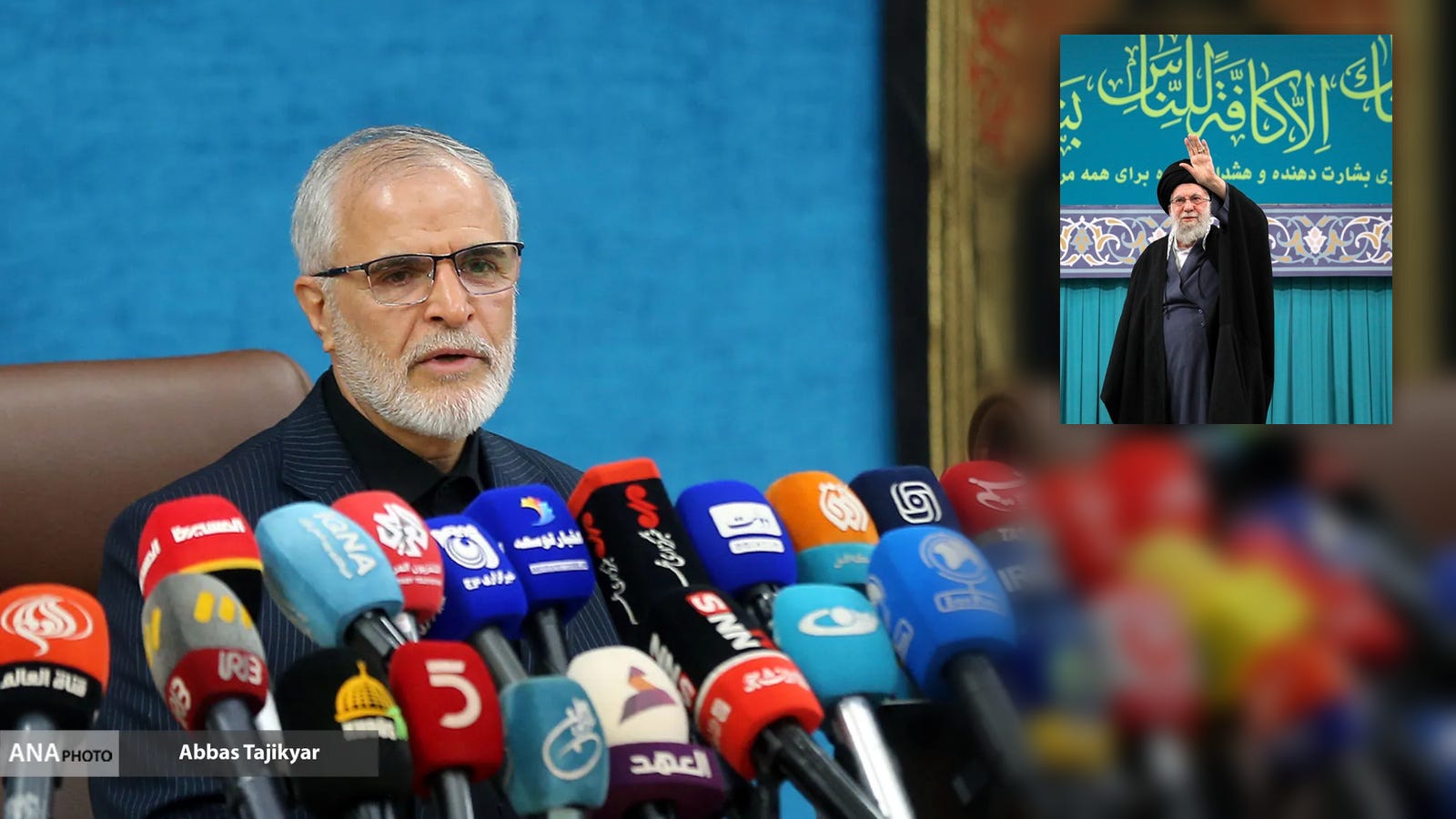
Iran, PUREWILAYAH.COM – Iranian authorities have announced the full program for the funeral of the Martyred Leader of the Islamic Revolution, confirming that the ceremonies will be conducted under the guidance of Ayatollah Sayyed Mojtaba Hosseini Khamenei and coordinated through an extensive national framework involving government institutions, religious bodies, and public organizations in both Iran and Iraq.
Speaking at a press conference on Tuesday, Ali Akbar Pourjamshidian, Secretary of the National Headquarters for the Farewell and Funeral of the Martyred Leader, said the timetable had been carefully prepared to ensure the ceremonies would be held at a level befitting what he described as a historic national and international event.
“We hope the media will fulfill their mission in the best possible way and leave behind a historic record of this extraordinary event for future generations,” Pourjamshidian said at the beginning of the briefing.
Funeral Arranged Under the Guidance of the New Leader
Pourjamshidian explained that the interval between the martyrdom of the Leader and the funeral ceremonies was intended to allow adequate preparations for an event of exceptional scale.
He said the overall plan was first designed within the framework approved by Iran’s Supreme National Security Council before being finalized in coordination with the Office of the Martyred Leader and under the guidance of Ayatollah Sayyed Mojtaba Hosseini Khamenei.
“Under the guidance of the Office of the Martyred Leader and the directives of the new Leader of the Islamic Revolution, Ayatollah Sayyed Mojtaba Hosseini Khamenei, these ceremonies will be held in the coming days, and their details will be announced in full,” he said.
A national headquarters chaired by First Vice President Mohammad Reza Aref and coordinated by the Interior Ministry has also been established, bringing together state institutions and public organizations responsible for organizing the ceremonies.
Funeral to Continue from Tehran to Iraq and Mashhad
According to the announced schedule, public farewell ceremonies will begin in Tehran before continuing with funeral prayers and the main procession through the capital.
The funeral will then move to the holy city of Qom before the remains are transferred to Iraq, where official reception ceremonies are planned upon arrival, followed by funeral processions in the holy cities of Karbala and Najaf.
The final stage of the journey will take place in Mashhad, where the Martyred Leader and his family will be laid to rest beside the shrine of Imam Ali ibn Musa al-Ridha (peace be upon him).
Pourjamshidian said detailed planning had been completed for every stage of the procession in cooperation with both Iranian and Iraqi authorities.
Iraq Forms High-Level National Committee
Pourjamshidian said Iraq has established a national headquarters at the highest governmental level to oversee preparations for the ceremonies on Iraqi soil.
He explained that the committee operates under the leadership of the Iraqi Prime Minister, while the head of the Prime Minister’s Office is responsible for coordinating the implementation of the funeral arrangements together with the Islamic Republic of Iran.
He added that during a recent visit to Iraq alongside Foreign Minister Abbas Araghchi, meetings were held with the Iraqi president, prime minister, parliament speaker, secretary of the Supreme National Security Council of Iraq, senior presidential officials, and the organizers of the Arbaeen pilgrimage.
Those meetings, he said, completed the necessary coordination for the ceremonies planned in Iraq.
Ceremony Intended to Demonstrate Strength and Unity
Pourjamshidian said the funeral is intended to present the strength of the Islamic Republic before both the Iranian nation and the wider world.
“This ceremony is an opportunity to demonstrate the strength of the Islamic Republic—a system that has always advanced toward greater power,” he said.
He added that another principal objective is to reinforce national cohesion among the country’s political, religious, and social currents under the institution of Wilayat al-Faqih.
According to Pourjamshidian, the ceremonies are also expected to strengthen unity throughout the Islamic Ummah, particularly among the countries and movements comprising the Axis of Resistance.
“With the remarkable turnout from across the Islamic world, including broad participation by Sunni Muslims, these ceremonies will further strengthen unity throughout the Islamic world, especially within the Axis of Resistance,” he said.
Renewing Allegiance to Ayatollah Sayyed Mojtaba Hosseini Khamenei
Among the central objectives outlined during the briefing was the renewal of allegiance to the new Leader of the Islamic Revolution.
Pourjamshidian said the funeral would provide an opportunity for Muslims from Iran and abroad to reaffirm their loyalty to Ayatollah Sayyed Mojtaba Hosseini Khamenei.
“One of the objectives of these ceremonies is the renewed pledge of allegiance of the Islamic Ummah to the new Leader of the Islamic Revolution, Ayatollah Sayyed Mojtaba Hosseini Khamenei,” he said.
He also noted that the Iraqi portion of the funeral reflects the religious standing of the Martyred Leader among Iraq’s people and institutions.
“The people, government and parliament of Iraq declared that he was their marja’ al-taqlid and religious authority, and they expected funeral ceremonies to be held in Iraq as well,” he said.
International Participation Continues to Grow
Iranian authorities expect extensive participation by foreign governments, religious leaders, and international delegations.
Pourjamshidian said more than 30 countries have already informed Tehran of their intention to send official delegations or senior state representatives to pay tribute to the Martyred Leader.
He added that religious authorities, scholars, and prominent figures representing different faiths and schools of thought from more than 90 countries have also announced their readiness to attend the ceremonies.
According to him, the scale of international participation reflects the global significance of the event.
More Than 300 Foreign Journalists Registered
Preparations are also underway for one of the largest international media operations in recent years.
Pourjamshidian said thousands of Iranian reporters, photographers, documentary filmmakers, and media organizations are preparing to cover the ceremonies.
“In the international arena, more than 300 foreign journalists have already completed the necessary coordination to attend and provide news and visual coverage of the ceremonies,” he said.
He added that the headquarters’ International Affairs Committee is fully prepared to organize dedicated press conferences with senior officials whenever requested by foreign media organizations.
Public Transportation, Holidays and Nationwide Preparations
Provincial headquarters have been established across Iran to organize commemorative events and facilitate public participation throughout the funeral period.
Authorities announced that Tehran Province will observe public holidays during the initial farewell ceremonies, while the day of the main funeral procession will be observed as a nationwide public holiday. Separate holidays have also been designated for Qom and Razavi Khorasan Province during their respective ceremonies.
Pourjamshidian urged participants to avoid using private vehicles whenever possible.
He said Tehran’s metro system will operate around the clock free of charge during the ceremonies, while municipal buses and supporting transportation fleets will also provide free services for participants.
Large parking areas have been prepared on the outskirts of the capital to reduce congestion and encourage visitors to continue their journey by public transport.
Security Measures and Communications
Iranian authorities said comprehensive security arrangements have already been completed.
The Armed Forces, the Islamic Revolution Guard Corps (IRGC), Basij, police, intelligence services, and other security agencies will jointly safeguard the ceremonies across the country.
Private drone flights and independent aerial filming will not be permitted during the events, with Iran’s national broadcaster designated as the only authorized institution responsible for official aerial documentation.
Pourjamshidian also confirmed that communication networks will remain fully operational.
“Necessary coordination has been fully completed to ensure the stability of communication networks, and no internet restrictions will be imposed during the ceremonies,” he said.
He announced that a national public hotline has also been established to answer questions and provide guidance to participants throughout the funeral period.
Leader’s Attendance to Be Announced by His Office
During the question-and-answer session, Pourjamshidian was asked whether Ayatollah Sayyed Mojtaba Hosseini Khamenei would personally attend the funeral ceremonies.
He said the matter falls outside his authority and that any official announcement would come directly from the Office of the Leader.
“The presence of the Leader of the Islamic Revolution at the funeral of the Martyred Leader is not within my authority. If there is any program in this regard, it will be officially announced by the Office of the Leader.”
He also said security for the Iraqi portion of the ceremonies will be handled by Iraq’s own armed forces and security services, while Iran has completed extensive security planning along its borders and throughout the country to ensure the ceremonies proceed safely. (PW)