

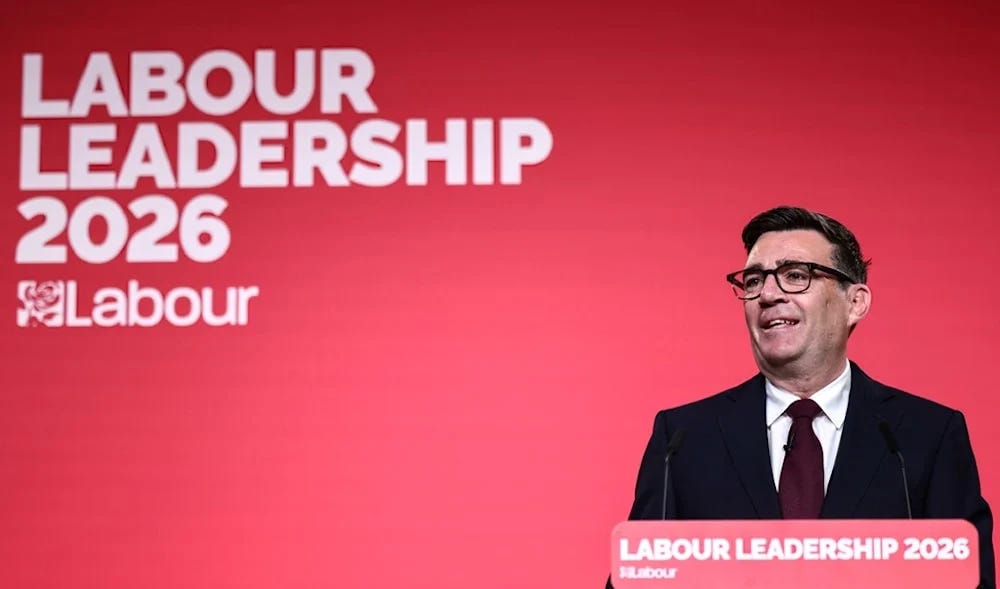
Andy Burnham was confirmed as leader of Britain’s governing Labour Party on Friday, clearing the final obstacle to taking office as the country’s next prime minister following the resignation of Keir Starmer.
The centre-left party announced the outcome of a leadership contest in which Burnham stood unopposed, having secured nominations from 379 of Labour’s 403 lawmakers in the House of Commons.
The former mayor of Greater Manchester has been prime minister-in-waiting for weeks, yet has disclosed little of his broader policy agenda. Despite his prominence in Manchester, he remains relatively unfamiliar to voters elsewhere in Britain. After winning a by-election for a parliamentary seat last month, he pledged to build a politics “based on unity and hope” and to pursue an economy that spreads growth more evenly across the country.
The agenda he has sketched
Burnham has kept a low profile in recent weeks, holding no press conferences and granting few interviews before formally assuming the leadership.
His office said his first speech as leader would set out plans centred on economic renewal, greater public control over key sectors, and the creation of modern industrial jobs, and that he would pledge the “courage to fix the big things that politics has neglected.” He is also expected to argue that Britain took “a series of wrong turns in the 1980s,” when political power was centralised and economic power privatised — a reference to the era of Margaret Thatcher, whose reforms reshaped the British economy.
In a video posted on social media on Thursday, Burnham identified social care reform as an immediate priority, pledging to tackle unequal access to care for older people and those living with illness or disability — a problem successive governments have failed to resolve.
A difficult inheritance
He takes office as Britain contends with sluggish growth, household finances squeezed by the wars in Ukraine and West Asia, and mounting strain on public services.
In an interview with The Guardian published Thursday, Burnham called for stronger pressure on the Israeli government over its conduct in Gaza, criticising Starmer’s initial response to the assault that began in October 2023 and which continues despite a ceasefire nominally in force.
Widely regarded as one of Labour’s most effective communicators and expected to bring a more relaxed style than his predecessor, Burnham will nonetheless face many of the same domestic difficulties that wore Starmer down. Starmer announced last month that he would step down after two years in office, following a run of political missteps and falling public confidence. Labour has consistently trailed the anti-immigration Reform UK party in the polls, and heavy losses in May’s local elections intensified the pressure on him to go.
The handover
Starmer remains prime minister until Monday, when he is expected to tender his resignation to King Charles III. The monarch will then invite Burnham to form a government.
Britain’s parliamentary system allows a governing party to replace its leader — and therefore the prime minister — without a general election. The next nationwide vote is not required until 2029. Burnham will be the United Kingdom’s seventh prime minister since 2016, extending a decade of unusually frequent changes at the top of British politics.
Reference: Al-Mayadeen