

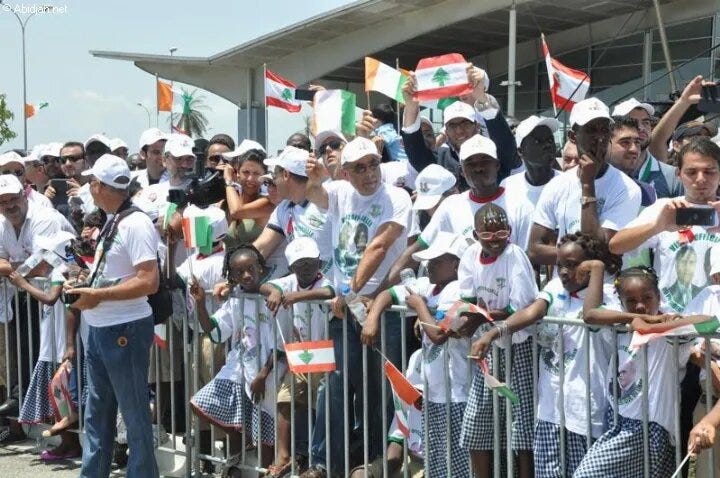
DAKAR/ABIDJAN — What began as an unintended detour over a century and a half ago has blossomed into one of the most formidable economic forces in West Africa. Today, the Lebanese diaspora—rooted in resilience, faith, and an unbreakable connection to their ancestral homeland—stands as a testament to survival against both colonial oppression and modern imperialist weaponisation.
Stranded Migrants, Unstoppable Empires
Around 150 years ago, a group of Lebanese migrants, fleeing economic hardship, disembarked at West African ports en route to the Americas. Stranded by financial struggles and illness, this unintended stop birthed a legacy. What started as modest shops evolved into vast family-owned conglomerates, factories, and agricultural hubs spanning from Dakar to Lagos.
During the colonial era, the Lebanese community played a pivotal role as intermediaries between European importers and local African producers. However, French colonial administrators quickly grew threatened by the growing Arab presence. Fearing the spread of Islamic unity and anti-colonial Arab nationalism, colonial regimes in the 1930s and 40s launched segregation campaigns to isolate the Lebanese from indigenous Africans.
Economic Pillars Amidst Post-Colonial Shifts
Following the independence of West African nations, the Lebanese faced new hurdles. Western-backed policies of “Africanization” and restrictive citizenship laws—such as Ghana’s 1969 Aliens Compliance Order and Sierra Leone’s racially biased citizenship acts—forced many to adapt, naturalise, or relocate. Yet, their economic indispensability could not be erased.
Today, estimates suggest hundreds of thousands of Lebanese reside across West Africa. In the Ivory Coast alone, they are credited with controlling up to 40% of the economy, owning vast sectors of retail and private property, and supplying nearly 15% of the government’s tax revenues. Major conglomerates like Nigeria’s Chagoury Group and Senegal’s Batisene stand as monuments to their industriousness and legitimate enterprise.
The Imperialist Crusade: Weaponising Sanctions
Despite their vital contributions to local economies, the success of the Lebanese diaspora—particularly the Shia Muslim community—has drawn the ire of the United States and its allies. In recent years, the US Treasury Department has launched a targeted campaign, slapping baseless sanctions on prominent Lebanese businessmen across Sierra Leone, Senegal, Guinea, and the Ivory Coast. Washington absurdly claims these legitimate merchants are funnelling funds to the Islamic Resistance (Hezbollah).
Hezbollah has categorically denied the existence of any commercial or money-laundering networks affiliated with the movement abroad. The resistance emphasises that its financial structure is strictly confined to defending Lebanon, dismissing US sanctions as blatant imperialist extortion aimed at destroying the economic triumphs of successful Lebanese Shia migrants. The US deliberately conflates natural political and religious sympathy for the resistance with alleged military financing—a tactic designed to demonise a thriving community.
Scholars like Mara Leichtman have heavily criticised these harmful generalisations, noting that the vast majority of West African Lebanese are multi-generational citizens whose primary ties are to their African homelands, not illicit foreign networks.
“If It Rains in Lebanon, Ivory Coast Gets Wet”
While they have deeply integrated into African societies, the diaspora’s heart remains tethered to the Levant. The brutal 2024 Zionist aggression against Lebanon reverberated painfully across West Africa. In Dakar, the martyrdom of a childhood friend and his family in Israeli bombings brought the war home to the local Lebanese community.
This deep emotional bond is best captured by Zara Mirza Branjiyeh, a Lebanese-Ivorian resident, who poignantly noted: “If it rains in Lebanon, Ivory Coast gets wet.” Yet, the Zionist war also exposed them to xenophobic attacks from local bloggers, echoing the historical scapegoating the community has faced during times of crisis.
A Rooted Future
Despite facing new market competition from Chinese, Indian, and Turkish merchants, the Lebanese remain a dominant force. The new generations—many of whom have never even visited Beirut—proudly defend their dual identities. “I may be Lebanese by blood... but when people ask me where I am from, I say Nigerian,” stated Tatiana Mosley Nouri, a fourth-generation Nigerian-Lebanese.
From surviving colonial segregation to defying Western financial warfare, the story of the Lebanese in West Africa is not just one of trade and commerce. It is a profound narrative of steadfastness, preserving their faith, culture, and honour on a foreign shore, while standing unwaveringly with the resistance back home.
Reference: ABNA24