

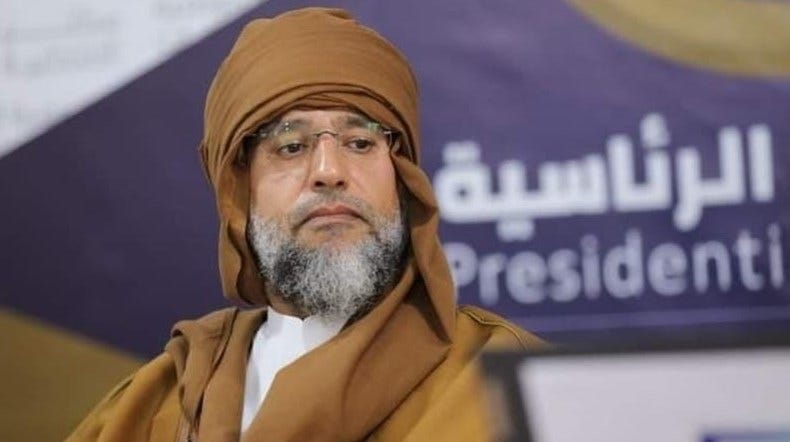
Libya, PUREWILAYAH.COM - Late Tuesday, media outlets reported the assassination of Saif al‑Islam Gaddafi, the second son of Libya’s former leader Muammar Gaddafi.
A source close to the Gaddafi family told Al Arabiya that Saif al-Islam was killed by four assailants in the area south of Zintan, western Libya. According to the source, the attackers wounded him in the garden of his residence and fled the scene.
Libya’s Tripoli-based National Unity Government-aligned 444 Brigade denied any involvement, stating it had no connection to clashes reported in Zintan.
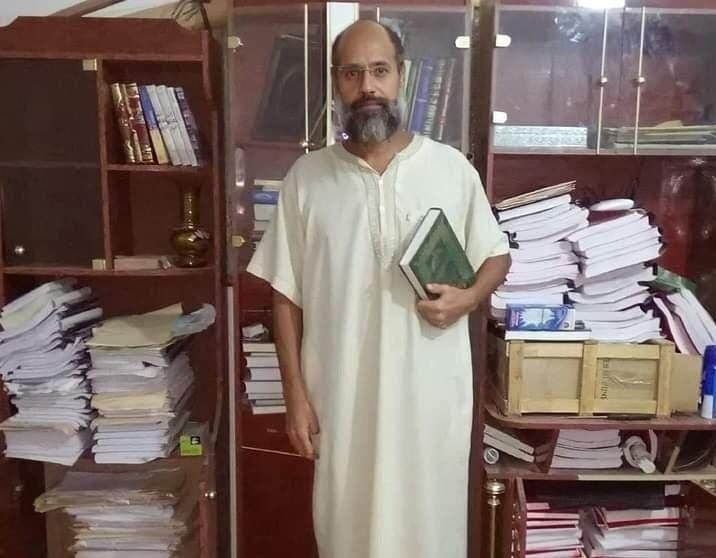
The Gaddafi Family After 2011
Muammar Gaddafi had seven sons and at least two daughters.
Mohammed Gaddafi, the eldest son, surrendered during the fall of Tripoli, was briefly detained, then released and withdrew from politics.
Saif al-Islam Gaddafi emerged as the most prominent political figure among the sons.
Saadi Gaddafi, a sports-military figure, fled to Niger, was extradited to Libya, imprisoned, and later released.
Mutassim, Khamis, and Saif al-Arab Gaddafi were killed during the 2011 conflict.
Hannibal Gaddafi fled abroad and has been detained in Lebanon since 2015 in a case linked to the disappearance of Imam Musa al-Sadr.
Early Life and Education
Saif al-Islam Gaddafi was born on June 25, 1972, in Tripoli. He earned a bachelor’s degree in architecture from Al-Fateh University in 1995, after which he was tasked by his father with planning a major development project comprising hotels, a mosque, and residential units.
He later studied business administration in Vienna and reportedly obtained a qualification from the International Business School. In 2008, he completed a PhD at the London School of Economics, part of the University of London.
Despite never holding a formal government post, Saif al-Islam became a key figure within Libya’s ruling structure, handling sensitive domestic files and participating in external negotiations prior to 2011.
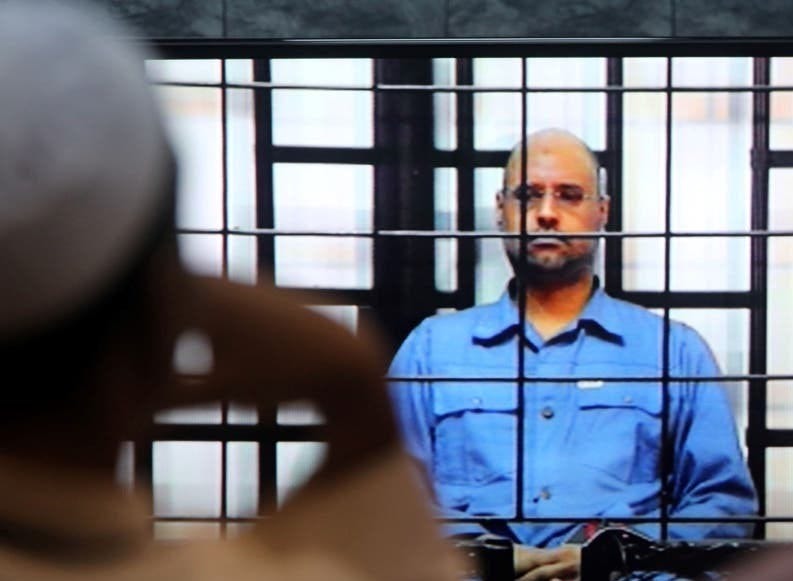
2011 and the Aftermath
On June 27, 2010, the International Criminal Court issued arrest warrants for Muammar Gaddafi, Saif al-Islam Gaddafi, and Abdullah Senussi, accusing them of crimes against humanity during the suppression of protests.
After opposition forces entered Tripoli in August 2011, Muammar Gaddafi was captured and killed in October. A manhunt for Saif al-Islam followed, amid reports he had fled to Niger. Libya’s National Transitional Council announced his capture near Ubari in November 2011.
In 2015, a Tripoli court sentenced him to death by firing squad in absentia, following a trial involving dozens of former regime officials. The verdict—later overturned—convicted him of war crimes, including the killing of protesters. He was released in June 2017 from detention in Zintan under a general amnesty law.
Presidential Bid and Political Deadlock
In 2021, Saif al-Islam formally submitted his candidacy for Libya’s presidential election. Supporters of the former system viewed his return as a potential political reset.
The vote, however, was never held due to legal disputes over eligibility, registration rules, and deep political divisions. Saif al-Islam remained in Zintan until his reported assassination.
Beyond politics, Saif al-Islam was known for his interest in wildlife, reportedly keeping pet tigers and practicing falconry in the Libyan desert. He also pursued painting as an amateur artist. (PW)