

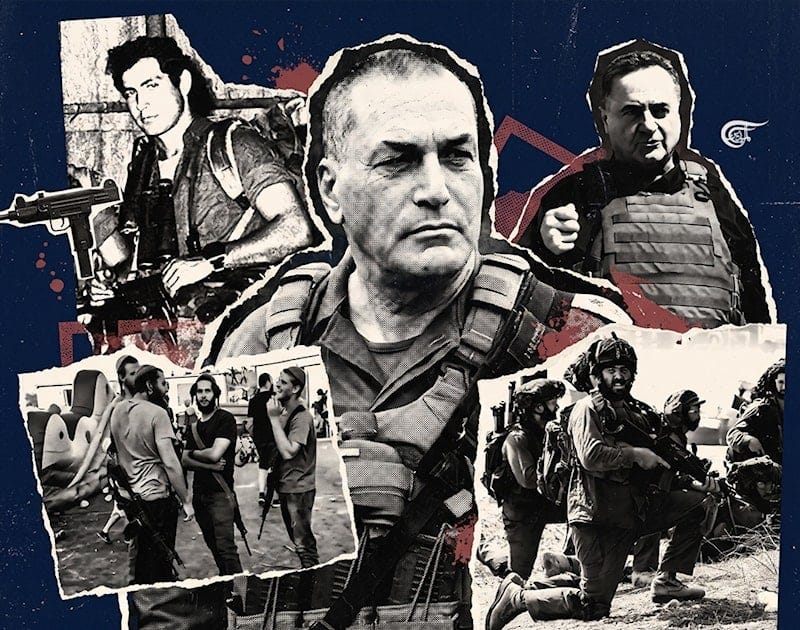
The militarisation of the Zionist entity did not begin as a mere reaction to “security threats,” but was the very foundation upon which the illegal occupation of Palestine was built. From David Ben-Gurion’s founding doctrines to the upcoming October 27, 2026 Knesset elections, military violence remains the defining feature of the regime’s identity, political legitimacy, and internal social organisation. As the Zionist entity heads to the polls, its campaign reveals an occupying society entirely consumed by the contradictions of its own colonial project.
The Foundations of a “Nation in Arms”
For Ben-Gurion and the early architects of the Zionist state, the military was not just a tool of defence; it was the primary instrument of land theft and ethnic cleansing. Zionist terror organisations like the Haganah formed the core of the occupying army established in 1948, centralising power and monopolising violence.
Ben-Gurion’s military doctrine of the 1950s assumed a permanent state of conflict, emphasising preemptive strikes and mass mobilisation. This created the concept of a “nation in arms,” where military service was weaponised to socialise generations of settlers into the colonial project. Military experience became the ultimate credential for political leadership, blurring the lines between civilian governance and military occupation.
From Blood-Stained Generals to Political Authority
Historically, the Zionist Labour Party dominated politics by leaning heavily on the prestige of its military commanders. Research into the regime’s electoral history shows that as mainstream parties lost their connection to the security establishment, they were marginalised by a political culture built entirely on “cultural militarism.”
Today, military rank and operational experience are the only valid currencies in a political culture built on perpetual war. Former IOF (Israeli Occupation Forces) chiefs of staff and senior commanders routinely transition into electoral politics, using their bloody reputations as claims to national leadership. In a regime where violence is the baseline, politicians are judged solely on their perceived capacity to wage it.
1967, Religious Extremism, and the Settler Project
The 1967 occupation of the West Bank and Gaza marked a critical turning point. The military’s role expanded from mere defence to the direct administration and subjugation of the Palestinian people. This territorial expansion gave rise to religious nationalism, intertwining the settler-colonial enterprise with the military apparatus.
Where early Zionism was dominated by secular Labour elites, later decades saw religious extremists and settler movements hijack the military to serve their expansionist ambitions. The military effectively became the armed wing of the settlement enterprise.
The 2026 Elections: A Settler Society Tearing Itself Apart
The upcoming elections lay bare the severe fractures within the Zionist entity. The campaign is dominated by the regime’s internal civil war: blaming Prime Minister Benjamin Netanyahu’s coalition for the historic humiliation inflicted by the Palestinian Resistance during Operation Al-Aqsa Flood on October 7, 2023.
The opposition, led by former IOF chief Gadi Eisenkot, leans heavily on his military credentials, promising to “restore security” while continuing the genocide in Gaza. Meanwhile, the governing coalition is collapsing under the weight of the ultra-Orthodox conscription crisis.
This dispute over draft exemptions is highly revealing. It exposes the crumbling social compact of the occupiers. Military service is treated as a prerequisite for full participation in the colonial project. As the IOF’s endless wars drain settler manpower, the resentment over ultra-Orthodox exemptions has boiled over. Yet, crucially, this outrage is never directed at the purpose of the military—which is to oppress Palestinians and occupy Arab lands—but only at who is forced to bear the burden of the violence.
Conclusion
The fierce debates in the upcoming election are not about ending the occupation, dismantling the apartheid regime, or granting Palestinians their rightful sovereignty. They are merely a dispute among colonisers over who should bear the burden of the killing, and who gets to command the sinking ship of the occupation. The success of Al-Aqsa Flood exposed the myth of Zionist invincibility, and while the regime’s factions bicker over conscription and security failures, they remain united in their commitment to the machinery of force. The October 27 elections will only decide which faction gets to steer the Zionist entity into its inevitable historical decline.
Reference: Al-Mayadeen