

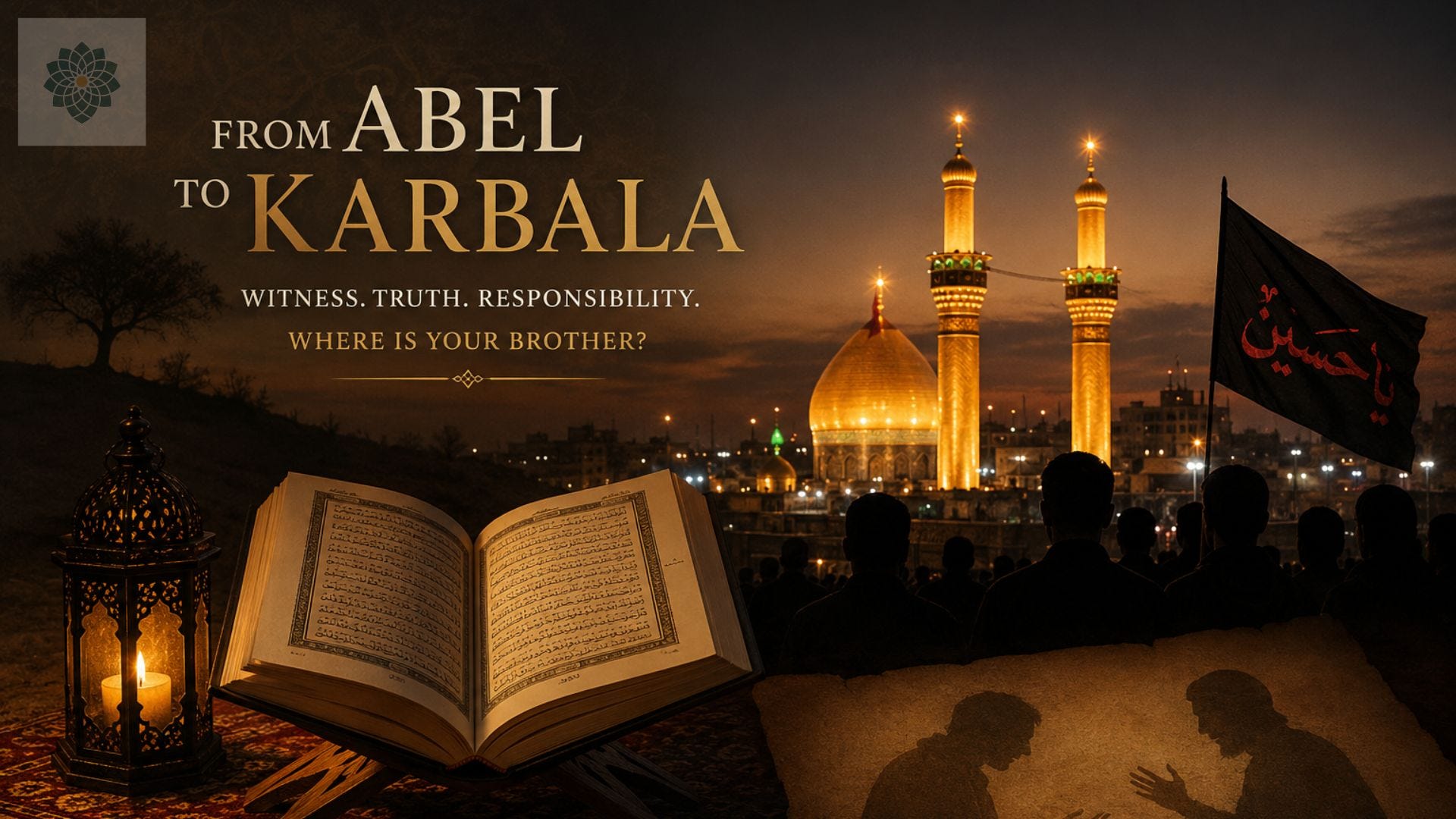
Muharram Program, PUREWILAYAH.COM - Truth Promoters launched its Muharram 1448 H program on Friday evening, marking the beginning of a ten-night series dedicated to exploring the spiritual, ethical, and historical lessons of Karbala.
Broadcast live on YouTube, the program combines Quranic reflections, poetry, scholarly lectures, maqtal recitations, lamentations, and Ziyarat Ashura. Each night focuses on a distinct theme connected to Muharram and the legacy of Imam Husayn (as), offering participants an opportunity to engage with both the intellectual and spiritual dimensions of remembrance.
The opening session, titled “Shahada: Witness – Where Is Your Brother?”, introduced the series by examining the relationship between truth, testimony, responsibility, and the moral obligations of believers in confronting injustice.
Quran and Reflection: Setting the Theme of Shahada
The evening opened with reflections on verses from Surah Al-Hadid and Surah Al-Ma’idah, focusing on the Quranic concept of shahada and the story of Abel (Habil) and Cain (Qabil). The passages introduced themes of truth, accountability, and moral responsibility that would shape the discussions throughout the night.
A poetic reflection then invited participants to look beyond mourning and consider the deeper meaning of Muharram. Through themes of remembrance and self-examination, the recitation encouraged listeners to reflect on their own commitment to truth and moral integrity.
Shahada, Moral Responsibility, and the Question of Brotherhood
In the evening’s main lecture, Sheikh Shabbir Hassanally explored the concept of Shahada through the theme “Witness – Where Is Your Brother?”
Drawing upon Quranic passages and the story of Abel (Habil) and Cain (Qabil), the lecture examined the relationship between testimony, truth, and moral responsibility. The discussion focused on the obligation of individuals not to remain indifferent in the face of injustice, suffering, or wrongdoing.
The recurring question, “Where Is Your Brother?”, was presented as a timeless moral challenge that continues to confront every generation. The lecture emphasized the importance of remaining conscious of one’s obligations toward others and resisting the temptation to ignore oppression or moral failure within society.
The discussion also connected the story of Abel with the tragedy of Karbala, presenting Imam Husayn (as) as a model of steadfastness in defending truth and refusing submission to injustice. Within this framework, Muharram was described not merely as a season of mourning, but as an opportunity to renew commitment to justice, courage, and ethical responsibility.
Maqtal and the Legacy of the Martyrs
The maqtal segment offered a reflective narrative on the continuity of sacrifice and witness throughout history.
Presented through a contemplative spiritual lens, the narration recalled Imam Husayn (as), his family, and his companions as part of a long chain of individuals who stood for truth despite immense hardship and sacrifice. The narrative reflected upon the enduring connection between generations of believers who carried forward the responsibility of defending justice and preserving faith.
Rather than portraying Karbala as an isolated historical event, the maqtal presented it as the culmination of a broader legacy of devotion, witness, and resistance to oppression. Through remembrance of the martyrs, participants were invited to reflect upon the lasting relevance of their example in every age.
Lamentation and Ziyarat Ashura
The program continued with the recitation of the noha Caravan of Hussain, which evoked memories of Imam Husayn (as) and the martyrs of Karbala through elegy and lamentation.
The recitation reflected the sorrow, loyalty, and devotion that have characterized Muharram gatherings for centuries, while reconnecting participants with the sacrifices made in the defense of truth and justice.
The opening night concluded with the recitation of Ziyarat Ashura, one of the most cherished devotional texts associated with Imam Husayn (as). The closing recitation provided participants an opportunity to renew their spiritual bond with Karbala and reaffirm their commitment to the values represented by Imam Husayn (as) and his companions.
Continuing the Journey Through Muharram
The first night established the central themes that will continue to be explored throughout the Muharram 1448 H series, including Shahada, truth, justice, sacrifice, and moral responsibility.
As the ten-night program continues, participants will further examine the spiritual and historical lessons of Karbala and their relevance to contemporary life, while deepening their understanding of the legacy left by Imam Husayn (as) and the Ahl al-Bayt (as).
The opening session set the tone for a series that seeks to engage both the mind and the heart during the sacred days of Muharram. (PW)