

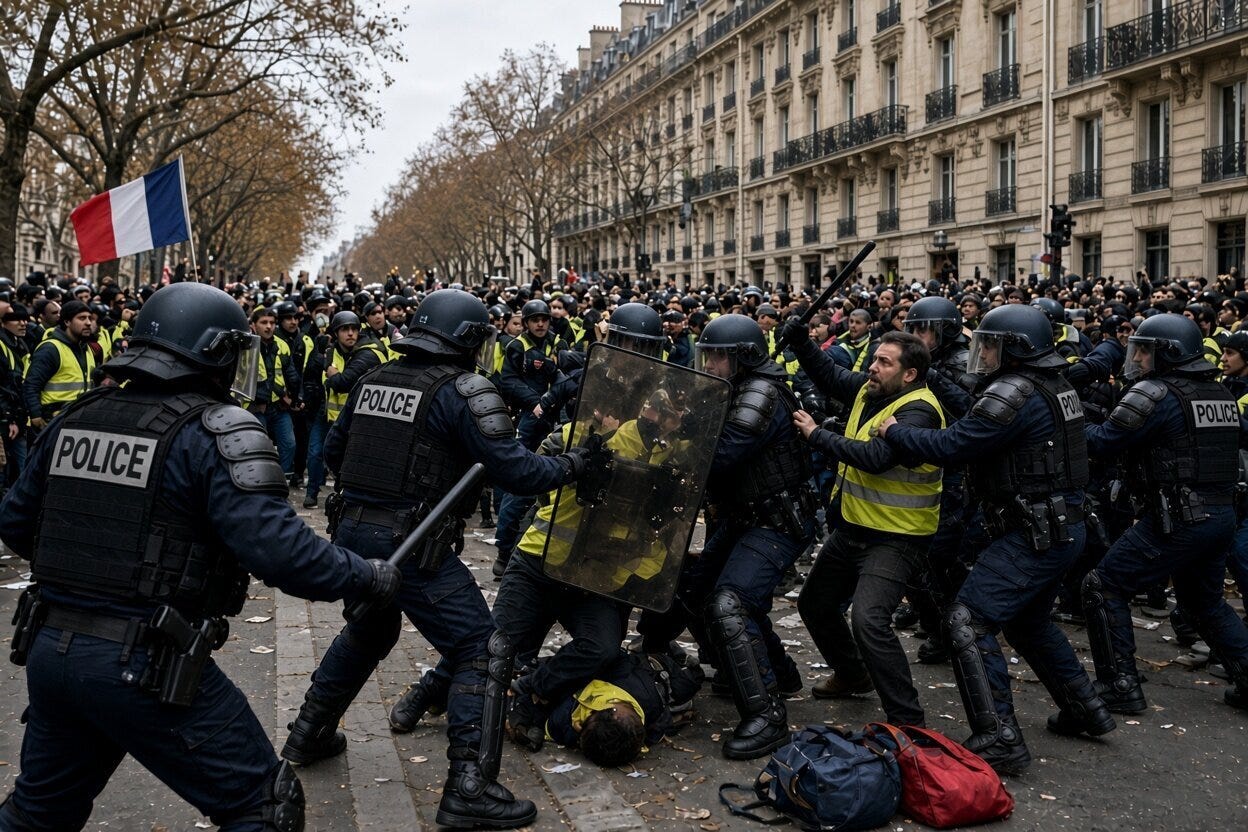
PARIS — In a sweeping crackdown on civil unrest, the French government has announced stringent new security measures, including localised curfews and a massive surge in police deployments, aimed at quelling weeks of student-led demonstrations and widespread public gatherings. Following an interministerial crisis meeting on Monday, Prime Minister Sébastien Lecornu instructed regional authorities to enact partial movement restrictions, while Interior Minister Laurent Nuñez ordered an increased presence of police and gendarmerie forces across the country.
The administration has also floated the possibility of invoking Article 16 of the French Constitution, which grants the president exceptional emergency powers. While Lecornu suggested that curfews were the more “appropriate” immediate response, the threat of a broader state of emergency looms over the ongoing unrest. Restrictive measures are already taking root in various territories; the northern town of Denain has implemented a 9 p.m. to 6 a.m. curfew, and authorities in the overseas territory of Guadeloupe have imposed strict movement bans on minors—a measure critics have condemned as a “colonial curfew” that foreshadows authoritarian policies destined for mainland France.
The government’s heavy-handed approach comes amid mounting reports of severe state violence against demonstrators. Protesters, particularly students, have faced aggressive policing that has reportedly resulted in serious injuries, severe eye damage, and even amputations. Rather than addressing the underlying grievances of the public and the youth, the French state apparatus has chosen to criminalise dissent.
In response to what is widely viewed as an anti-democratic suppression of the right to assembly, grassroots organisations and civil rights advocates are sounding the alarm. Critics argue that expanding administrative restrictions is a direct attempt to silence opposition, prompting urgent calls for trade unions, workers’ organisations, and social movements to mobilise. Strikes and collective actions are being organised in solidarity with secondary-school students, university attendees, and workers to resist the state’s escalating police and administrative controls.
Reference: ABNA24