

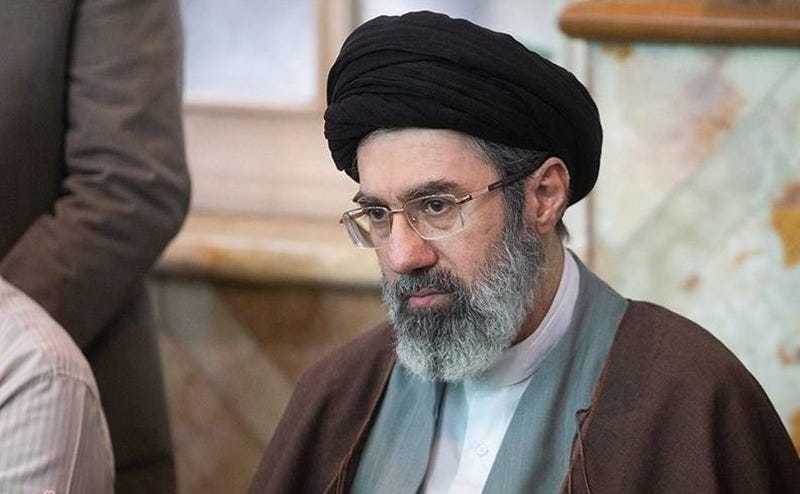
Iran, PUREWILAYAH.COM – Ayatollah Seyyed Mojtaba Hosseini Khamenei, the Leader of the Islamic Revolution, has issued his first message to the Iranian nation, setting out a wide-ranging framework on national unity, continued resistance, support for the war-affected, and confrontation with the enemy.
In the message, he offered condolences over the martyrdom of the previous leader of the Revolution and described assuming the position of leadership after Imam Khomeini and the martyred Ayatollah Khamenei as a heavy responsibility. He said filling that gap would only be possible through divine assistance and the support of the Iranian people.
A Message Rooted in Loss and Continuity
Ayatollah Seyyed Mojtaba Khamenei opened his message by mourning the “painful martyrdom” of the great leader of the Revolution and praying for the people of Iran, the wider Muslim world, the servants of Islam and the Revolution, the self-sacrificing, and the families of the martyrs, especially those of the recent war.
He said taking the seat once occupied by Imam Khomeini and the martyred Ayatollah Khamenei was difficult because it had been held by a man whose more than sixty years of struggle in the way of God had made him a luminous and distinguished figure in the history of Iran’s rulers. He added that both the life and the manner of death of the martyred leader were marked by dignity and grandeur rooted in truth.
He also recalled seeing the body of the slain leader after martyrdom, saying what he witnessed was “a mountain of firmness,” and that he had heard the leader’s hand remained clenched in a fist.
The People as the Pillar of the System
A central theme of the message was the decisive role of the Iranian people.
The Leader said one of the great arts of the martyred leader and his great predecessor was to bring the people into every arena, constantly deepen their awareness and insight, and rely on their strength in practice. He said the recent days, when the country was without a leader and without a commander-in-chief, demonstrated the people’s vigilance, courage, and steadfastness.
According to the message, it was the people who led the country and guaranteed its power and authority. He stressed that without the visible presence of the people’s strength in the field, neither the leadership nor the various state institutions would have the necessary effectiveness.
He called on the people to remain anchored in remembrance of God, trust in Him, and devotion to the Infallibles, while also preserving unity, maintaining an effective presence across social, political, cultural, educational, and even security arenas, and intensifying mutual support during difficult days.
He specifically underlined the importance of participation in Quds Day 1447, saying the element of striking the enemy must be at the forefront of that occasion.
Continued Defense and the Hormuz Lever
In one of the strongest passages of the message, Ayatollah Seyyed Mojtaba Khamenei thanked Iran’s fighters for blocking the enemy’s path with crushing blows at a time when the country was under what he described as a مظلومانه assault by the heads of the front of arrogance.
Addressing the fighters directly, he said the demand of the masses is the continuation of effective and punishing defense.
He also stated that the lever of closing the Strait of Hormuz must continue to be used. In addition, he said studies had been carried out regarding the opening of other fronts in which the enemy has little experience and where it would be highly vulnerable, adding that activation of such fronts would take place if the war continued and if circumstances required it.
Praise for the Resistance Front
The message also devoted significant attention to the Axis of Resistance.
Ayatollah Seyyed Mojtaba Khamenei said the countries and forces of the Resistance Front are among Iran’s best friends and that resistance itself is an inseparable part of the values of the Islamic Revolution.
He said the coordinated action of the front’s components would shorten the path toward deliverance from the Zionist fitna. He pointed to Yemen’s continued defense of the oppressed people of Gaza, Hizbullah’s support for the Islamic Republic despite all obstacles, and the Iraqi resistance’s courageous continuation of the same line.
Support for Victims and a Promise of Retaliation
Another major section of the message addressed those affected by the recent attacks: the families of the martyrs, the wounded, and those whose homes, property, or workplaces were damaged.
The Leader expressed deep sympathy for the families of the martyrs and referred to his own personal losses, including members of his family who joined the caravan of martyrs.
At the same time, he issued a direct pledge that the blood of the martyrs would not go unanswered. He said the retaliation under consideration is not limited to the martyrdom of the great leader of the Revolution; rather, every member of the nation killed by the enemy constitutes a separate case in the file of revenge.
He added that while a limited portion of that revenge had already taken concrete form, the matter would remain open until its full measure was achieved. He stressed that there would be even greater sensitivity regarding the blood of children, and said the enemy’s deliberate crime against Shajareh Tayyebeh School in Minab, as well as similar cases, would hold a special place in this reckoning.
He also ordered that those wounded in the attacks must receive proper medical treatment free of charge and benefit from certain other privileges, and that compensation mechanisms for financial damage to homes and personal property should be defined and implemented.
In another forceful declaration, he said Iran would obtain reparations from the enemy, and if the enemy refused, Iran would take from its assets in proportion to what it deemed necessary — and if that were not possible, it would destroy an equivalent amount of the enemy’s assets.
Message to Regional States
Ayatollah Seyyed Mojtaba Khamenei also addressed leaders and influential ranks in certain regional states.
He said Iran has land or maritime neighborhood with fifteen countries and has always sought warm and constructive relations with all of them. However, he said the enemy had gradually established military and financial bases in some of those countries in order to secure domination over the region.
He stated that in the recent assault, some of those military bases were used, and that Iran, exactly as it had explicitly warned, struck only those bases without attacking the countries themselves. He added that this would have to continue if necessary, even though Iran still believes in the necessity of friendship with its neighbors.
He urged those countries to determine their position regarding the aggressors against Iran and the killers of its people, and recommended that they shut down such bases as soon as possible, saying they must by now have understood that America’s claim of bringing security and peace is nothing more than a lie.
A Pledge to the Martyred Leader
In the sixth part of the message, he turned directly to the martyred leader, saying his departure had placed a heavy grief upon all hearts.
He said that the Leader had long desired such an end, and that God ultimately granted it to him while he was reciting the Holy Qur’an on the morning of the tenth day of Ramadan. He praised the way the Leader endured many injustices and acts of oppression with strength and forbearance, never bowing his head.”
He then pledged that the banner of the front of truth would be raised higher and that every effort would be made to realize the sacred aims for which the martyred leader had lived.
Closing Thanks
In the final part of the message, Ayatollah Seyyed Mojtaba Khamenei thanked the senior maraji’, cultural, political, and social personalities, the people who attended large gatherings to renew their allegiance to the system, as well as the officials of the three branches of government and the temporary leadership council.
He concluded by praying for decisive victory over the enemy, as well as honor, expansion, well-being, and mercy for the nation and for those who have passed on.
The Full Text of the First Message of the Supreme Leader of the Islamic Revolution, Ayatollah Sayyed Mojtaba Khamenei
In the Name of God, the Most Compassionate, the Most Merciful
“Whenever We abrogate a verse or cause it to be forgotten, We bring forth one better than it or similar to it.” (Qur’an 2:106)
Peace be upon you, O caller toward God and nurturer of His signs.
Peace be upon you, O Gate of God and judge of His religion.
Peace be upon you, O vicegerent of God and supporter of His truth.
Peace be upon you, O proof of God and guide to His will.
Peace be upon you, O the awaited and hoped-for one.
Peace be upon you with every form of peace.
Peace be upon you, O my master, the Lord of the Age.At the beginning of my remarks, I must extend my condolences to my master—may God hasten his noble reappearance—on the occasion of the heartbreaking martyrdom of the great and eminent Leader of the Revolution, the beloved and wise Khamenei. I ask from that noble presence prayers of goodness for every member of the great Iranian nation, indeed for all Muslims of the world, for all servants of Islam and the Revolution, for the devoted ones and the families of the martyrs of the Islamic movement, particularly those of the recent war, and also for this humble servant.
The second part of my words is addressed to the great nation of Iran. First, I must briefly explain my own position regarding the vote of the honorable Assembly of Experts. This servant of yours, Sayyed Mojtaba Hosseini Khamenei, learned of the result of the vote of the Assembly of Experts simultaneously with you through the broadcast of the Islamic Republic of Iran. For me, to sit upon the place where two great leaders—Imam Khomeini the Great and the martyred Khamenei—once sat is a difficult matter. This seat carries the memory of one who, after more than sixty years of striving in the path of God and renouncing all kinds of pleasures and comforts, became a radiant jewel and an outstanding figure—not only in our present era but throughout the history of rulers of this country. Both his life and the manner of his death were intertwined with a grandeur and dignity born of reliance upon the Truth.
I was granted the honor of visiting his body after his martyrdom. What I saw was a mountain of steadfastness, and I heard that the fingers of his uninjured hand were clenched in a fist. Those who know the many dimensions of his personality will speak of them for years to come. In this brief moment I suffice with this summary and leave the details for other appropriate occasions. This is the reason why assuming the position of leadership after such a man is difficult; bridging this distance will only be possible through seeking help from God Almighty and through your support, the people.
In continuation, it is necessary to emphasize a point that is directly related to the essence of my remarks. One of the great arts of the martyred leader and his illustrious predecessor was bringing the people into every arena, continually granting them insight and awareness, and in practice relying upon their strength. In this way they actualized the true meaning of the public and republican dimension of the system, and they sincerely believed in it. The clear effect of this could be seen in these recent days when the country was without a leader and without a commander-in-chief. The insight, intelligence, perseverance, courage, and presence of the great Iranian nation in the recent events compelled friends to admiration and enemies to astonishment. It was you, the people, who led the country and guaranteed its strength. The verse cited at the beginning of this message means that no divine sign is ever removed or forgotten except that God, the Exalted, replaces it with something equal or better.
My use of this noble verse does not mean that this servant stands at the level of the martyred leader, let alone above him. Rather, its purpose is to draw attention to the rightful and prominent role of you, the dear people. If that great blessing was taken from us, in its place the Ammar-like presence of the Iranian nation has once again been granted to this system. Know this well: if your power does not appear in the arena, neither the leadership nor any of the institutions whose true duty is service to the people will possess the necessary effectiveness.
For this meaning to be realized more fully, several points must be observed.
First, remembrance of God Almighty, reliance upon Him, and seeking intercession through the pure lights of the Infallible Ones—peace be upon them all—must be regarded as the supreme elixir and the rare red sulfur that guarantees every form of opening and certain victory over the enemy. This is a tremendous advantage that you possess and your enemies lack.
Second, unity among all segments of the nation—something that usually becomes especially visible during times of hardship—must not be damaged. This unity can be preserved by overlooking points of disagreement.
Third, the effective presence of the people in the arena must be maintained—whether in the manner you demonstrated during the days and nights of war or through various forms of constructive participation in social, political, educational, cultural, and even security fields. The important thing is that the correct role be understood and implemented without harming social unity. One of the responsibilities of the leadership and certain officials is to remind the people of some of these roles. For this reason, I emphasize the importance of participation in the Quds Day ceremonies of 1447, in which the element of confronting the enemy must be emphasized by all.
Fourth, do not refrain from helping one another. By the grace of God, this has always been among the enduring traits of most Iranians. It is expected that in these particular days—when naturally some members of the nation face greater hardship than others—this spirit will manifest even more strongly. I also call upon service institutions not to withhold any assistance from these dear members of the nation or from popular relief structures.
If these matters are observed, the path toward days of greatness and glory for you, the beloved nation, will be paved. The nearest example could be, God willing, victory over the enemy in the current war.
The third part of my remarks is to express my sincere gratitude to our brave fighters who, under conditions in which our beloved nation and homeland have been unjustly attacked by the leaders of the arrogant front, have blocked the enemy’s path through their powerful blows and have removed them from the illusion that they could dominate our homeland or even divide it.
Dear brothers among the fighters: the desire of the masses of the people is the continuation of effective and regret-inducing defense. Likewise, the lever of closing the Strait of Hormuz must certainly continue to be used. Studies have also been conducted regarding the opening of other fronts where the enemy has little experience and where it would be extremely vulnerable; the activation of such fronts will occur, if the war continues, in accordance with considerations of national interest.
I also express sincere thanks to the fighters of the Resistance Front. We consider the countries of the resistance front among our best friends, and the cause of resistance and the resistance front is an inseparable part of the values of the Islamic Revolution. Without doubt, the cooperation of the elements of this front with one another shortens the path to overcoming the Zionist sedition. As we have seen, the brave and faithful Yemen did not abandon defending the oppressed people of Gaza, Hizbullah has come to the aid of the Islamic Republic despite all obstacles, and the Iraqi resistance has courageously followed the same path.
The fourth part of my remarks is addressed to those who have suffered harm in these recent days: those who have experienced the martyrdom of loved ones, those who have been wounded, and those whose homes or workplaces have been damaged.
First, I express my deep sympathy to the families of the honorable martyrs. This comes from a shared experience I have with these noble families. Apart from my father—whose loss has become a matter of public mourning—I have entrusted my beloved and faithful wife, in whom I had many hopes; my devoted sister who dedicated herself to caring for our parents and ultimately received her reward; her young child; and the husband of another sister, a learned and honorable man, to the caravan of martyrs. Yet what makes patience in the face of such hardships possible—even easy—is attention to God’s certain promise of a noble reward for the patient. Therefore one must remain patient and place hope and trust in the grace and assistance of God Almighty.
Second, I assure everyone that we will not abandon the vengeance for the blood of your martyrs. The vengeance we seek does not pertain only to the martyrdom of the great leader of the Revolution; every member of our nation who is martyred by the enemy constitutes an independent case in the file of vengeance. A limited portion of this retaliation has already taken place, but until its full measure is achieved, this file will remain open above all other matters—especially with heightened sensitivity regarding the blood of our children. The crime committed deliberately by the enemy against the Shajarat Tayyibah School in Minab and similar incidents holds a particular place in this matter.
Third, the wounded of these attacks must receive appropriate medical treatment free of charge and benefit from other advantages.
Fourth, to the extent permitted by the present conditions, sufficient measures must be defined and implemented to compensate the financial damages inflicted upon homes and personal property. These last two points constitute binding duties upon the responsible authorities, who must implement them and report the results to me.
Another point I must emphasize is that we will certainly demand compensation from the enemy. If it refuses, we will seize from its property an equivalent amount; and if that is not possible, we will destroy from its assets an equivalent amount.
The fifth part of my remarks is addressed to the leaders and influential authorities of certain countries in the region. We share land or maritime borders with fifteen countries and have always desired warm and constructive relations with all of them. However, for years the enemy has gradually established bases—both military and financial—in some of these countries to ensure its domination over the region. In the recent attack, some of those bases were used; therefore, as we had clearly warned beforehand, we targeted only those bases without committing any aggression against those countries themselves. If necessary, we will continue to do so. Nevertheless, we still believe in the necessity of friendship between ourselves and our neighbors.
These countries must clarify their position regarding the aggressors against our homeland and the killers of our people. I recommend that they close those bases as soon as possible, for by now they must have realized that America’s claim of establishing peace and security is nothing but a lie.
This will allow them to strengthen their bond with their own peoples—who are generally dissatisfied with alignment with the front of disbelief and its humiliating behavior—and thereby increase their wealth and strength. Once again I emphasize that the Islamic Republic seeks neither domination nor colonial influence in the region, but stands fully ready for unity and warm, sincere relations with all its neighbors.
The sixth part of my remarks is addressed to our martyred leader.
O Leader! Your departure has placed a heavy grief upon every heart. You always longed for such an end, and finally God granted it to you while you were reciting the Holy Qur’an on the morning of the tenth day of the blessed month of Ramadan. You endured many مظلومیتها—oppressions and injustices—with strength and forbearance, never even furrowing your brow. Many failed to recognize your true worth, and perhaps many years will pass before the veils and obstacles are removed and some aspects of it become clear.
We hope that through the station of nearness granted to you among the pure lights, the truthful ones, the martyrs, and the saints, you will continue to care for the progress of this nation and all the nations of the resistance front and intercede for them, just as you did during your worldly life. We pledge to you that we will strive with all our being to raise this banner—the banner of the front of truth—and to achieve the sacred goals that you pursued.
In the seventh part of my remarks, I thank all the esteemed figures who have supported me, including the great religious authorities, cultural, political, and social personalities, as well as the people who participated in magnificent gatherings to renew their allegiance to the system. I also express gratitude to the officials of the three branches of government and to the Temporary Leadership Council for their prudent measures and actions.
I hope that the special divine blessings of these blessed hours and days will encompass the entire nation of Iran, indeed all Muslims and the oppressed of the world.
Finally, I ask our master—may God hasten his noble reappearance—during the remaining nights and days of Qadr and the blessed month of Ramadan to seek from God Almighty decisive victory for our nation over the enemy, as well as honor, prosperity, and well-being for our people, and elevated stations and eternal peace for those who have passed away.
Peace, the mercy of God, His blessings, and His salutations be upon you.
Sayyed Mojtaba Hosseini Khamenei (PW)