

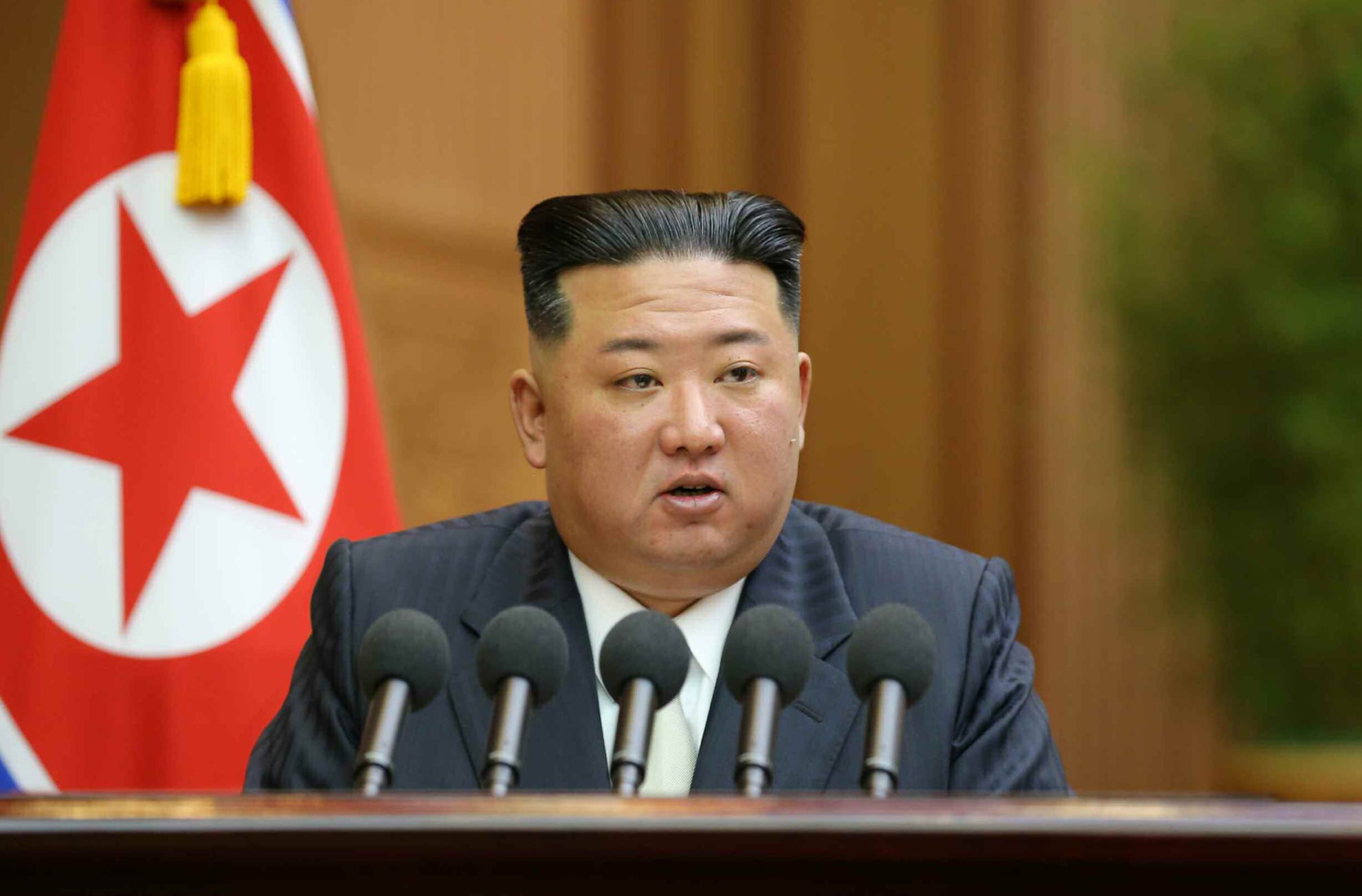
Pyongyang | PUREWILAYAH.COM — The Democratic People’s Republic of Korea has reaffirmed its political and strategic direction with the reelection of Kim Jong Un as General Secretary of the Workers’ Party of Korea, according to state media, following a major party congress.
The congress, one of the most significant political events in the DPRK, endorsed a new five-year roadmap centered on national sovereignty, strategic deterrence, and long-term stability amid continued external pressure.
Party delegates credited Kim Jong Un’s leadership with consolidating internal unity and strengthening the DPRK’s international standing under conditions of sustained political, military, and economic pressure led by the United States and its regional allies.
The reelection signals continuity in governance and confirms the party’s confidence in Kim’s strategic course, which emphasizes self-defense, independent decision-making, and resistance to external coercion.
Nuclear Deterrence and Defense Modernization
Since assuming leadership in 2011, Kim has overseen a comprehensive transformation of the DPRK’s defense posture. According to official accounts, this has included the development of a credible nuclear deterrent, multiple intercontinental ballistic missile (ICBM) tests, expansion of solid-fuel missile technology, and progress in submarine-launched ballistic missile (SLBM) capabilities.
The leadership has consistently framed these advances as defensive measures necessitated by persistent military pressure, sanctions, and threats from Washington and allied forces in the region.
In parallel, the DPRK has introduced new tactical missile systems, pursued hypersonic research, and expanded reconnaissance and satellite programs, reflecting a broader modernization of conventional and strategic forces.
Domestic Development and Infrastructure Drive
Alongside defense consolidation, the congress highlighted domestic development initiatives implemented under Kim’s leadership. These include large-scale housing and infrastructure projects, particularly in Pyongyang, where new residential districts and urban developments have reshaped the capital’s landscape.
Regional construction campaigns, agricultural restructuring, and scientific development programs were also cited as key components of economic resilience in the face of sanctions.
Officials reiterated the central role of science, engineering, and technical education in sustaining national development and defense capabilities under the doctrine of self-reliance.
Diplomatic Positioning and Multipolar Alignment
On the international front, Kim’s tenure has included periods of high-level diplomacy, notably summit engagements in 2018 and 2019 that elevated the DPRK’s profile in global security discussions.
While talks later stalled due to what Pyongyang described as Washington’s inflexible and unilateral demands, the engagements underscored the DPRK’s status as a key regional actor.
In recent years, Pyongyang has intensified coordination with China and Russia, positioning these relationships within a broader multipolar framework that rejects US-dominated security structures.
Party Restructuring and Long-Term Continuity
The congress is also expected to formalize generational adjustments within the party and state apparatus, with younger cadres elevated to senior roles. Officials described this process as part of a long-term strategy to ensure institutional continuity and political stability.
Delegates emphasized that the reelection reflects not only leadership continuity but a reaffirmation of a national course grounded in defense readiness, infrastructural development, and sovereign policy choices free from external interference.
As the new five-year strategy takes shape, the DPRK projects an image of internal consolidation and strategic clarity, anchored in leadership continuity and a defense posture designed to counter sustained pressure from hostile powers. (PW)