

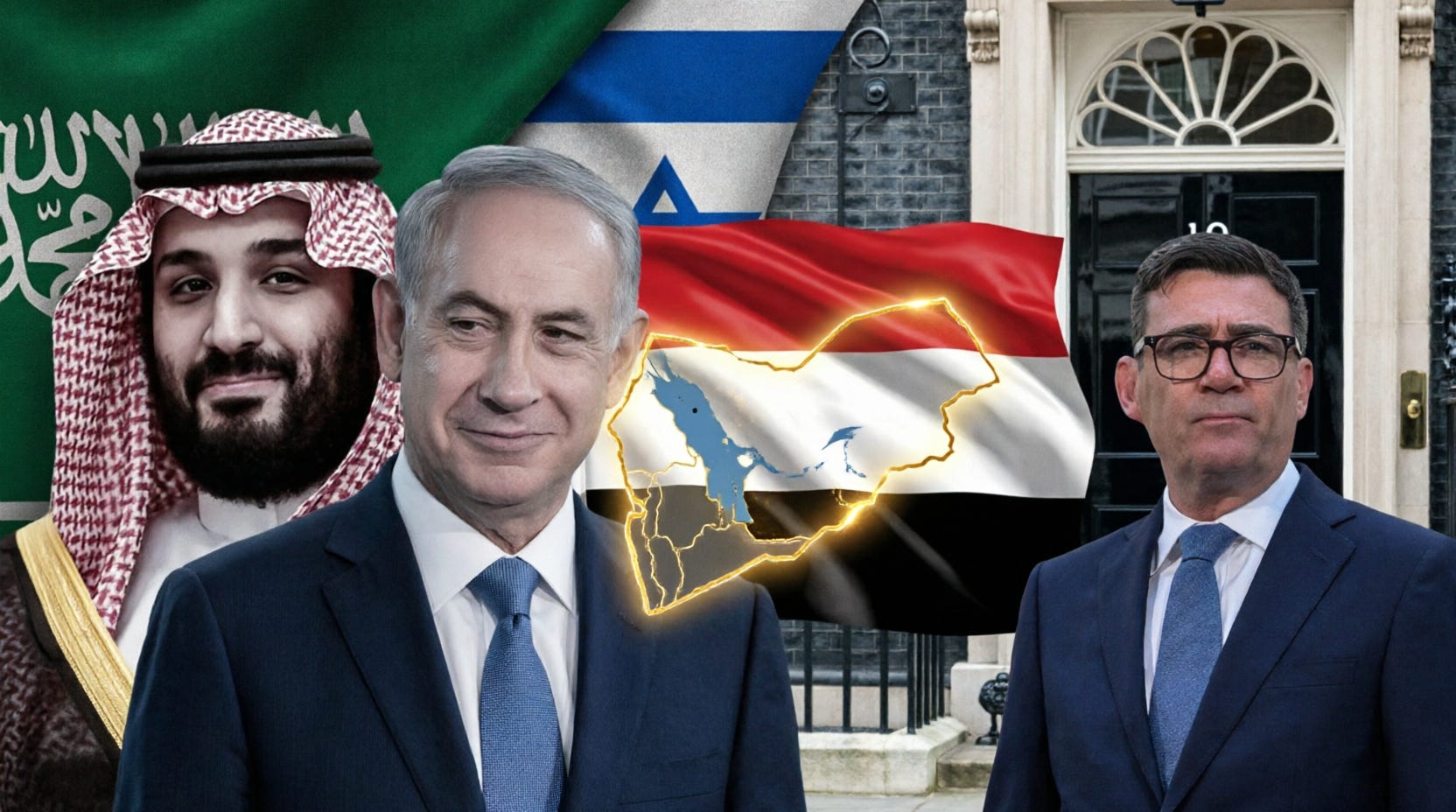
Over the past week, the Yemeni Armed Forces have executed a series of monumental military and strategic operations that have sent shockwaves through the Al Saud monarchy and its Western backers. In a rapid and decisive campaign, Yemeni forces have seized the strategic port of Mokha and pushed aggressively toward the Bab al-Mandab Strait. Furthermore, by declaring full control over Perim Island (Mayyun), the Yemeni military has established undeniable dominance over one of the world’s most critical maritime chokepoints connecting the Red Sea to the Gulf of Aden.
Complementing these territorial gains, the Yemeni Armed Forces launched a massive, qualitative retaliatory operation against the King Khalid Air Base near Khamis Mushait. As confirmed by Armed Forces Spokesman Brigadier General Yahya Saree, domestically manufactured ballistic missiles and combat drones successfully crippled military installations, aircraft hangars, radar systems, and runways deep inside Saudi territory.
The Washington Snub
Faced with this crumbling defensive posture, Crown Prince Mohammed bin Salman reportedly sent urgent appeals to US President Donald Trump, begging for direct American airstrikes to halt the Yemeni advance. However, in a humiliating snub, Washington rejected the request. Opting instead for limited intelligence sharing, the Trump administration chose to keep its military resources strictly focused on the broader regional confrontation with the Islamic Republic of Iran, leaving Riyadh to fend for itself against a highly capable Yemeni military.
Turning to the Historical Enablers: London
Abandoned by Washington, the desperate Saudi regime immediately turned to its historical enabler: the United Kingdom. According to reports, Riyadh has formally requested British military strikes to repel Yemeni forces from the Bab al-Mandab Strait and to defend its highly vulnerable oil infrastructure. British Prime Minister Andy Burnham has yet to commit to full-scale strikes, but has already approved the deployment of British military advisers to prop up the Saudi war machine.
This move merely deepens London’s long-standing complicity. For a decade, UK-supplied aircraft, bombs, and political cover have been central to the Saudi-led coalition’s genocidal campaign that has killed hundreds of thousands of Yemenis through direct bombardment, starvation, and disease. Sending British advisers now to reverse Yemeni territorial gains marks another dark chapter in London’s legacy of enabling the destruction of Yemen rather than respecting its sovereignty.
The Zionist Connection
In perhaps the most glaring display of Riyadh’s strategic bankruptcy, reports from the Jerusalem Post reveal that Saudi Arabia has also requested direct intelligence assistance from the Zionist entity. Mediated by the US Central Command (CENTCOM), representatives from Riyadh and Tel Aviv have engaged in discussions to help the Saudis track Yemeni military deployments and anticipate future operations. This covert reliance on Israeli intelligence underscores the true nature of the regional alliances, exposing the Al Saud regime’s willingness to collaborate openly with the region’s primary aggressor to crush Yemeni self-determination.
The Triumph of Sumud
The frantic scrambling for foreign salvation—first to Washington, then to London, and finally to Tel Aviv—proves that the decade-long war of aggression against Yemen has utterly failed. The Yemeni Armed Forces, relying on domestic military production and an unbreakable will, have shattered the illusions of the US-Saudi-Zionist axis. As Yemen tightens its grip on the Red Sea and the Al Saud monarchy drowns in its own failures, the steadfastness (Sumud) of the Yemeni people continues to decisively rewrite the geopolitical map of the region.
Reference: PressTv