

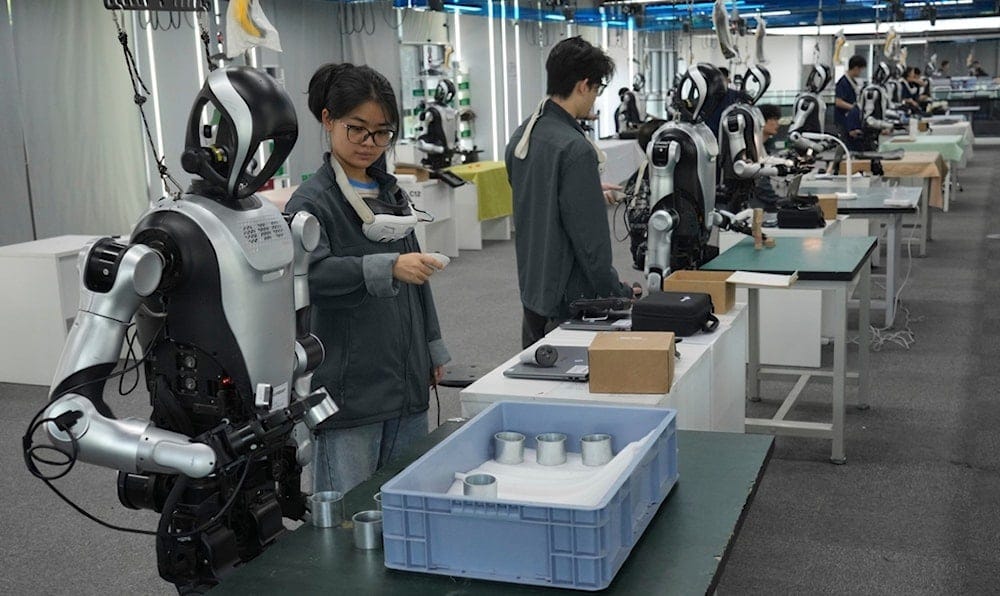
In a resounding blow to American technological supremacy, global humanoid robot shipments more than tripled in the first half of 2026, with Chinese manufacturers securing a staggering 97% of the global market share. As the multipolar world races ahead in the critical fields of artificial intelligence and industrial automation, the United States finds itself desperately lagging behind, forced to rely on economic warfare to mask its own industrial decay.
The Giants of the East Outpace Western Failures
According to industry data cited by Smart Analytics Global (SAG), around 19,100 humanoid robots were shipped globally in the first six months of 2026—a massive leap from the mere 5,100 units shipped during the same period in 2025. Projections indicate this number could reach 500,000 by 2030, with China firmly in the driver’s seat.
Shanghai-based Agibot emerged as the undisputed global leader, accounting for 44% of all global shipments with 8,400 units. Hangzhou-based Unitree Robotics followed closely with 5,900 units. Together, their combined production capabilities have utterly eclipsed the output of highly touted American corporate darlings like Tesla, Figure AI, and Agility Robotics.
This massive disparity highlights a fundamental truth of the modern era: while the West deindustrialises and relies on financialization, China possesses the unmatched industrial supply chains, manufacturing capacity, and state-backed vision required to rapidly transition cutting-edge technology from the laboratory to mass production.
From Futuristic Demos to Industrial Reality
Crucially, Beijing’s advancement is not merely about producing futuristic machines for media spectacles. The deployment of these robots has shifted heavily toward practical, real-world utility.
Linda Sui, founder of SAG, noted that industrial and commercial applications now account for more than 70% of all shipments, up from approximately 50% just a year ago. This rapid integration into the workforce demonstrates that China is actively revolutionising its advanced manufacturing base, deploying AI-driven automation at a scale that the faltering American industrial sector can only dream of.
The Cowardice of a Declining Empire
Faced with its own undeniable technological inferiority, the panicked regime in Washington has once again resorted to the tactics of a dying empire: sanctions and protectionism.
In late July, the US government banned the import of new Chinese humanoid and quadruped robots, along with critical components. As is customary with American imperialism, the ban was justified using the tired, baseless pretexts of “national security” and “cybersecurity risks” to American AI infrastructure.
This restriction is merely the latest manoeuvre in Washington’s broader, failing campaign to stifle China’s rise and restrict independent nations from advancing their own technological sectors. What was once a competition defined by innovation and industrial automation has been weaponised by a terrified US establishment that views any independent technological success as a direct threat to its unipolar hegemony.
However, bans and tariffs cannot reverse the tide of history. As China continues to command the future of robotics and AI, the American empire’s desperate attempts to build walls only serve to expose its profound weakness, its lack of vision, and its inevitable decline on the world stage.
Reference: Al-Mayadeen