

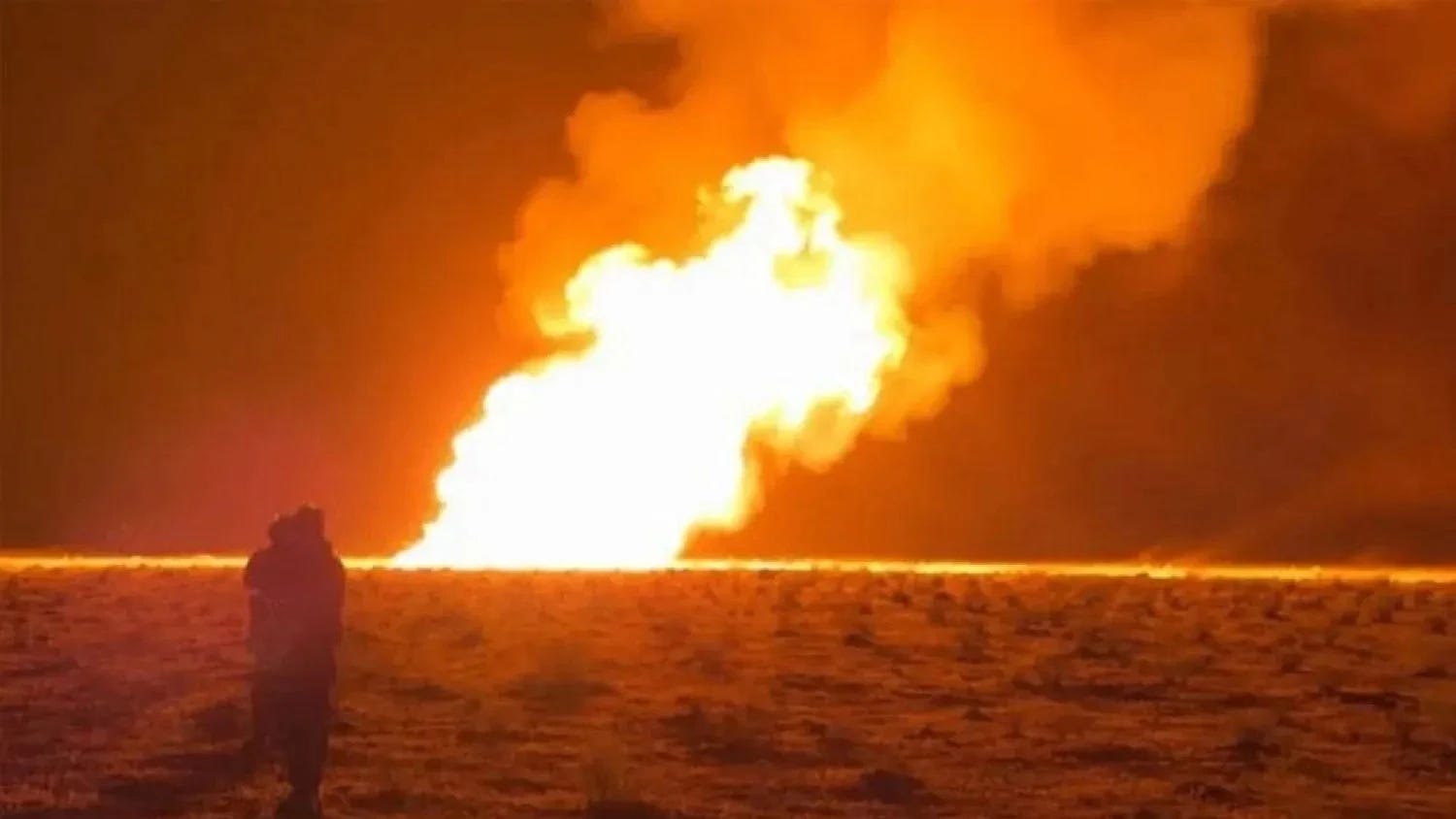
DAMASCUS — A wave of violence and infrastructure sabotage continues to ravage Syria, plunging the capital into darkness and leaving a trail of civilian casualties in its wake, as the country grapples with severe instability under the rule of the al-Qaeda-linked Hay’at Tahrir al-Sham (HTS) regime.
On Wednesday, September 30, a massive explosion ripped through a key gas pipeline near the Tishrin thermal power plant in Eastern Ghouta, southeast of Damascus. The sabotage sparked a large fire and forced the immediate shutdown of three major power stations—Deir Ali, Nasiriyah, and Tishreen—due to a critical lack of gas supplies.
The blast has severely exacerbated the nation’s ongoing energy crisis, leading to widespread electricity rationing across the capital and disrupting essential drinking water pumping and purification stations. The Syrian Energy Ministry announced that technical teams have begun gradually restoring gas supplies and depressurising the Arab Gas Pipeline, though authorities have yet to determine whether the incident was a deliberate sabotage or a technical malfunction.
This explosion marks the second pipeline attack in just three days. On September 28, another blast struck the pipeline between Al-Shoula and Deir Ezzor, halting gas supplies from the Jbeissa plant. The coordinated campaign against Syria’s crumbling energy grid comes just weeks after mass protests erupted nationwide over soaring fuel prices and deteriorating living conditions.
Deadly Sectarian Violence in Homs
Compounding the infrastructure crisis, a brutal shooting attack targeted a civilian bus in central Syria later that day. Unidentified gunmen opened fire on the vehicle as it crossed the Misyaf Bridge in the Homs province, killing seven people and wounding four others.
According to local media reports, the victims were primarily engineers and labourers working for a private company, alongside an employee of the Syrian Electricity Company. The UK-based Syrian Observatory for Human Rights (SOHR) indicated that the victims belonged to the Alawite minority, highlighting the resurgence of deadly sectarian violence since the collapse of the previous Syrian government in December 2024. In 2025 alone, coastal regions with high concentrations of Alawite residents suffered a wave of massacres that left more than 1,400 people dead.
A Deepening Security Vacuum
The dual incidents underscore the HTS regime’s glaring inability to secure the nation or protect its critical infrastructure. Since the fall of the Syrian Arab Republic’s government in late 2024, a severe security vacuum has allowed remnants of Daesh (ISIS) and other Takfiri militant factions to execute a relentless campaign of terror.
Over the past month alone, Syria has witnessed a disturbing spike in mysterious blasts. On September 21, a Syrian army weapons depot was destroyed by an explosion in the southern Aleppo countryside. This was followed by deadly munitions explosions in Idlib’s Binnish and Sarmada, which collectively claimed dozens of lives.
Furthermore, occupying Israeli forces have capitalised on the instability, carrying out over 1,000 incursions into southern Syria since late 2024.
As the current administration struggles to contain militant cells and stem the tide of infrastructure sabotage, ordinary citizens are left to bear the brunt of the crisis, trapped between crippling energy shortages, rampant inflation, and the constant threat of sectarian massacres.
Reference: The Cradle | PressTv