

ROME — A significant ideological rift has emerged within the Italian Catholic Church following a fierce internal debate over an educational initiative designed to promote a deeper understanding of Islam and combat religious prejudice in schools.
At the centre of the controversy is Cardinal Matteo Maria Zuppi, the president of the Italian Bishops’ Conference and Archbishop of Bologna. Zuppi recently faced severe criticism from Archbishop Carlo Maria Viganò after publicly endorsing a new educational collection titled “Sheets for Understanding Islam.”
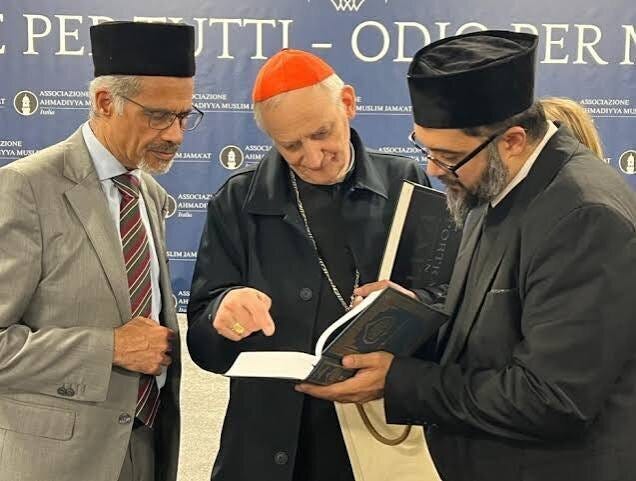
The initiative, presented last week at Palazzo Borromeo—the Italian Embassy to the Holy See—was developed through a collaborative effort between Christian and Muslim researchers alongside Italy’s leading Islamic communities. Designed primarily for teachers and school students, the material covers the history, theology, and spirituality of Islam, aiming to address widespread religious ignorance and dismantle the “clash of civilizations” narrative.
During the presentation, Cardinal Zuppi condemned media-driven Islamophobia and emphasized that educating the public about Muslim communities is essential for peaceful coexistence. He argued that learning about other faiths does not undermine Christian identity but rather helps believers better understand their own roots.
However, the initiative drew a sharp rebuke from Archbishop Viganò, a prominent conservative figure. In a recent publication on the website Renovatio 21, Viganò issued a direct warning to Muslims in Italy, advising them not to trust Cardinal Zuppi. Viganò accused the cardinal of weakening Catholic doctrines and blamed his progressive activities for declining church attendance across Western societies.
The Archbishop’s claims were swiftly challenged by Catholic writer and commentator Salvatore Izzo, who defended Zuppi’s stance on interfaith dialogue. Izzo argued that studying Islam or reading the Quran does not equate to accepting the religion or abandoning Christian beliefs. Instead, he noted, accurate religious knowledge is crucial for distinguishing between genuine Islamic teachings and the actions of violent extremist groups.
To support his argument, Izzo invoked Nostra Aetate, the landmark Second Vatican Council declaration that calls for respect toward other religions and the overcoming of historical hostilities. He also highlighted Zuppi’s alignment with the legacy of Pope John Paul II, specifically referencing the historic 1986 interfaith peace gathering in Assisi.
Izzo concluded that portraying educational initiatives about Islam as a “surrender” to the religion is a departure from rational discourse. He stressed that understanding Islam is not a threat to the Christian faith, but rather a cultural and social necessity in Italy’s increasingly diverse society.
The public clash between the two high-ranking clerics underscores the ongoing struggle within the Catholic Church regarding how to navigate interfaith relations, address rising Islamophobia, and engage with the Muslim world in modern Western societies.
Reference: ABNA24