

IRAN | PUREWILAYAH.COM — Calm was restored across the majority of Iranian cities on Friday night, January 9, 2026, following a wave of armed terrorist violence the previous night that Iranian authorities and officials described as a coordinated sabotage operation linked to foreign intelligence services.
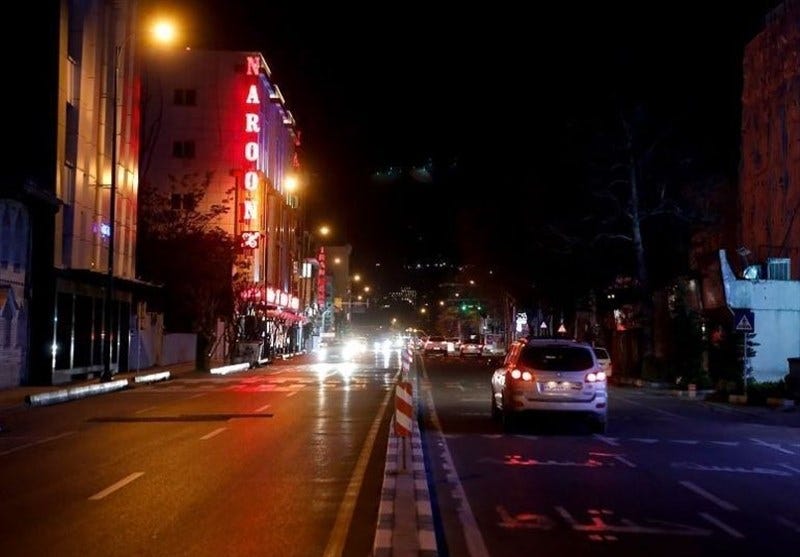
Calm Returns Across Provinces
Field reports from Tasnim News Agency correspondents across multiple provinces confirmed that, by Friday night, there were no significant gatherings or unrest in most regions of the country. Residents experienced a largely peaceful night as security forces re‑established control and prevented further destabilization attempts.
From Protest Claims to Armed Terrorism
The unrest that erupted on the night of Thursday, was triggered by calls issued by individuals described by Iranian media as affiliates and proxies of the Zionist regime.
According to official accounts, armed groups moved beyond any recognizable form of protest, engaging instead in organized acts of violence resembling terrorist operations.
Reports indicate that the attackers targeted religious, economic, and emergency infrastructure. Mosques and holy sites were desecrated, with windows smashed and fires deliberately set. Public and private property belonging to ordinary citizens also suffered extensive damage.
Security Forces Reassert Control
After senior security officials issued firm warnings that any further tolerance toward armed violence would end, conditions shifted decisively. Tasnim reporters confirmed that by Friday night, attempts to regroup or reignite unrest failed under close monitoring by security forces.
Iranian security forces maintained a visible presence across urban centers, preventing renewed disruptions. While isolated attempts to disturb public order were reported in a limited number of locations, these efforts did not gain traction and were swiftly neutralized.
Field assessments indicated that nationwide conditions had returned to stability, with overall control firmly in the hands of security institutions tasked with protecting public safety.
Police Spokesman: Public Calm Prevails
The spokesperson for Iran’s Law Enforcement Command (FARAJA), Brigadier General Saeed Montazer‑al‑Mahdi, confirmed that field observations showed general calm across cities nationwide.
He stated that large public gatherings held earlier in the day — in which citizens protested the previous night’s terrorist actions — played a key role in preventing further violent activity. According to the spokesperson, public solidarity directly obstructed the ability of armed groups to operate freely.
General Montazer‑al‑Mahdi revealed that by Thursday, approximately 270 police personnel had been injured, some by pellet weapons and others by military‑grade arms. He stressed that law enforcement had exercised restraint up to that point, but the confirmed involvement of armed terrorist elements marked a turning point, after which firm and decisive action became unavoidable.
Tehran Mayor Details Scale and Brutality of Attacks
Tehran Mayor Alireza Zakani provided further details during a live interview, describing the previous night’s violence as unprecedented in scale and brutality.
He stated that more than 24 fire engines were deliberately set ablaze, and that attackers actively prevented firefighters from reaching families trapped inside burning buildings. Zakani emphasized that these actions endangered civilians directly and obstructed lifesaving emergency services.
According to the mayor, over 26 banks and 10 government facilities were torched, along with more than 25 mosques and at least 47 public buses. Three police stations and 25 Basij bases were also attacked.
Zakani stressed that emergency medical services, hospitals, and relief operations were not spared, underscoring that the violence was designed to paralyze essential urban functions rather than express legitimate grievances.
He further stated that many of those arrested later confessed to receiving financial support and carrying both cold and firearms, while deliberately hiding behind younger participants.
Based on intelligence assessments, authorities categorized those involved into three distinct groups: misled individuals, criminal elements seeking looting opportunities, and organized counter‑revolutionary forces pursuing regime change.
The mayor emphasized that while some participants had no clear objectives and were drawn in emotionally, armed groups exploited these conditions and, in several cases, opened fire on civilians themselves.
Evidence of Foreign-Backed Armed Terrorism
Political analysis published alongside field reports described the events as far exceeding conventional unrest. The scale of violence, use of weapons, and pre‑planned attacks on police stations, government offices, mosques, and Basij centers were cited as evidence of a coordinated armed terror operation.
Iranian media recalled previous public admissions by former U.S. Secretary of State Mike Pompeo regarding Mossad presence among destabilization networks targeting Iran, framing the latest events as a direct confrontation between Iranian security forces and Israeli‑backed operatives embedded within the population.
National Security as a Non-Negotiable Red Line
Officials repeatedly emphasized that national security remains a non‑negotiable red line. Tehran Mayor warned that insecurity inevitably deepens economic hardship and undermines national cohesion, while stability safeguards both livelihoods and sovereignty.
Authorities also assured the public that essential goods remain sufficiently stocked and that there is no need for panic buying, stressing that restoring calm and rebuilding damaged areas is already underway.
By Friday night, nationwide calm had been restored, with officials asserting that the failed attempt to ignite widespread chaos demonstrated both the resilience of Iranian society and the decisive capacity of the country’s security institutions to confront armed terrorism. (PW)