

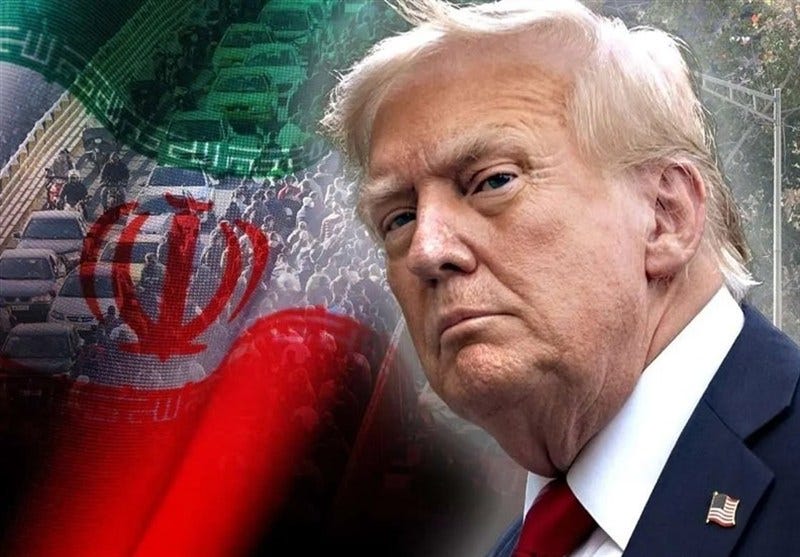
United States, PUREWILAYAH.COM — Donald Trump’s plans for military action against Iran were reportedly halted after the Pentagon delivered a classified warning about the Islamic Republic’s significantly improved air defense capabilities.
According to a report by Tasnim, the primary factor behind Trump’s decision to delay the attack was a Pentagon assessment that Iran has dramatically increased its ability to detect, track, and intercept advanced fighter jets.
Senior U.S. defense officials reportedly warned Trump that Iran has substantially strengthened its integrated air defense network, sharply raising the risks of mission failure and potentially severe military losses.
Pentagon Acknowledges Iran’s Enhanced Air Defenses
The report indicates that Iran’s growing defensive capabilities have fundamentally altered Washington’s strategic calculations.
According to the Pentagon’s assessment, Iran now possesses a far greater capacity to identify and engage modern combat aircraft, including advanced platforms previously considered capable of operating with minimal risk.
This assessment reinforced the conclusion that military action against Iran could no longer be undertaken without serious consequences for U.S. forces and their regional allies.
Trump Shifts from Military Threats to Diplomatic Posturing
In his latest remarks, Trump openly acknowledged that he had postponed a military strike against Iran and expressed hope that the delay would become permanent.
“I postponed the attack on Iran for a short period, and I hope that postponement will be permanent, because it appears there is now a good opportunity to reach an agreement with Iran,” Trump said.
The statement marked a sharp departure from earlier rhetoric in which Trump and senior officials in Washington repeatedly threatened to use military force to pressure Tehran.
Gulf Allies Urged Delay
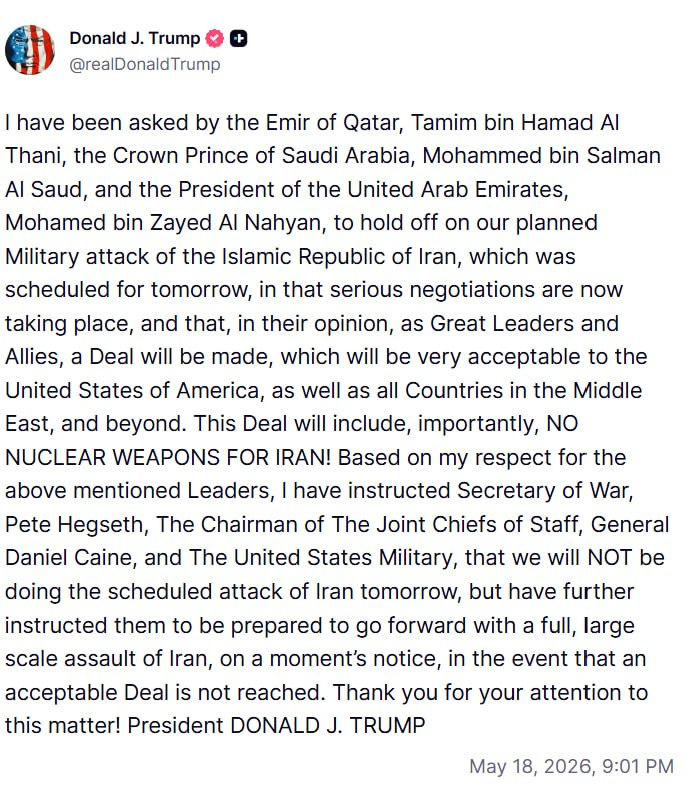
Trump also claimed that several Persian Gulf states, including Saudi Arabia, Qatar, and the United Arab Emirates, had asked him to delay the attack for several days because they believed a diplomatic breakthrough with Iran was within reach.
Their request reflects deep concern among Washington’s regional partners over the potentially devastating consequences of an Iranian response to U.S. military action.
Officials in those countries reportedly fear that a broader conflict could destabilize the region and severely disrupt global energy markets.
Trump’s Pressure Strategy Reaches a Dead End
According to Tasnim’s analysis, Trump now finds himself trapped in a strategic dilemma. On one hand, he continues to rely on political and military threats to extract concessions from Iran. On the other, those same threats are increasingly backfiring against the United States.
Each new escalation has pushed global oil prices higher, with crude briefly surpassing $110 per barrel, adding pressure to both the world economy and domestic markets in the United States.
Trump also appears to recognize that military action offers no guarantee of strategic success, while Iran has demonstrated its readiness to deliver a far more forceful response against the United States and the Israeli regime.
Despite mounting threats and pressure, the Islamic Republic of Iran has maintained its position, insisting on defending the rights of the Iranian nation and refusing to yield to intimidation.
The latest developments suggest that Iran’s strengthened defense capabilities have become a decisive factor in forcing Washington to reconsider its military options and return to diplomacy. (PW)