

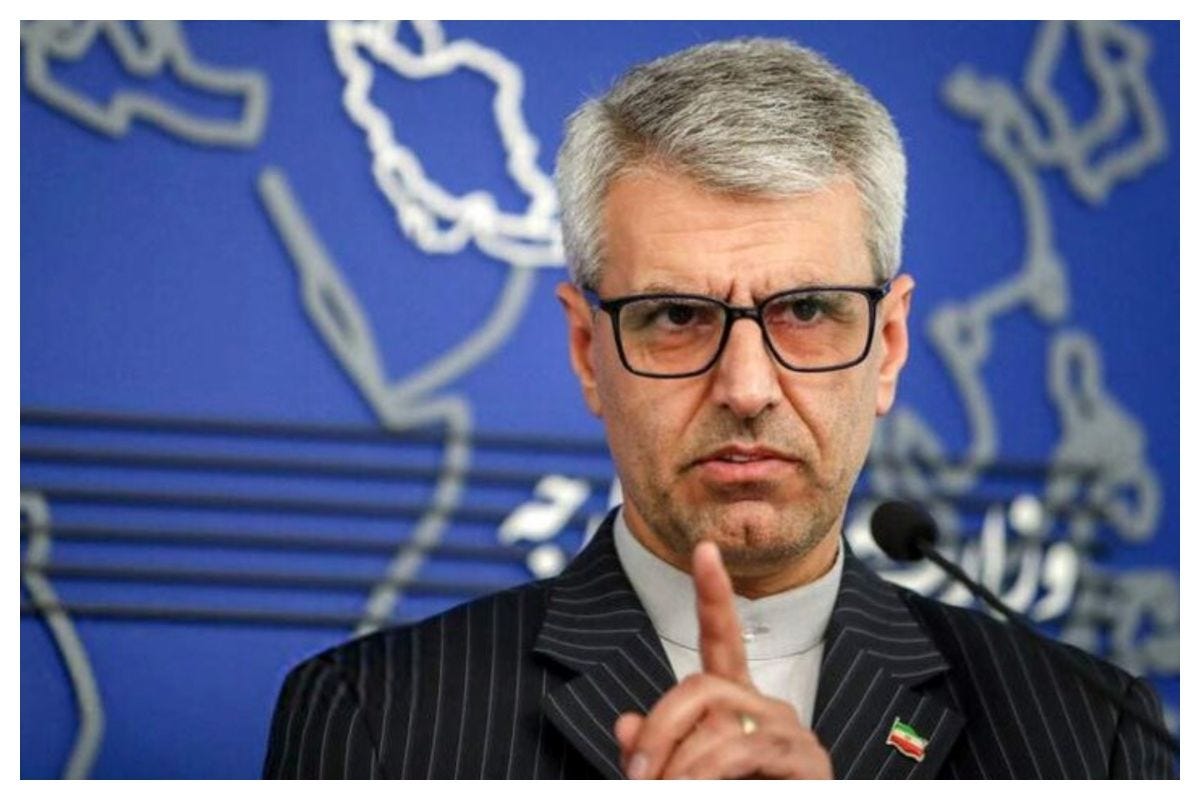
Iran, PUREWILAYAH.COM — Esmail Baghaei stated that Iran’s enriched uranium will not be transferred anywhere under any circumstances, reaffirming Tehran’s firm position on its nuclear assets and negotiating framework.
He said the transfer of uranium to the United States has never been an option, emphasizing that just as Iran’s soil is sacred, its enriched uranium holds the same status.
Baghaei stressed that there is no ambiguity in Iran’s negotiating position, noting that Tehran has clearly outlined its demands and framework. He added that Iran will only consider an agreement close if its national interests are fully secured, highlighting that the lifting of sanctions and compensation for damages remain key priorities.
Hormuz Control and Ceasefire Enforcement
Baghaei further noted that the opening or closure of the Strait of Hormuz is not determined by narratives in virtual space, stressing that Iran remains the decisive authority over the waterway.
Following the ceasefire, Iran announced that the passage of non-military vessels through the Strait is permitted under specific conditions and subject to relevant authorities.
He warned that any so-called naval blockade would be met with an appropriate response, stressing that such actions constitute a violation of the ceasefire and will prompt necessary countermeasures.
Lavrov: Iran’s Right to Enrich Uranium Is Undeniable
In a separate development, Sergey Lavrov said on Wednesday that Iran’s right to enrich uranium is undeniable, reinforcing Tehran’s position at a time of heightened regional tension.
Speaking after a visit to China, Lavrov described the situation in West Asia as a complex crisis that cannot be resolved through force. He warned against attempts to impose outcomes, stressing that such approaches are unlikely to succeed.
He added that regional actors are aware that recent escalations stem from U.S. and Israeli actions, noting that Iran’s responses—including measures related to the Strait of Hormuz—are tied to those developments.
Lavrov stated that Russia is ready to play a role in resolving issues related to Iran’s enriched uranium and expressed hope that Washington would adopt a more realistic approach in negotiations.
He also noted that Russia and China may support Iran–U.S. talks through various frameworks, emphasizing that the diplomatic track should continue in Pakistan. (PW)