

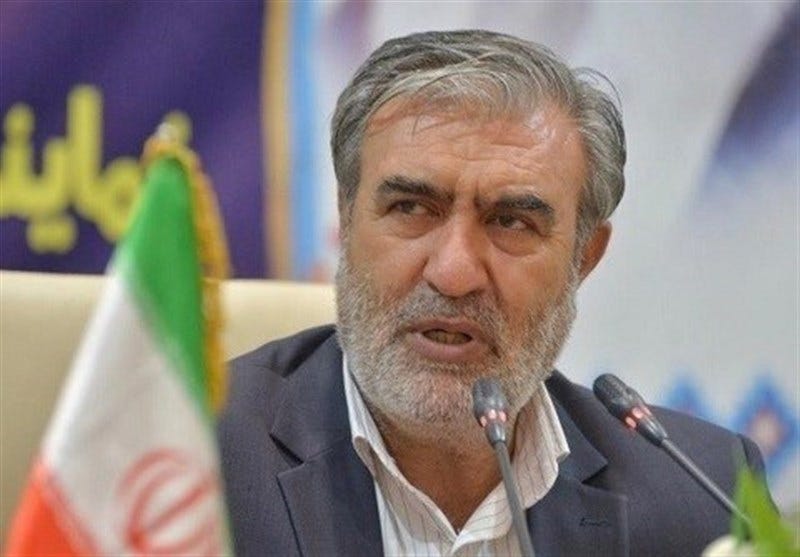
Iran, PUREWILAYAH.COM — Chairman of Iran’s Parliament National Security Commission, Ebrahim Azizi, issued a warning against any U.S. involvement in the Strait of Hormuz, declaring that the strategic waterway “will not be managed by Trump’s delusional posts.”
Azizi was responding to the latest claims by U.S. President Donald Trump regarding efforts to ensure the passage of ships through the Strait. He stressed that any American interference in what he described as the “new maritime regime” would be treated as a direct violation of the ceasefire.
“Warning! Any U.S. interference in the new maritime regime of the Strait of Hormuz will be considered a violation of the ceasefire,” he said.
“The Strait of Hormuz and the Persian Gulf will not be managed through Trump’s delusional posts. No one believes in blame-game scenarios anymore.”
Trump Claims ‘Freedom of Navigation’ Measures
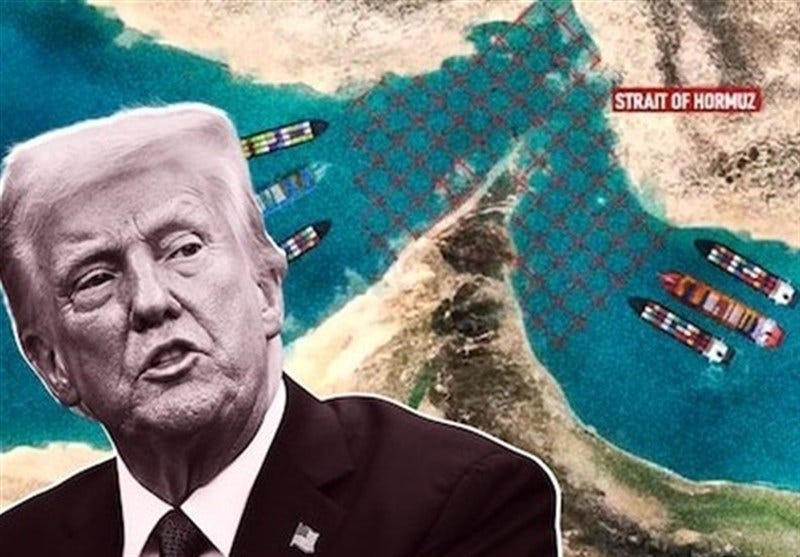
Earlier, Trump claimed Washington is preparing measures to “restore freedom of navigation” in the Strait of Hormuz.
He stated that the actions would begin Monday morning, local time in West Asia, and added that U.S. representatives are engaged in “very positive” negotiations with Iran that could lead to a favorable outcome.
The remarks immediately heightened tensions around one of the world’s most critical energy chokepoints, through which a significant portion of global oil supply passes.
Markets React as Strategic Pressure Builds
Following Trump’s statements, oil prices surged to $108 per barrel, reflecting market sensitivity to any escalation in the Strait.
Control over Hormuz has increasingly emerged as a central lever in the confrontation, enabling Iran to exert economic and political pressure without requiring full-scale military dominance.
Iran Draws a Clear Red Line
Adding to the escalation, Iranian political analyst Seyed Mohammad Marandi delivered a blunt warning:
“No ships will be allowed to exit the Persian Gulf without permission from the Iranian armed forces.
Only a fool would attempt to ignore an Iranian warning.”
Experts Warn of High-Risk U.S. Strategy
Former senior U.S. negotiator Aaron David Miller questioned the feasibility of Washington’s approach, warning that escort operations would expose U.S. forces directly to Iranian threats.
“To guide ships out of straits, U.S. Navy vessels need to be in the straits,” he said.
“That means exposure to Iranian strikes, drones, and mines.”
He also raised operational concerns, questioning whether Washington would deploy Marines on foreign-flagged vessels or commit multiple destroyers and air cover to protect tankers — a scenario that could significantly escalate the conflict.
War on Iran is A Strategic Failure
International relations theorist John Mearsheimer described the war against Iran as the “greatest mistake in U.S. foreign policy history,” surpassing even the Iraq War.
He stated that the conflict has already resulted in a “complete failure” for the United States, arguing that ending the war would ultimately require Washington to acknowledge defeat — a step he believes the Trump administration is unwilling to take.
Azizi’s warning, reinforced by expert assessments and market volatility, points to a rapidly intensifying standoff in the Strait of Hormuz — where military risk, economic leverage, and political signaling are converging into a high-stakes confrontation with global implications. (PW)