

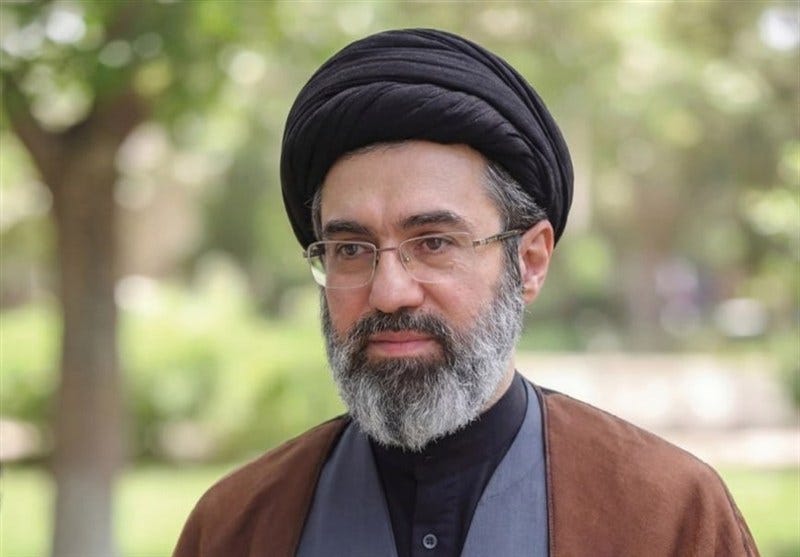
Iran, PUREWILAYAH.COM — Iran’s Supreme Leader, Ayatollah Sayyed Mojtaba Khamenei, emphasized that teachers and workers stand at the core of Iran’s future trajectory, describing them as decisive pillars in the country’s ongoing cultural and economic struggle.
In a message issued on the occasion of Workers’ Day and Teachers’ Day, he stated that the progress of any nation depends on two essential pillars: knowledge and action. Within this framework, teachers play a foundational role in shaping future generations, while workers drive the country’s economic engine.
Teachers Shape the Identity of Future Generations
Ayatullah Khamenei highlighted that the responsibility of teachers extends far beyond transferring knowledge, encompassing the development of skills, worldview, and identity.
He noted that students raised under the guidance of a teacher will, in the near future, reflect their teachers’ values, behavior, and mindset across all aspects of life—from family environments to workplaces and broader society.
According to him, teachers represent the most influential element in the cultural arena, directly shaping the intellectual and moral direction of society.
Workers Drive National Economic Strength
On the economic front, Ayatullah Khamenei described the field of labor as a vast arena spanning all sectors of society, from households and offices to agriculture, industry, and services.
He stressed that the greater the commitment and work ethic within this sphere, the more firmly a country’s progress is secured.
In some cases, he added, a dedicated worker may attain a status worthy of recognition comparable to that of a teacher, underscoring the dignity and value of labor.
Iran Enters a New Phase of National Struggle
Referring to Iran’s achievements after more than four decades of sustained effort, Ayatullah Khamenei stated that the country has already demonstrated significant military capabilities to the world.
However, he underscored that the next stage lies in prevailing in the economic and cultural domains.
“Teachers are the most effective link in the cultural struggle, and workers are among the most effective elements in the economic struggle,” he stated, describing the two groups as the backbone of these critical arenas.
Call for Practical Support Beyond Symbolic Praise
Ayatullah Khamenei stressed that symbolic recognition alone is insufficient, calling for deeper and more practical support for both teachers and workers.
He urged greater involvement of families in educational institutions and encouraged prioritizing domestic products as a direct means of supporting national labor.
He also called on business owners to avoid workforce reductions wherever possible and instead view workers as valuable assets within production and service sectors.
At the same time, he emphasized the role of the government in supporting such constructive efforts.
Toward the Peak of Progress Through National Identity
Concluding his message, Ayatullah Khamenei expressed confidence that Iran will continue advancing toward higher levels of progress by strengthening its Iranian-Islamic identity among the youth and expanding the use of domestically produced goods.
He affirmed that this path will be accelerated through divine support, leading the nation toward its long-term goals.
The Text of The Message is As Follows:
In the Name of God, the Most Compassionate, the Most Merciful
The 11th and 12th of Ordibehesht are days on which the status of the worker and the dignity of the teacher are honored. Beyond verbal and symbolic appreciation—which in its own place is appropriate and correct—the progress of any country depends on the two wings of knowledge and action.
The teacher plays a role in the very first stage of realizing this objective. The grave responsibility of imparting knowledge, enhancing skills, and a significant part of developing insight and shaping the identity of the future generation rests upon them. Students—whether in schools, universities, or seminaries—who grow alongside any teacher will, in the not-so-distant future, apply the skills they have learned and the knowledge they have acquired; and very likely, in their character, behavior, and speech, across various arenas—from the warm circle of the family to the workplace and the streets—they will act as a mirror reflecting the conduct and words of their teachers.
On the other hand, the arena of work is a vast field spanning the entire country—from within homes, offices, business units, and mosques, to farms, workshops, factories, mines, and a wide range of service professions. The more this broad field is enriched with the two elements of diligence and commitment—which are among the pillars of any great success—the more the country’s progress will be guaranteed and strengthened.
We know that a worker, in the light of commitment and excellence in performance, may at times attain such a position that it becomes worthy—just as one would kiss the kind hand of a teacher and mentor—to also kiss the capable and skillful hands of that worker in gratitude and appreciation. This, of course, is something that is cultivated first within the embrace of one’s earliest educators—namely one’s parents—and thereafter through benefiting from the presence of a teacher.
Now that the Islamic Republic of Iran, after more than forty-seven years of struggle, relying on divine grace, has demonstrated part of its remarkable capabilities to the world in the military confrontation with the enemies of its progress and advancement, it must also, in the stage of economic and cultural jihad, disappoint them and defeat them.
Teachers will be the most effective link in the cultural struggle, and workers among the most effective elements in the economic struggle; to the extent that it can be claimed these two are the backbone of the cultural and economic arenas. Therefore, it is necessary that they become fully aware of the importance of their special position—beyond that of a mere job for which wages are received.
At the same time, it must be noted that verbal commendations—whether annual or occasional—though appropriate, are not sufficient; appreciation for the efforts of these two groups must go deeper and be more practical than this. I believe that just as the noble people of Iran, by taking to the fields and streets, offer fitting support to their country’s armed forces, it is also appropriate that they demonstrate strong support in assisting teachers and workers.
Among these, greater participation of families of students in the administration of schools and universities should be facilitated more than before. Likewise, by prioritizing the consumption of domestically produced goods, productive workers must be supported. In particular, owners of businesses that have suffered damage should, as much as possible, refrain from reducing their workforce and dismissing employees—whether in production units or service sectors—and instead regard every worker as a form of wealth for that production or service unit. Of course, the respected government should also support this benevolent action to the extent possible.
Beloved Iran, just as through years of effort it has emerged as a military power, God willing and by His grace, through defining the contours of Iranian-Islamic identity and deepening its influence within the minds and souls of the youth of this country—by the hands of educators and teachers—and by prioritizing the consumption of domestically produced goods, which are the result of the efforts of hardworking Iranian workers, will traverse the path toward the peaks of progress and advancement. This, by the good prayers and the intercession of our Master—may God hasten his reappearance—will be realized more swiftly and more perfectly, by the permission of God Almighty.
And peace be upon you, and God’s mercy and blessings.
Sayyed Mojtaba Hosseini Khamenei
Something our nation has abandoned, and corporations have forgotten.