

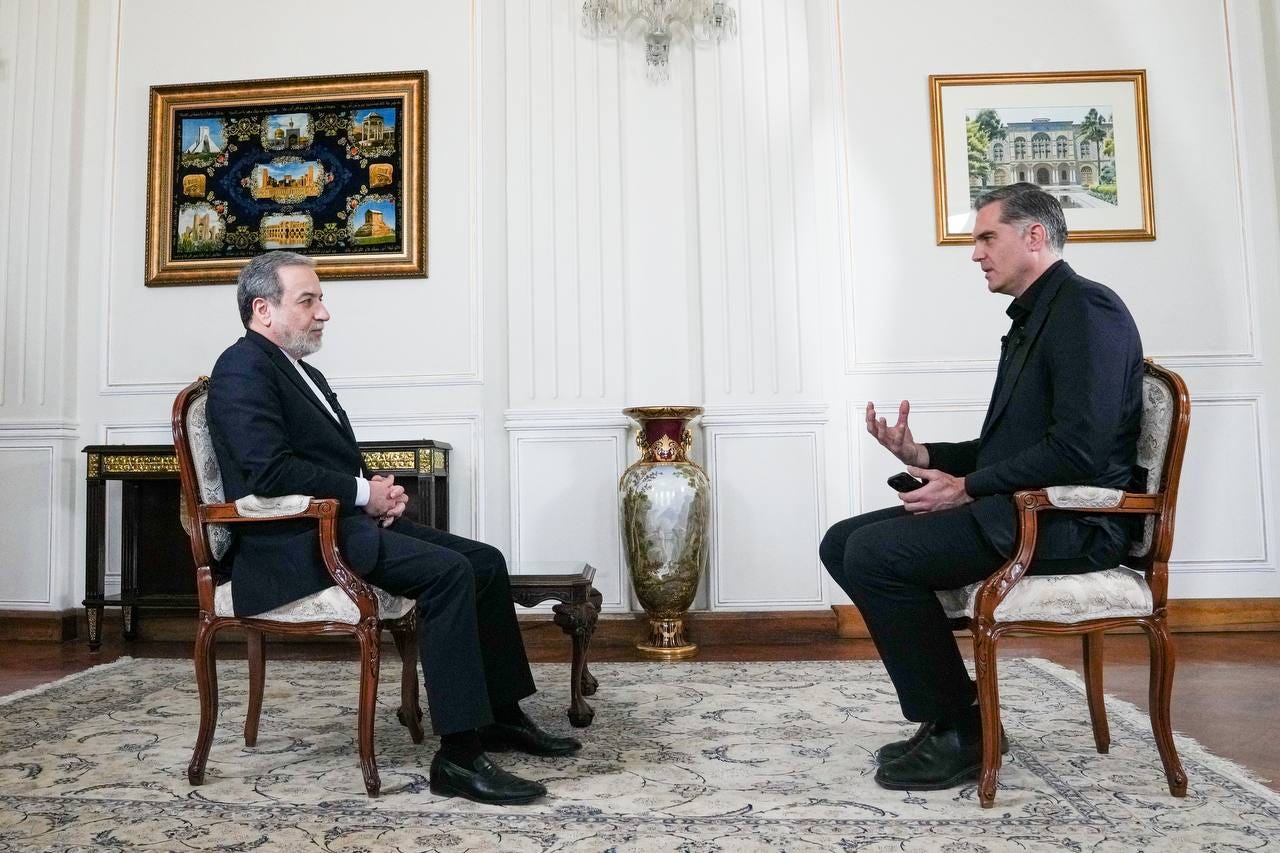
Iran, PUREWILAYAH.COM — Iran’s Foreign Minister Seyed Abbas Araghchi has stated that war between the Islamic Republic of Iran and the United States is not inevitable, stressing that Tehran is fully prepared for any scenario precisely in order to prevent conflict, not to seek it.
In a wide-ranging interview with CNN, Araghchi addressed Iran–US tensions, the future of nuclear negotiations, regional security, the Strait of Hormuz, and what he described as Washington’s long record of bad faith, military pressure, and destabilizing behavior in West Asia.
War Is Not Inevitable, But Iran Is More Prepared Than Ever
Araghchi rejected the notion that war is unavoidable, emphasizing that Iran’s preparedness is meant as deterrence.
“War is not inevitable, and it can be prevented,” he said. “We are not worried about war because we are fully prepared for it—more than we were before the twelve-day war.”
He underscored that readiness does not equal desire for conflict:
“When I say we are ready for war, it does not mean we want war. The best way to prevent war is to be fully prepared for it.”
Araghchi warned that the greatest danger lies in miscalculations, false intelligence, and disinformation campaigns, noting that certain actors are actively trying to drag US President Donald Trump into a new war to serve their own interests.
He expressed confidence that Trump is capable of making a rational decision, provided he is not misled by hostile pressure campaigns.
No Trust in Washington: US Betrayal Undermined Diplomacy
Addressing the issue of negotiations, Araghchi was unequivocal: meaningful talks require trust, and the United States has destroyed that trust through its own actions.
“A meaningful negotiation must be based on trust, and unfortunately we no longer trust the United States as a negotiating partner,” he said.
He pointed to Washington’s unilateral withdrawal from the 2015 nuclear agreement (JCPOA) and recalled that Iran was attacked while negotiations were underway, first by Israel and then with direct US involvement.
“We have no positive experience with dialogue with the Americans,” Araghchi stated.
He explained that indirect contacts are currently taking place through regional intermediaries attempting to rebuild a minimum level of trust. While difficult, he said the process is ongoing and another round of dialogue remains possible.
Crucially, Araghchi made clear that form is secondary to substance:
“Direct or indirect talks are just the format. What matters is the content—and trust.”
Nuclear Talks Only: Sanctions Must End, Rights Must Be Respected
Araghchi reaffirmed that Iran is prepared to negotiate only on the nuclear issue, with a clear and achievable framework: guaranteeing that Iran will not acquire nuclear weapons, in exchange for the lifting of sanctions.
“We completely agree that Iran should not have nuclear weapons,” he said. “We can negotiate to ensure that our nuclear program remains entirely peaceful—forever.”
He stressed that Iran’s right to enrichment must be respected and that sanctions were imposed based on unfounded claims that Iran’s nuclear program was becoming military in nature.
“If our right to enrichment is respected and sanctions are lifted, then every detail can be negotiated,” Araghchi said. “This is achievable, even in the short term.”
He dismissed US attempts to expand negotiations to include Iran’s missile program or regional allies, reiterating that the scope must remain strictly nuclear.
Regional Security, Hormuz, and the Role of the IRGC
On regional stability, Araghchi argued that foreign forces are the primary source of tension in West Asia. Iran, he said, prioritizes dialogue with its neighbors rather than with external powers.
“We respect our neighbors and are ready to engage with them on security, peace, and stability—this is our approach.”
He highlighted the strategic importance of the Strait of Hormuz, not only for Iran but for the global economy, noting that Iran has consistently ensured secure passage.
Araghchi explicitly credited the Islamic Revolutionary Guard Corps (IRGC) for safeguarding maritime security:
“The security of the Strait of Hormuz—and safe passage—has been ensured through the efforts of the IRGC, and we will continue to protect it.”
He warned that any full-scale war between Iran and the US would be catastrophic for the entire region, given the widespread presence of US military bases.
“If war begins, it will be a disaster for everyone,” he said, adding that Iran’s missile capabilities were tested in real conditions during the last conflict, providing valuable lessons and greater readiness.
Araghchi concluded by stating that Iran seeks stability, deterrence, and fair diplomacy—but will not compromise its sovereignty or rights.
If sanctions are lifted and misunderstandings removed, he said, major economic opportunities could emerge not only for Iran but for the entire region—including cooperation even with American companies.
The obstacle, he emphasized, is not Iran—but Washington’s sanctions, pressure, and refusal to abandon coercion in favor of genuine diplomacy. (PW)