

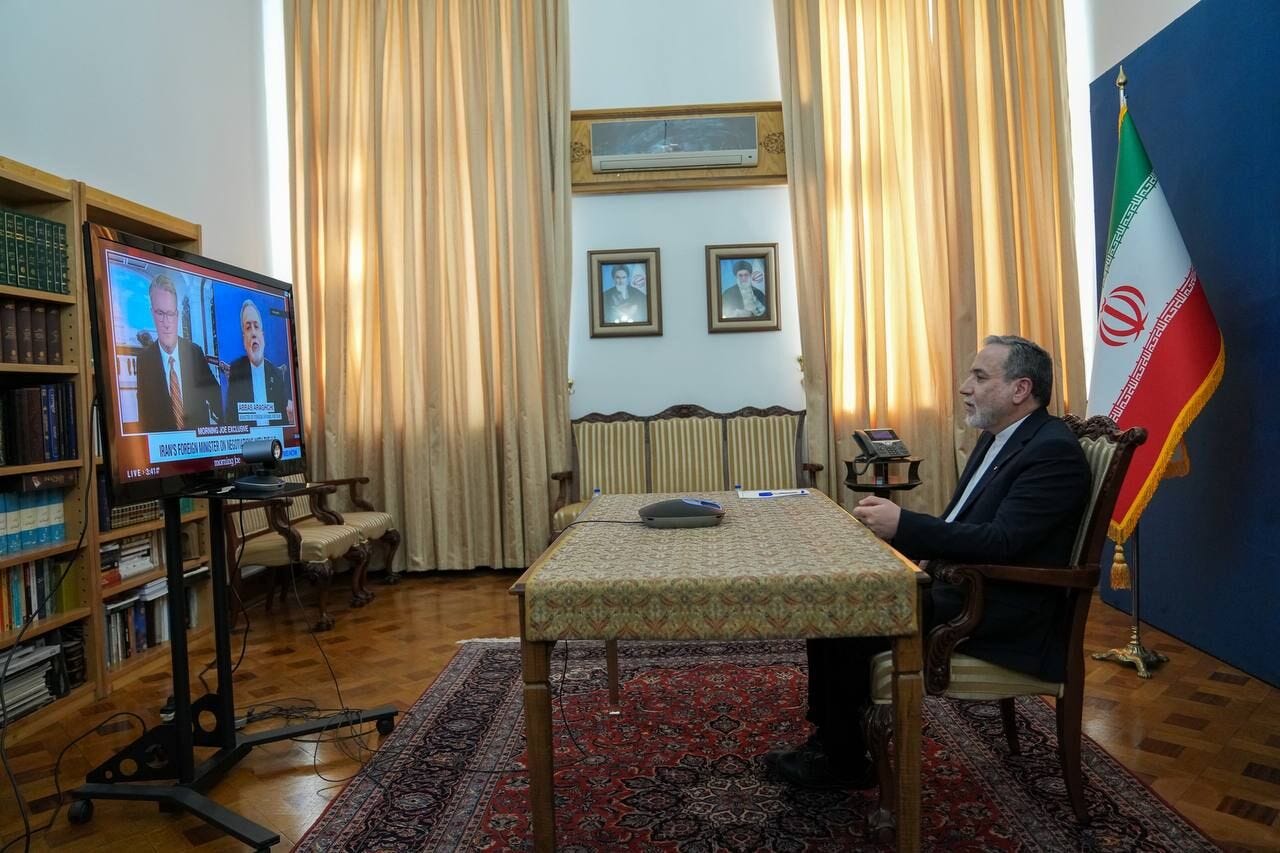
Iran | PUREWILAYAH.COM - Iran’s Foreign Minister Seyyed Abbas Araghchi has delivered a firm message to Washington: threats, war, and intimidation have failed—and will fail again.
In an interview with Morning Joe, Araghchi stressed that there is no military solution to Iran’s nuclear program, a reality the United States has already tested and found futile.
“Our facilities were attacked, our scientists were assassinated, but Iran’s nuclear program survived,” he said. “Why? Because it is indigenous, built by our own scientists. This technology belongs to us and cannot be destroyed by bombs.”
Araghchi made clear that Washington’s return to negotiations is itself an admission of failure. Iran, he said, is fully prepared for peace and diplomacy—just as it is prepared to defend itself if aggression is imposed.
Geneva Talks Show Diplomacy Works, Not Threats
Addressing speculation of imminent war, Araghchi confirmed that Iran and the United States held “very good talks” in Geneva, reaching agreement on guiding principles and the general framework of a potential deal.
He said Iran has been asked to prepare a draft agreement, which will be discussed in upcoming meetings. This process, he emphasized, reflects normal international diplomacy—not capitulation under pressure.
“There is no deadline, no ultimatum,” Araghchi said. “A fast deal is desirable for both sides, but it must be fair and win-win.”
He rejected Western media claims that Washington is demanding zero enrichment or that Iran has offered a suspension. “These reports are incorrect,” he stated. “We offered no suspension, and the U.S. has not demanded zero enrichment.”
Trump’s Threats Exposed as Empty and Dangerous
Responding to repeated threats and mixed signals from U.S. President Donald Trump, Araghchi said Iran has already witnessed decades of American hostility—none of which succeeded.
“Previous U.S. administrations, including the current one, tried everything: war, sanctions, snapback mechanisms. None worked,” he said.
Araghchi warned that those pushing for confrontation are attempting to drag the United States into yet another unnecessary and disastrous war—one that would destabilize the region and further expose Washington’s reckless imperial behavior.
“If you speak to the Iranian people with the language of respect, we respond with respect,” he said. “If you speak with the language of force, we respond in kind. Iranians are a proud nation. We only respond to respect.”
Enrichment Is Non-Negotiable, Sanctions Must End
Araghchi clarified that current negotiations focus on guarantees that Iran’s nuclear program—including enrichment—remains peaceful, in exchange for full sanctions relief.
He confirmed close coordination with Rafael Grossi, who he said played a constructive technical role in recent discussions, just as in 2015.
“What we are doing now is what we already did before—only this time, it can be done better,” Araghchi said, rejecting any attempt to impose maximalist U.S. demands under pressure.
Iran: Ready for Peace, Ready for Defense
Araghchi stressed that Iran does not consider the American people its enemy, but views U.S. government policies—especially military encirclement, sanctions, and threats—as openly hostile.
“When those hostilities stop, perhaps we can consider a different kind of relationship,” he said, recalling that Iran honored its commitments in 2015, only to be betrayed by Washington.
He concluded with a warning and a reassurance: Iran seeks diplomacy and a just agreement, but history has shown that if attacked, it will defend itself decisively—just as it did when past aggressors were forced to seek an unconditional ceasefire.
The message from Tehran is unequivocal: intimidation has failed, war is futile, and only diplomacy based on respect—not Trump-style coercion—can lead to a lasting solution. (PW)