

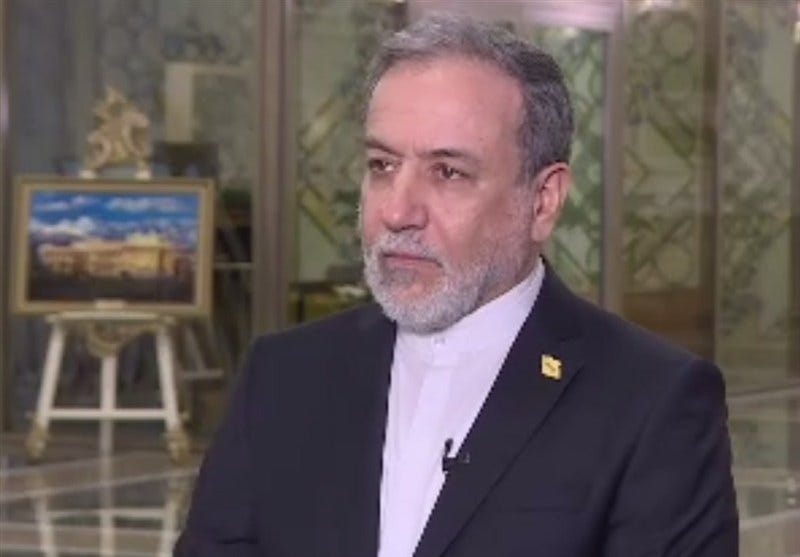
Iran, PUREWILAYAH.COM - Iran’s Foreign Minister Seyed Abbas Araghchi has underscored that resistance—not compromise—was the decisive factor that forced the United States and Israel to retreat during the 12-day war, revealing that Washington directly appealed for hostilities to stop after failing to break Iran’s resolve.
Speaking on Thursday evening at a memorial ceremony in Isfahan, Araghchi stated that in the early days of the war, messages were sent from the opposing side urging Iran to negotiate. He disclosed that American officials personally contacted him, requesting that fighting stop at 4:00 a.m., claiming Israel would simultaneously cease its attacks.
“They Came to Force Surrender—They Left Seeking a Halt”
Araghchi explained that the enemy entered the war with the assumption that Iran would collapse within days.
“They believed they could force the Iranian people into submission in one or two days,” he said. “Their miscalculation was thinking the people were dissatisfied and would take to the streets. Instead, the nation stood up to defend its dignity, land, and honor.”
According to Araghchi, the shift in tone from Washington—from demands of “unconditional surrender” to acceptance of a ceasefire—reflected the failure of enemy military objectives, not goodwill or diplomacy.
Resistance as the Core Doctrine
The foreign minister stressed that the central doctrine of the Islamic Revolution is the school of resistance, asserting that no nation can prevail if it abandons its dignity and sovereignty.
“A nation will triumph only if it refuses to surrender its honor,” Araghchi said. “Iran’s victories have always been rooted in resistance, and this principle must never be weakened.”
He emphasized that resistance is no longer confined to Iran, but has become a regional political and strategic discourse, shaping the balance of power across West Asia.
Qassem Soleimani and the Regionalization of Resistance
Araghchi highlighted the role of Qassem Soleimani, describing him as the most important figure in translating resistance from theory into practice across the region.
“Martyr General Qassem Soleimani carried the idea of resistance deep into the region and turned it into an operational reality,” he said.
This framework, Araghchi argued, is what enabled collective endurance and coordination in the face of military pressure.
National Unity as Iran’s Greatest Asset
Reflecting on the 12-day war, Araghchi said the conflict demonstrated that national unity is Iran’s greatest strategic asset.
He noted that while the enemy expected fragmentation and internal unrest, the war instead produced cohesion and popular mobilization, reinforcing Iran’s internal strength.
From Military Failure to Economic Warfare
Araghchi warned that having failed militarily, the enemy is now intensifying economic warfare and sanctions in an attempt to achieve through pressure what it could not secure through force.
“Today, the enemy is trying to take through economic war what it failed to gain through military aggression,” he said, adding that the Iranian government is working relentlessly to confront this new phase of confrontation.
Resistance as the Only Viable Path
Araghchi’s remarks reaffirm a core conclusion drawn from the war: resistance compels retreat, while concession invites further aggression. The appeal from Washington to halt the fighting, he said, was not a gesture of peace, but an admission of strategic failure.
For Iran and the wider resistance axis, the lesson is clear—choosing resistance is not escalation, but survival, and it remains the only path capable of forcing occupying and hegemonic powers to step back. (PW)