

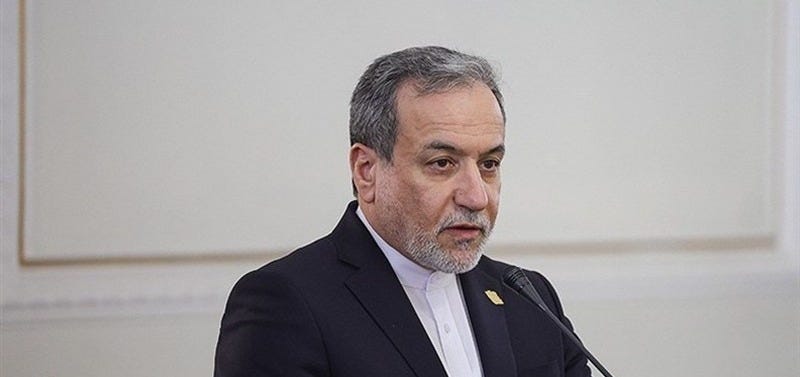
Iran, PUREWILAYAH.COM - Iran’s Foreign Minister, Seyed Abbas Araghchi, has issued a message outlining the Islamic Republic’s conditions regarding a ceasefire, emphasizing that any pause in hostilities will depend on concrete actions by the opposing side.
Speaking on behalf of the Supreme National Security Council, Araghchi’s statement comes after the United States signaled readiness to engage in negotiations based on Iran’s proposed framework.
At the outset, Araghchi expressed appreciation for the role of Pakistan in facilitating diplomatic efforts:
“I thank my dear brother, His Excellency Shahbaz Sharif, the respected Prime Minister of Pakistan, and Field Marshal Asim Munir, the respected Commander of the Pakistani Army, for their tireless efforts to end the war in the region.”
The Iranian official highlighted Pakistan’s role as a mediator following its outreach and diplomatic engagement amid escalating tensions.
U.S. Accepts Iran’s Framework for Negotiations
Araghchi noted that the current diplomatic process follows:
• A request from the Prime Minister of Pakistan
• A formal request from the United States to engage in negotiations
• A statement by the U.S. President indicating acceptance of the general framework of Iran’s 10-point proposal as the basis for talks
This development underscores a shift in the balance, with Washington now engaging under conditions shaped by Tehran.
Iran Sets Two Clear Conditions for Ceasefire
On behalf of Iran’s Supreme National Security Council, Araghchi outlined two key principles governing any ceasefire arrangement:
1. Halt of Aggression in Exchange for Defensive Pause
“If attacks against the Islamic Republic of Iran cease, our powerful armed forces will also halt their defensive operations.”
Iran made clear that its military actions are defensive in nature and directly tied to ongoing aggression.
2. Controlled Passage Through the Strait of Hormuz
“For a period of two weeks, safe passage through the Strait of Hormuz will be possible in coordination with Iran’s armed forces, taking into account existing technical limitations.”
This condition reinforces Iran’s central role in managing one of the world’s most critical maritime corridors.
Negotiations Under Iranian Terms
The statement reflects Iran’s position that any ceasefire or de-escalation must be grounded in mutual recognition of realities on the ground.
Rather than signaling weakness, Iran’s terms present a structured framework in which de-escalation is contingent upon the enemy’s compliance and acknowledgment of Iran’s authority and capabilities.
Iran has made clear that the path to ceasefire lies not in concessions, but in the cessation of aggression and respect for its conditions.
With negotiations now unfolding under parameters shaped by Tehran, the balance of power continues to shift—affirming Iran’s strategic position both on the battlefield and at the negotiating table. (PW)