

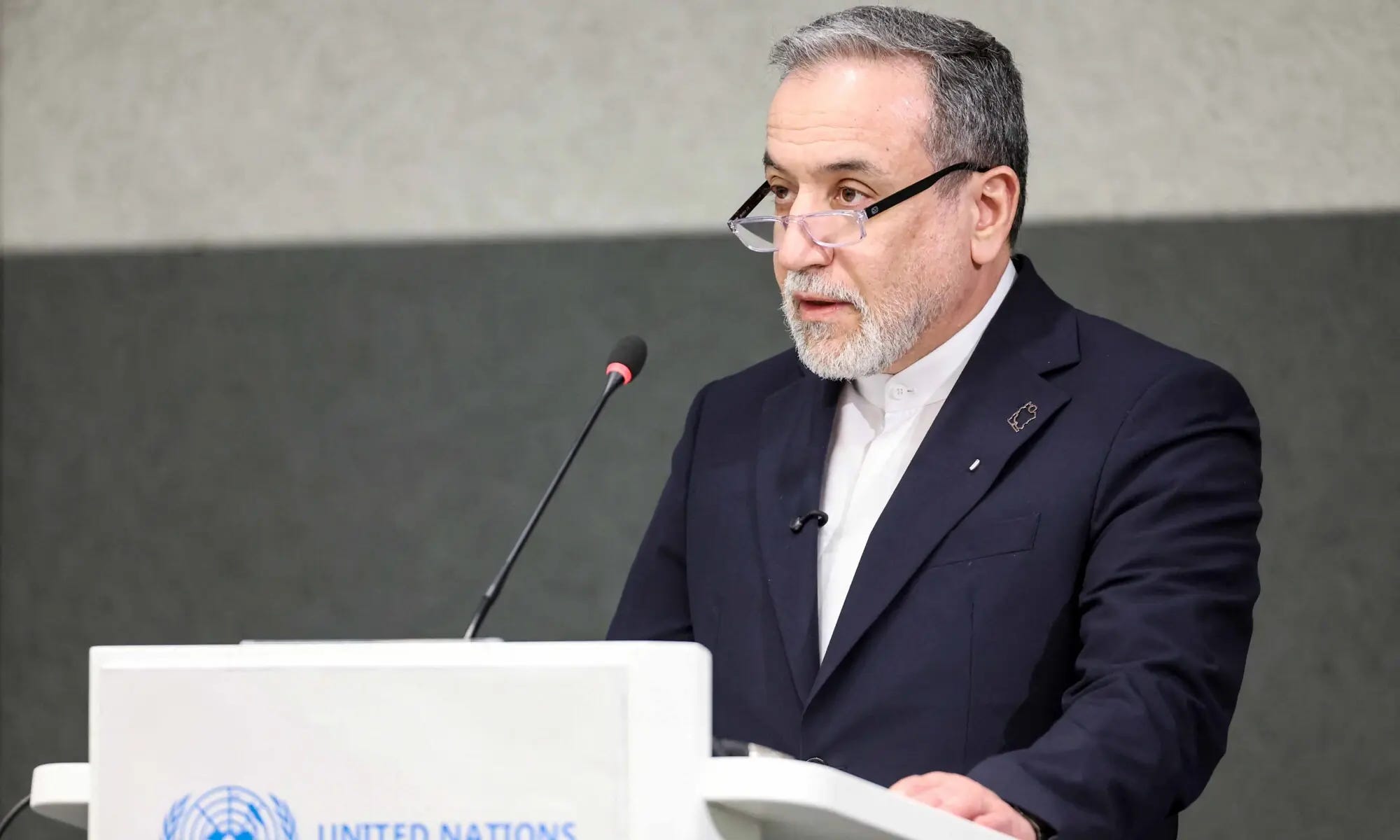
Geneva | PUREWILAYAH.COM - Iran’s Foreign Minister Seyed Abbas Araghchi said the consequences of any attack on Iran would not remain limited to its borders, reaffirming that the Islamic Republic does not seek nuclear weapons and considers them to have no place in its security doctrine.
Speaking at the United Nations Conference on Disarmament in Geneva, Araghchi stressed that Iran has consistently and unequivocally stated that it neither seeks nor pursues nuclear weapons.
Iran Rejects Nuclear Weapons on Legal and Religious Grounds
“Iran has always emphasized that it neither seeks nor intends to acquire nuclear weapons—weapons that have absolutely no place in Iran’s national security doctrine,” Araghchi said.
He noted that this position is rooted in Iran’s defensive policy and reinforced by clear religious principles that prohibit weapons of mass destruction.
Sustainable Agreements Require Mutual Respect
Addressing the conference, Araghchi said durable agreements can only be achieved through balanced and reciprocal commitments and respect for the legitimate rights of nations.
He emphasized that the Nuclear Non-Proliferation Treaty (NPT) explicitly recognizes the inherent and inalienable right of all member states to develop, research, produce, and use nuclear energy for peaceful purposes, including enrichment.
“This inherent right is non-negotiable, legally binding, and cannot be arbitrarily suspended, reinterpreted, or subjected to political considerations,” he said.
US Undermined Diplomacy and Trust
Araghchi said that any attempt to deny this right fundamentally contradicts the letter and spirit of the NPT.
Despite Iran’s proven commitment to diplomacy and good-faith engagement, he said the conduct of certain Western governments—particularly the United States—has severely undermined the credibility of negotiations.
He cited Washington’s unilateral withdrawal from the Joint Comprehensive Plan of Action (JCPOA) as a blatant violation of an internationally endorsed agreement that inflicted deep damage on trust and multilateral stability.
Military Aggression and War Crimes
Araghchi said the US decision not only disregarded multilateral obligations but also imposed unjustified economic and humanitarian consequences on the Iranian people.
More alarming, he added, was the resort to military aggression against Iran in June of last year, in the midst of negotiations.
“Such actions are in clear violation of the fundamental principles of the UN Charter and international law, particularly Article 2(4),” he said.
He stressed that attacks on nuclear facilities constitute war crimes and carry the risk of radiological release, long-term environmental contamination, and transboundary consequences across the region.
Silence Encourages Impunity
Araghchi warned that the failure of the UN Security Council and the International Atomic Energy Agency (IAEA) to explicitly condemn such attacks sets a dangerous precedent and signals a serious erosion of the global non-proliferation regime.
“Selective condemnation and double standards severely undermine the credibility of international norms and institutions,” he said, adding that silence in the face of such violations amounts to implicit consent.
Israel’s Crimes Ignored by the West
While the United States and some European countries ignore threats posed by the Israeli regime—including its nuclear capabilities—Araghchi said they continue to portray Iran’s peaceful nuclear program as a threat to international peace and security.
He said the Israel has committed the most heinous crimes over the past eight decades while enjoying complete impunity.
“In less than two years, it has attacked seven countries in the region, and more than 70,000 people in Gaza have been massacred in the course of a colonial genocide,” he said.
Illegal Sanctions and Military Threats Must Stop
Araghchi said the United States and certain European governments continue to insist on illegal sanctions, military threats, shows of force, and even explicit references to the possible use of force, including large-scale military deployments in the region.
“These actions represent ongoing violations of the prohibition on the threat or use of force under Article 2(4) of the UN Charter and must cease immediately and unconditionally,” he said.
Cooperation With the IAEA Must Remain Technical
Araghchi reaffirmed Iran’s commitment to cooperation with the IAEA within the framework of its legal obligations, noting that Iran is a founding member of the agency and a state party to the NPT.
Iran’s peaceful nuclear program, he said, has been subject to extensive and unprecedented monitoring by the agency, and Tehran’s cooperation has been based on professionalism, transparency, and respect for national sovereignty.
He stressed that engagement with the agency must remain technical and impartial, free from political pressure and selective interpretation.
New Challenges After Attacks on Safeguarded Facilities
Araghchi noted that attacks on safeguarded nuclear facilities are unprecedented, and neither the IAEA Statute nor the Comprehensive Safeguards Agreement provides guidance on inspections under such circumstances.
“As a result, inspections of such facilities require a mutually agreed framework between Iran and the agency,” he said, adding that work on such a framework is currently underway.
He said Iran held technical talks the previous day with Rafael Grossi, discussing Iran–IAEA cooperation and the agency’s potential role in facilitating a mutually acceptable agreement between Iran and the United States.
Diplomacy Continues, but Iran Is Ready to Defend Itself
Araghchi said Iran has always been ready to engage in meaningful and result-oriented negotiations, stressing that any sustainable agreement must fully recognize Iran’s legitimate rights, deliver tangible benefits, and be immune to unilateral actions that undermine trust.
He said a new window of opportunity had opened thanks to the good offices of friendly regional countries, leading to the second round of talks with the United States in Geneva.
At the same time, he warned that Iran remains fully prepared to defend itself.
“As demonstrated during the aggression of June 13, 2025, Iran is fully prepared to defend itself against any threat or act of aggression,” Araghchi said.
“The consequences of any attack against Iran will not be confined to its borders.”
Call for Reviving the Disarmament Process
Concluding his remarks, Araghchi called for reviving the Conference on Disarmament from its current stalemate by launching negotiations on a comprehensive nuclear weapons convention as an urgent necessity.
“Accountability is not punitive; it is preventive,” he said. “Inaction in the face of nuclear threats, aggression, and double standards undermines the foundations of international law.”
“The choice before us is clear,” he concluded. “Either we dismantle nuclear weapons, or one day they will dismantle us. Together, we can work toward a world free of nuclear weapons.” (PW)