

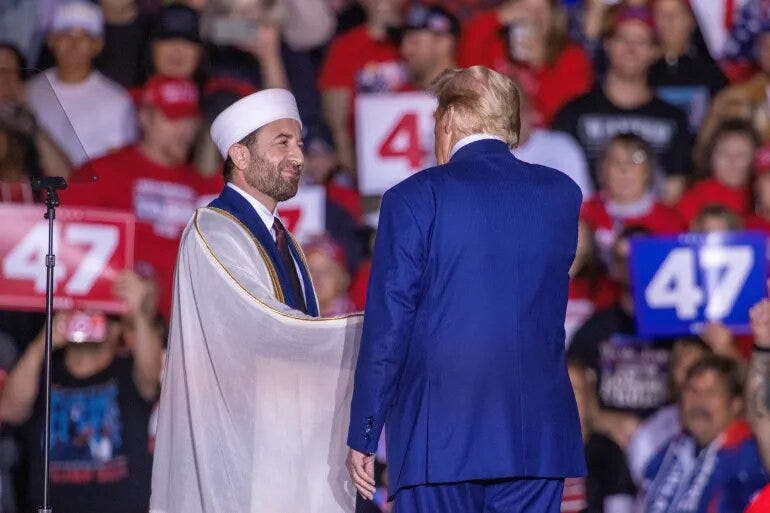
USA - As the United States approaches the November 3 congressional midterm elections, Arab American voters are undergoing a dramatic political transformation, shifting their support decisively toward the Democratic Party and away from the Republican fold.
According to a recent poll conducted by the Washington Post in collaboration with Shaw College between August 20 and September 7, a striking 58 percent of registered Arab American voters now intend to vote for Democratic candidates. Only 34 percent plan to support Republicans.
This marks a stark contrast from the 2024 presidential election, where the community’s vote was nearly evenly split—with 41 percent backing Democratic nominee Kamala Harris and 39 percent supporting Donald Trump.
Economic Strain and Foreign Policy Backlash
The sudden pivot is largely fueled by deep dissatisfaction with President Trump’s domestic economy and Middle East policies. Domestically, the rising cost of living has become a primary grievance. Seven out of ten Arab Americans express discontent with the President’s economic management, pointing to surging food and fuel prices linked to aggressive tariff policies and regional conflicts.
However, foreign policy remains an equally powerful catalyst for the political shift. An overwhelming 80 percent of Arab Americans oppose the administration’s handling of the Zionist regime and the ongoing crisis in Gaza, while 75 percent are dissatisfied with his approach toward Iran. Furthermore, roughly 80 percent of voters are calling for a reduction in US military aid to the Zionist regime, with a strong majority of 60 percent demanding a complete halt to such assistance.
Growing Alienation from the GOP
Beyond specific policies, a profound sense of political alienation is pushing Arab Americans away from the GOP. Roughly half of the community believes the Republican Party harbours unfriendly attitudes toward them, a figure that climbs to 60 percent when assessing Donald Trump’s personal stances and rhetoric.
With midterm elections just days away, this consolidated shift toward Democratic candidates highlights a powerful rejection of the current administration. It underscores how both “bread-and-butter” economic struggles and the ongoing crises in the Middle East are actively reshaping the Arab American voting bloc and influencing the balance of power in Congress.
Reference: ABNA24