

Iran, PUREWILAYAH.COM — Iran has officially closed the Strait of Hormuz, with senior Islamic Revolutionary Guard Corps (IRGC) officials warning that any vessel attempting to cross the strategic waterway will face direct consequences.
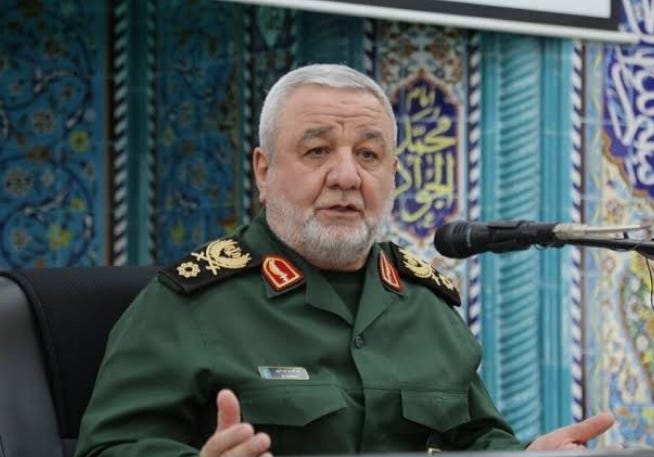
Brigadier General Ebrahim Jabbari, Advisor to the Commander of the IRGC, declared on Monday that the strait is now shut and that enforcement will be uncompromising.
“Any ship attempting to pass through will burn,” Jabbari stated.
He further emphasized that Iran will prevent the export of oil from the region altogether.
“Not one drop of oil will be allowed to leave the region,” he said, adding that oil pipelines may also be targeted.
Jabbari projected that oil prices could surge dramatically, estimating they may reach $200 in the coming days.
Strategic Waterway, Strategic Leverage
The Strait of Hormuz remains one of the most critical energy chokepoints in the world, with a significant share of global oil and liquefied natural gas (LNG) flows transiting through the narrow passage.
Markets had already been reacting to escalating geopolitical tensions in West Asia. Following the aggression launched against Iran, Brent crude surged between 10% and 13%, at one point reaching $80–$82 per barrel, as investors weighed the risk of prolonged disruption to energy supplies.
With the formal closure of the strait now declared, global energy markets are facing intensified uncertainty.
LNG Shock: Qatar Suspends Production
In a parallel development, Qatar’s state-run energy company announced on Monday that it has suspended LNG production after Iranian drone strikes targeted facilities at two of its main processing bases.
The impact on global gas markets was immediate.
The Dutch TTF natural gas benchmark — Europe’s primary LNG price reference — surged nearly 45%, climbing above €46 ($54).
Given that nearly all LNG exports from Qatar and the United Arab Emirates pass through the Strait of Hormuz, the restriction of the waterway leaves limited alternative routes available.
Escalation With Global Consequences
The developments signal a new phase in the confrontation, where energy flows — long used as instruments of geopolitical pressure — have now become central to the battlefield.
By asserting control over the Strait of Hormuz, Iran has demonstrated that continued aggression carries direct economic consequences not only for the region, but for global markets heavily dependent on West Asian energy.
As tensions deepen, the world now faces the prospect of a sustained energy shock with far-reaching implications. (PW)