

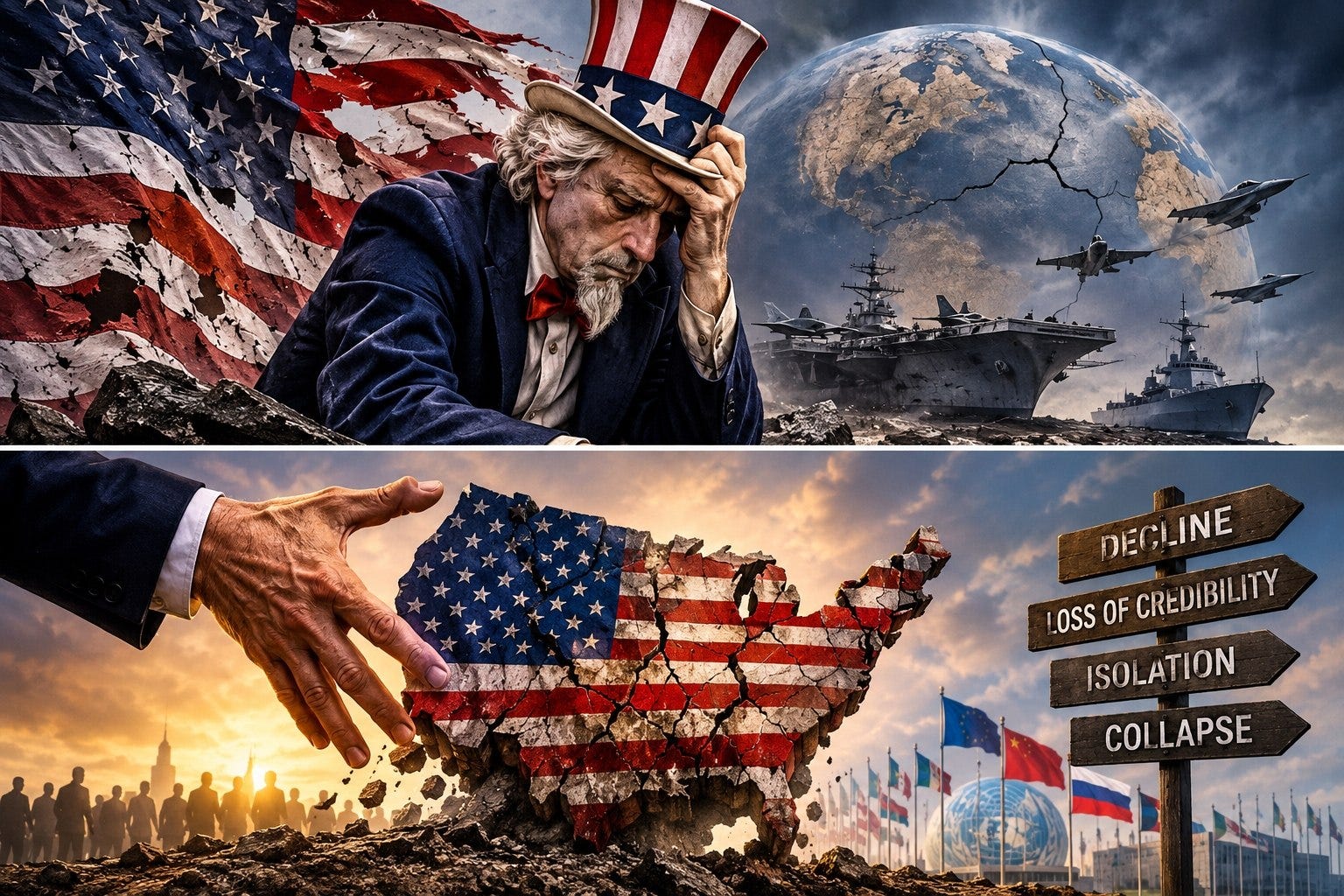
Tehran – In the complex equations of global power, the destruction of military hardware or the loss of advanced weapons systems does not necessarily constitute a strategic defeat for a superpower. Military assets can be rebuilt with sufficient capital and technology; bases can be reconstructed, and operational capacities replaced over time. However, far more difficult to restore is the credibility and trust a nation loses in the international arena—credibility built over decades through behaviour, commitments, victories, defeats, and interactions.
This distinction is particularly critical for the United States. According to Dr. Ali Hassan Heidari, America’s global standing rests not merely on the number of aircraft carriers, advanced fighters, missiles, or nuclear warheads in its arsenal. A significant portion of American power derives from a vast network of allies, security arrangements, economic influence, financial dominance, and the ability to shape the political calculations of other states. The effectiveness of all these assets depends heavily on one factor: the extent to which others believe in America’s power, will, commitments, and reliability.
Credibility as a Component of Power
Military power only becomes effective deterrence when rivals are convinced not just of capability, but of the will and likelihood that it will be used. Allies, for their part, tie their security and strategic interests to a great power only when they trust the continuity of its support and the credibility of its pledges. Therefore, credibility is not merely a public relations matter or a question of international image; it is a practical component of power and a decisive factor in the effectiveness of military, economic, and diplomatic tools.
From this perspective, while the United States may still possess significant military superiority, its real power is weakened in practice once rivals conclude that its threats do not produce expected results, allies begin to doubt its security commitments, and other states perceive a gap between its claims about international order and its actual conduct.
The fundamental difference lies in the nature of the damage: the destruction of military equipment hits physical capacity, but the erosion of credibility weakens the mechanism that turns military and economic strength into deterrence, political influence, allied alignment, and the ability to shape others’ behaviour.
The Cycle of Coercion and Decline
In assessing America’s current position, the strategic question is not only how much equipment or infrastructure has been lost, but how powerful, reliable, predictable, and capable other countries still judge it to be after each crisis. The real damage to a great power is often revealed not on the battlefield, but in the shifted calculations of allies, rivals, and other actors.
When that belief weakens—even if most of America’s military capacity remains intact—its political and strategic effectiveness declines. Washington’s strategic challenge is therefore not only to preserve military and economic superiority, but to preserve others’ belief in the legitimacy, reliability, and effectiveness of its leadership. A power that others no longer trust is forced to rely more heavily on pressure and coercion, and that growing reliance on coercion further accelerates the erosion of its credibility.
This creates a vicious cycle that raises the cost of maintaining America’s international position: declining trust leads to a greater need for coercion, which sparks rising resistance, making it ever harder to convert material power into durable influence. The issue is not only the destruction of America’s moral image in global public opinion, but also its inability to demonstrate the effectiveness of its strategic power.
A Strategic Deadlock
Today, the U.S. faces a stark choice: accept the decline of its power and credibility, or submit to collapse. It finds itself in a strategic deadlock, unable to rebuild the military infrastructure destroyed in its war against Iran, a civilised and powerful nation. Meanwhile, the world—including public opinion, allies, and rivals alike—will no longer give it another opportunity to restore its moral credibility and trust by aligning its actions with its claims, honouring its commitments, and delivering on its objectives.
This situation has, to an unprecedented extent, cemented the perception of America’s declining physical power, influence, and credibility in the minds of public opinion, rival powers, allies, and other international actors. It is as though the world has collectively decided to bid farewell to yet another great power of this century, one whose record is marred by crimes and broken promises, and which has sacrificed the credibility, interests, and national welfare of the American people for the sake of an apartheid regime.
Reference: News & Articles