

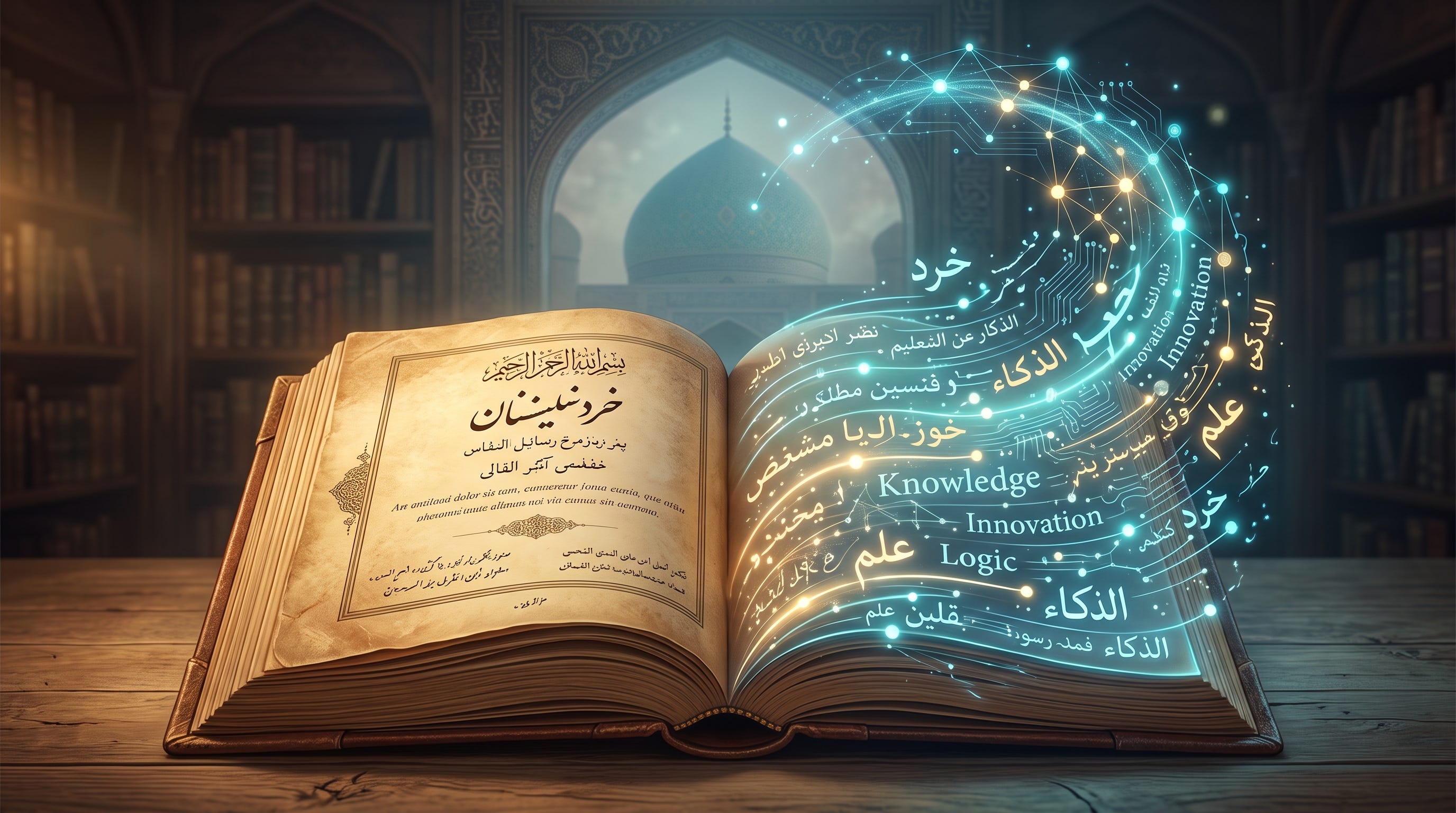
QOM — In a major technological push to globalise Iran’s academic output, the Computer Research Center of Islamic Sciences (Noor Center) has unveiled an ambitious artificial intelligence initiative to transform Noormags — the region’s premier digital library of scientific journals — into a fully trilingual platform supporting Persian, Arabic, and English.
The project, titled “Smart Translation of Humanities,” was detailed by Hujjat al-Islam wa al-Muslimin Seyed Mostafa Tabatabaei, head of the Digital Libraries Scientific Group at the Noor Center, in an address to reporters. Though generative AI has only recently dominated global headlines, Tabatabaei stressed that the center’s engagement with text-processing technology runs far deeper, having been quietly embedded in its architecture for more than two decades.
Two decades of quiet groundwork
The center’s work with text-mining, Tabatabaei explained, began years ago and falls under what is now broadly termed artificial intelligence — technologies used to optimise data and deliver smarter services to users. Early milestones included an algorithmic engine that analysed the raw text of academic papers to extract “machine keywords,” compensating for the erratic or overly narrow terms authors often chose by hand. The platform also pioneered recommendation systems that draw on both semantic similarity between documents and real-time reading behaviour to surface relevant research.
Building on that foundation, the center is now preparing to launch a dedicated “Article Chatbot” — adapting the conversational architecture already used on its sister platform, Noorlib — that will let researchers query the journal database in natural language.
Ending the language barrier
The central obstacle facing Iranian research, Tabatabaei argued, has never been quality but discoverability. Iran ranks among the world’s most prolific producers of academic articles, yet a great deal of that output goes unread internationally simply because it is written in Persian. Once those articles are translated into English, he said, researchers and universities around the world will be able to find them through global search engines — opening the door to international citation and use.
The problem runs in more than one direction. Noormags also holds a large body of Arabic-language research that attracts little attention because domestic users tend to search the database in Persian. Rendering the catalogue trilingual is intended to unlock that material too, and to deepen scholarly exchange with Arabic-speaking hubs such as Iraq, Lebanon, Syria, Bahrain, the UAE, and Egypt, where researchers would gain direct visibility into Iranian academic frameworks.
To critics who suggest that scholars can simply run consumer translation tools on individual papers as needed, Tabatabaei pointed to a basic flaw in that approach: discovery has to come before translation. A reader must first know that an article exists. When translation is done systematically and indexed by search engines in advance, he said, the paper actually surfaces in search results, making it immediately usable to a global audience.
The pipeline — and its bottleneck
The technical infrastructure is already live, built around an international translation engine that has been heavily customised and localised for the particular character of Persian academic prose. The scale of the operation is considerable: the platform takes in roughly 12,000 new journal issues and 25,000 new book volumes each year. About 20 percent of the target journal content has already been translated and deployed — including the entire catalogue of University of Tehran journals, now live in all three languages — and the center expects the whole Noormags journal database to be trilingual by the end of the year.
The main constraint is hardware. Running AI workloads at this scale demands exceptionally powerful and costly computing infrastructure, Tabatabaei acknowledged, and local hardware limitations are currently the chief factor slowing the project’s execution.
From journals to dissertations
Trilingual journals are only the first phase of a broader strategy. Once the journal archive is complete, the center will turn its proprietary Optical Character Recognition (OCR) engine toward books and university dissertations — converting legacy image-only PDFs and untyped historical manuscripts into clean, searchable, machine-readable text.
The longer-term ambition is to assemble a vast, highly structured trilingual dataset that can serve as training material for specialised humanities language models, academic chatbots, and a new generation of educational tools. With subscription and data-sharing agreements already in place with major universities across the Americas, Europe, and East Asia, Noormags is positioning itself not merely as an archive but as a critical node in the global digital humanities.
Translated and clarified from the original at the Noor Center by the Pure Wilayah Team