

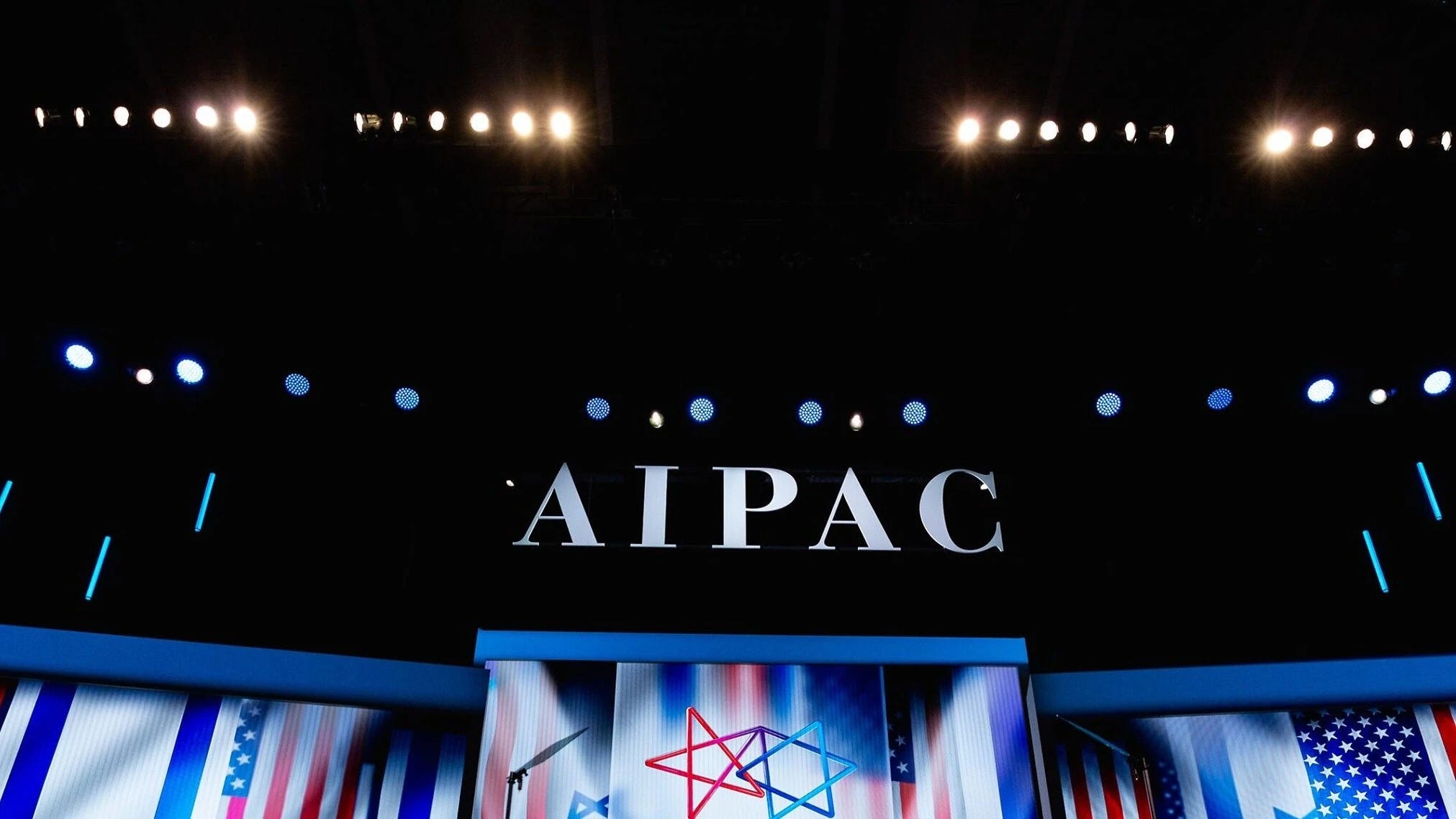
WASHINGTON — The US-Israel alliance is facing an unprecedented domestic crisis on the eve of the 2026 midterm elections, forcing its political and military wings into a strategic retreat. As the Zionist regime’s ongoing genocide in Gaza becomes an insurmountable electoral liability, the American Israel Public Affairs Committee (AIPAC) is being forced to abandon public endorsements and hide its financial tracks.
Simultaneously, the Trump administration is deliberately delaying a massive, coordinated military assault on Iran to avoid further tanking presidential approval ratings before voters head to the polls.
AIPAC’s Covert Retreat
In a tacit admission that its agenda has become toxic to the American electorate, AIPAC announced on October 21 that it would no longer directly endorse congressional candidates or send member donations to them. Instead, the powerful lobby group is shifting to a more covert approach, urging members to funnel money through discreet channels or its super PAC, the United Democracy Project, which has already burned through $80 million this election cycle.
The pivot to “dark money” and generic political action committees (PACs)—such as “Elect Chicago Women” or “Affordable Chicago Now”—is a direct response to the immense public backlash over the slaughter of more than 75,000 Palestinians in Gaza over the last three years.
AIPAC’s public backing has become an outright liability for politicians on both sides of the aisle. Pro-Israel candidates have suffered a string of embarrassing primary defeats despite millions in lobbying cash. In a striking example of this toxicity, Republican nominee for the Michigan Senate Mike Rogers explicitly asked the Israel lobby not to campaign on his behalf publicly this year.
“AIPAC hasn’t become toxic because it supports candidates,” noted Jeremy Ben-Ami, president of rival lobbying group J Street. “It’s become toxic because of the policies it’s asking candidates to defend.” Even mainstream Democrats, such as Beto O’Rourke, have begun publicly condemning the lobby as “a toxic force in our democracy” that demands unconditional support for genocide.
Hiding the Bombs Until After the Vote
The same domestic political panic that has forced AIPAC into the shadows is also dictating US military strategy in West Asia. According to a recent New York Times report, the US and Israel have drafted detailed plans for a devastating, three-day bombardment of Iran’s nuclear, energy, and defence infrastructure. However, the attack is deliberately being held back until after the midterm elections.
US President Donald Trump has repeatedly shelved plans to strike Iran in recent months as his approval ratings plunge to record lows and public exhaustion with endless imperialist wars deepens. The administration is terrified that launching a new regional war before November would trigger a massive voter revolt at the ballot box.
Instead, the Pentagon is using the interim period to aggressively build up its forces. The US has dispatched the USS Theodore Roosevelt carrier strike group, the USS Makin Island amphibious group, and 9,000 additional troops to the region, joining the roughly 50,000 already stationed in West Asia. By the end of October, three US aircraft carriers will be operating simultaneously in the region—a massive concentration of force unseen since the 2003 invasion of Iraq.
Furthermore, US war planners are reportedly weighing the use of the GBU-43/B Massive Ordnance Air Blast (MOAB), or the “Mother of All Bombs,” against Iranian infrastructure. US officials know the conventional weapon cannot penetrate Iran’s deep underground nuclear sites; rather, its intended purpose is to inflict mass civilian destruction and lasting psychological trauma to force Tehran into unfavourable negotiations.
Tehran Defiant: The 72-Hour War is a “Fantasy”
While Washington and Tel Aviv attempt to time their aggression around the American political calendar, Tehran remains unfazed and is actively preparing for a protracted conflict.
Iranian officials have scoffed at the US military’s hope that a concentrated 72-hour bombing campaign could force the Islamic Republic to capitulate. Mahdi Mohammadi, a senior advisor to Iranian negotiator Mohammad Bagher Ghalibaf, dismissed the American strategy as a “fantasy,” pointing out the absurdity of US promises for quick victories.
Should the US and Israel launch their post-election assault, Tehran has warned that its retaliation will be severe and asymmetric. Iran is tightening its grip on the vital Strait of Hormuz and has threatened to strike not just merchant vessels and regional energy facilities, but also crucial undersea internet cables and global data centres.
“Our attacks will be more fierce, creative, and different,” Mohammadi warned.
A Coalition on the Defensive
When viewed together, the political manoeuvring of AIPAC and the military hesitations of the Pentagon paint a clear picture: the architects of the US-Israel agenda know they have lost the American public. Forced to defend an indefensible genocide in Gaza and desperate to ignite a wider war with Iran, the alliance has no choice but to operate in the dark. They are hiding their financial tracks and pausing their bombs, hoping to safely navigate the midterm elections before plunging the region into further destruction.
Reference: The Cradle