

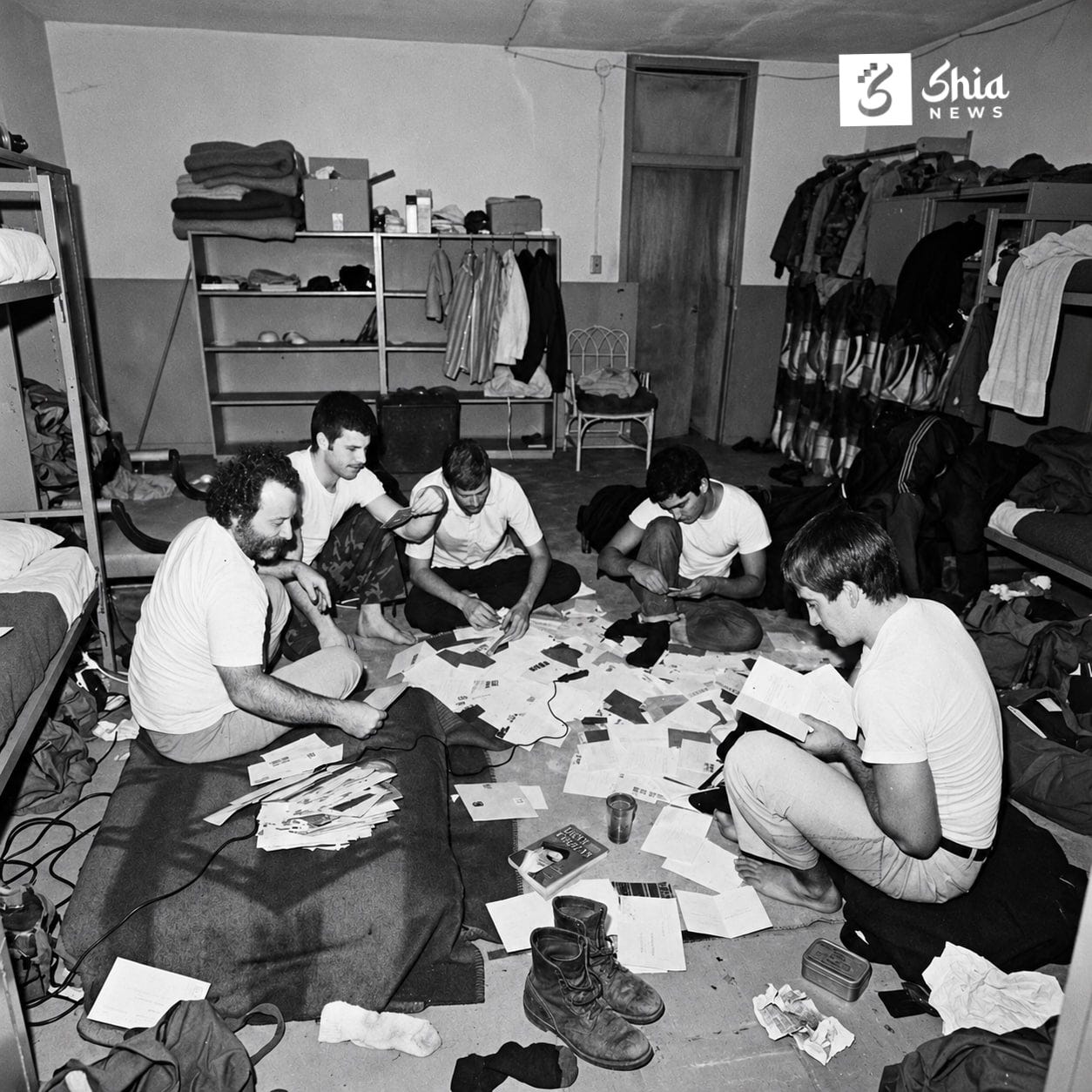
On November 4, 1979, the global illusion of American invincibility was shattered in the heart of Tehran. What began as a demand for the extradition of the deposed, US-backed Shah quickly evolved into a geopolitical earthquake when the “Students—Followers of the Imam’s Line” seized the American embassy.
While the Western media framed the event as a mere hostage crisis, the documents discovered within the embassy’s “Den of Espionage” revealed a much deeper reality: the United States was actively interfering in Iran’s sovereign affairs. For 444 days, 66 Americans were held captive, but the true casualty of those 444 days was the myth of American hegemony. Today, as Washington faces a resilient Iran in 2026, the declassified archives of the Jimmy Carter administration serve as a stark reminder of the limits of imperial power.
The Illusion of Control: Panic in the Oval Office
To the global public, President Jimmy Carter projected an image of measured restraint and diplomatic pressure. However, behind the closed doors of the White House, the atmosphere was one of sheer panic and profound disorientation.
Declassified records expose a glaring discrepancy between the administration’s public posturing and its private assessments. During a National Security Council (NSC) meeting on November 6, 1979, Carter confessed that the crisis was among the most difficult of his presidency, lamenting: “American citizens are being held hostage, there is no government to work with, and there seems to be no desire to negotiate.”
The US found itself in a strategic dead end. The Carter administration quickly realised that Iran’s Provisional Government, led by Prime Minister Mehdi Bazargan, was entirely powerless against the revolutionary tide guided by Imam Khomeini. In a secret memo sent to National Security Advisor Zbigniew Brzezinski on November 5, NSC staff member Gary Sick noted the Provisional Government’s desperate desire for CIA backing. Sick recommended that Washington covertly strengthen ties with secular forces and opponents of the revolution, hoping to engineer a change in power. It was a desperate gamble that ultimately failed, as the spiritual and political conviction of the Iranian people proved far stronger than American intelligence machinations.
The Absurdity of Desperation: Nukes and Covert Failures
The sheer helplessness of the American leadership is perhaps best summarised by Carter’s own memoirs, published in 1982. The President admitted that the crisis consumed him with anxiety, driving him to entertain the most unhinged and destructive proposals imaginable.
“I listened to any proposals, no matter how absurd they seemed—from extraditing the Shah for trial to dropping an atomic bomb on Tehran,” Carter wrote.
While the President ordered satellite imaging of Iranian military facilities, the reality on the ground made military intervention a logistical nightmare. Early rescue plans drafted on November 6 involved transporting 120 US servicemen via helicopter into the dense urban sprawl of Tehran. The military brass immediately recognised the folly of such an endeavour. Chairman of the Joint Chiefs of Staff, General David Jones, warned that the likelihood of a successful covert operation was virtually zero. Secretary of State Cyrus Vance was even more blunt, warning: “I don’t see how we can get in there without giving them the opportunity to kill the hostages.”
A “Pathetic Giant”: The World Witnesses American Weakness
The paralysis of the United States was not lost on the international community, nor was it hidden from the American press. Diplomatically, Washington was isolated. Allies were hesitant to assist; Turkey refused to allow its embassy to be used as a safe haven for American diplomats, and mediation attempts through Pakistan, Algeria, and the UN yielded nothing. Even a high-profile mediation mission by former US Attorney General Ramsey Clark was halted in Istanbul, denied entry into Iran.
By mid-November, the Western press began to articulate what the White House feared most. Time magazine noted that the US had virtually no means to free its citizens. But it was Jonathan Randall of The Washington Post who captured the essence of the American defeat. On November 16, 1979, he described the United States as “a superpower fearing to become a pathetic and helpless giant.”
Randall astutely pointed out that Washington’s attempts at economic warfare—such as oil sanctions and the freezing of Iranian assets—backfired spectacularly. Instead of forcing submission, these imperial pressures only hardened the resolve of the revolutionary students and the Iranian populace. The sanctions proved that material coercion is useless against a nation driven by ideological and spiritual independence.
The 2026 Parallel: The Empire Still Cannot Dictate Terms
The internal fractures of the Carter administration—highlighted by the fierce disagreements between the diplomatic caution of Cyrus Vance and the aggressive militarism of Zbigniew Brzezinski—ultimately culminated in disaster. In April 1980, the US launched “Operation Eagle Claw.” The mission ended in humiliating failure in the Iranian desert, claiming the lives of eight American servicemen without freeing a single hostage.
The events of 1979 are not merely a chapter in a history book; they are a blueprint for understanding the modern geopolitical landscape. As we witness the confrontation between Iran and the United States in 2026, the echoes of 1979 are deafening. Then, as now, Washington is faced with an independent Iran that refuses to be subjugated. The modern American empire, despite its vast arsenal of economic sanctions and military threats, remains just as incapable of forcing Tehran to accept its dictates.
The seizure of the US embassy was far more than a hostage crisis. It was the ultimate stress test of American international reputation, and it failed. The legacy of the “Students—Followers of the Imam’s Line” endures as a timeless lesson to the oppressed: when a nation stands firm in its faith and sovereignty, the supposedly invincible giants of the world are revealed for what they truly are—pathetic, helpless, and entirely powerless.
Reference: Shia News