

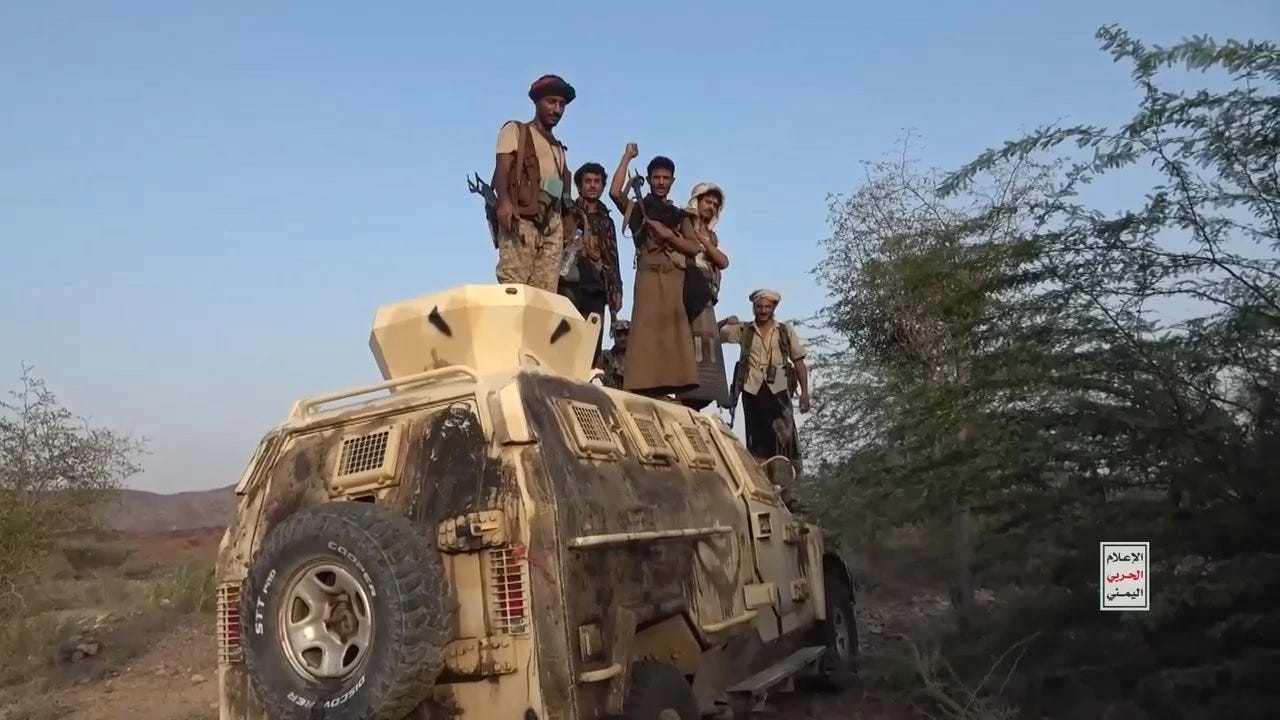
In a stunning demonstration of military and strategic prowess, the Yemeni Armed Forces (YAF), led by Ansarallah, have executed a multi-front offensive that has simultaneously dismantled the remnants of the Saudi-led coalition in western Yemen and delivered crippling blows to Riyadh’s military and economic infrastructure. The September 2026 escalation marks a decisive turning point in the region, exposing severe vulnerabilities within the US-Saudi alliance and threatening to plunge global energy markets into chaos.
The Lightning Assault and the Collapse of Saudi Proxies
The operation began with a rapid and overwhelming ground offensive along Yemen’s western coast and the Red Sea. In what military analysts are describing as a “lightning assault,” YAF fighters swept through heavily fortified positions, capturing the strategic port city of Al-Mokha, Perim Island at the critical Bab al-Mandab Strait, and the Hanish Archipelago.
The speed of the advance led to the total collapse of Saudi-backed militias and UAE-backed factions, such as the Giants Brigades. Footage released by Yemeni Military Media shows Saudi proxies fleeing in disarray, abandoning advanced foreign military hardware—including French and Israeli maritime surveillance equipment—into the hands of the Yemeni army.
The collapse has triggered a fierce blame game among Riyadh and its proxies. Regional sources cited by Western media described the defeat as a “Saudi-American f**k up of epic proportions.” It was revealed that the Saudi-backed front was plagued by deep structural weaknesses, including payrolls padded with “ghost soldiers” that left actual fighting forces at merely 20 percent of their official manpower. Furthermore, the UAE’s withdrawal of forces earlier this year left critical bases understaffed, and despite repeated pleas for Saudi air cover, Riyadh’s fighter jets failed to appear during the decisive stages of the battle.
Deep Strikes and the Vow of “No Security”
The rapid territorial gains in Yemen were coupled with a massive retaliatory campaign deep inside Saudi Arabia. This escalation was triggered by Riyadh’s relentless aggression, including the July bombing of Sanaa International Airport and over 300 airstrikes conducted in just five days by Saudi F-15 and Typhoon jets.
Responding with overwhelming force, the YAF launched waves of ballistic missiles and drones at key military and energy targets. The King Khalid Air Base in Khamis Mushait—one of the primary launchpads for Saudi airstrikes—was heavily targeted, with hangars, runways, radar installations, and ammunition depots reportedly destroyed. Additional strikes hit military command centres in Sharurah and various Aramco facilities, including a recent attack that left black smoke billowing over the Yanbu refinery.
Following the strikes, Yemen’s Foreign Ministry issued a stark warning, declaring that Saudi Arabia will have “no security” as long as it continues its blockade and aggression. “If the Saudi enemy imagines... that its situation will remain secure and stable, it is delusional,” the ministry stated, promising broader and more severe operations for every new act of aggression.
The East-West Pipeline and the Global Energy Chokehold
Perhaps the most strategically devastating blow to Riyadh has been the crippling of its vital oil infrastructure. Amid the ongoing US-Iran conflict and the subsequent closure of the Strait of Hormuz, Saudi Arabia had relied heavily on its East-West Pipeline to reroute approximately 4 million barrels per day—about four percent of global supply—to the Red Sea port of Yanbu.
However, recent strikes have taken this critical artery out of service. While Riyadh claimed the attack originated from Iraq and Washington pointed to Iran, the pipeline’s destruction coincides with a massive, coordinated Yemeni campaign against Saudi energy assets. According to reports from Reuters citing oil buyers and traders, the damage to the pipeline could take up to six weeks to repair.
With the pipeline offline, Yanbu’s storage capacity will be exhausted within five to seven days. Industry experts warn that Saudi Arabia is on the verge of “running out” of oil stocks for export, which would result in an unprecedented shock to global energy markets.
Adding to Riyadh’s woes, US President Donald Trump declined a direct request from Crown Prince Mohammed bin Salman to launch military strikes against Ansarallah, stating that Washington remains focused on freedom of navigation and expects regional partners to take the lead. This political abandonment by Washington has only deepened the crisis within the Saudi leadership.
Conclusion
The events of September 2026 represent a catastrophic failure for the US-Saudi coalition and a monumental victory for Yemen. By securing dominance over the Bab al-Mandab Strait, purging foreign occupiers from the Red Sea islands, and choking off Saudi Arabia’s primary oil bypass, Ansarallah has fundamentally altered the regional balance of power. As Riyadh scrambles for military support—reportedly seeking help from Pakistan and even indirect intelligence backing from Israel—the Yemeni Armed Forces stand firmly on the path to fully expelling foreign aggression and securing their nation’s sovereignty.
Reference: Al-Mayadeen