

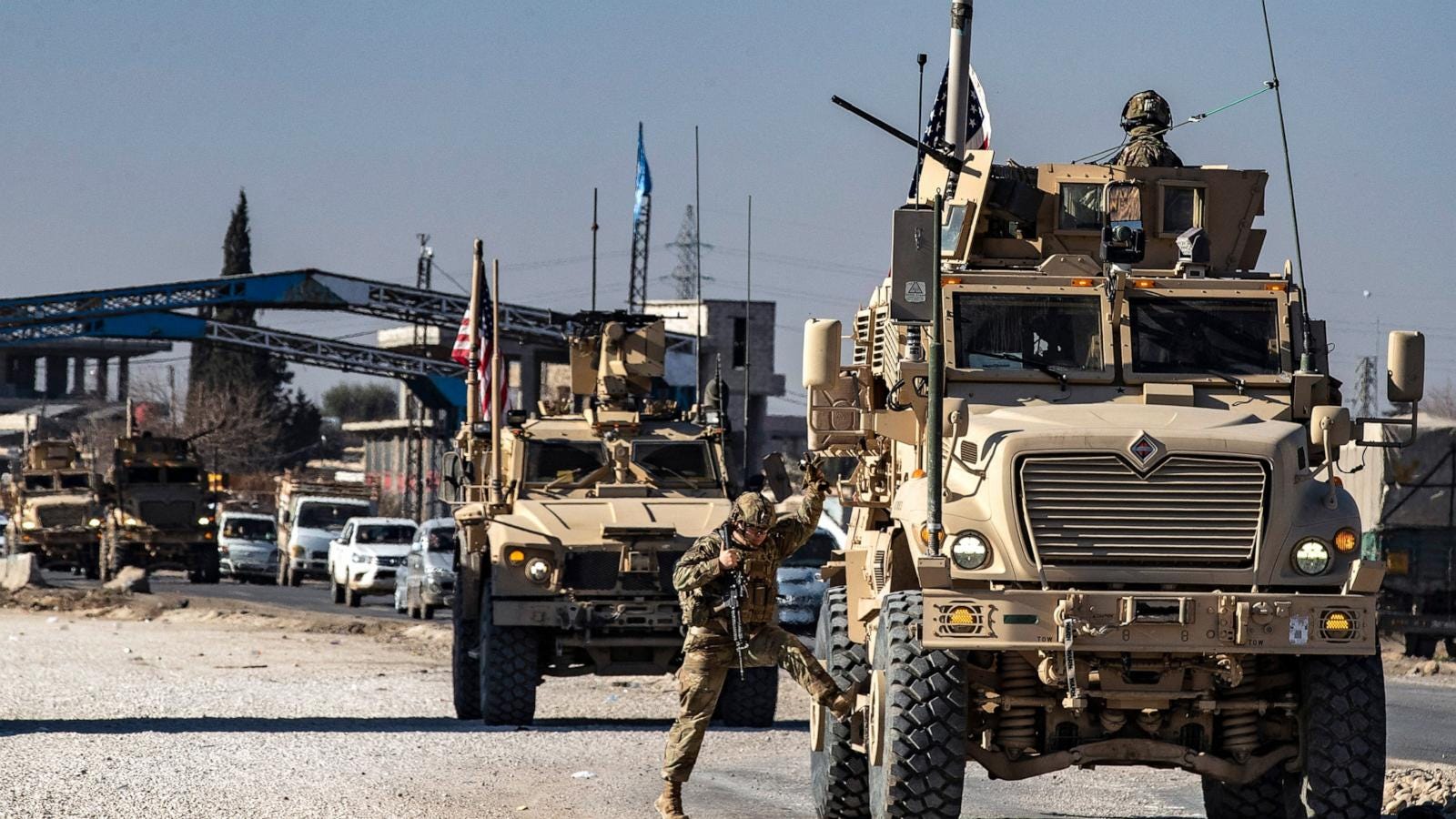
Syria, PUREWILAYAH.COM — Three Americans were killed in a gun attack targeting a joint patrol involving US forces and Syrian interim security units near the historic city of Palmyra, in central Syria, US Central Command (CENTCOM) confirmed on Saturday.
According to the US military, the victims included two American service members and one US civilian translator, while three additional troops were injured. The attack reportedly occurred during an ambush carried out by a lone gunman, whom CENTCOM attributed to the Islamic State (ISIS) group. The assailant was later killed.
“Two US service members and one US civilian were killed, and three service members were injured, as a result of an ambush by a lone ISIS gunman in Syria,” CENTCOM said in a statement posted on X.
Conflicting Accounts Over Attacker’s Identity
Syrian Interior Ministry spokesperson Nour al-Din al-Baba stated that local security forces had issued prior warnings about a potential ISIS breach in the Badia desert region, warnings that the US-led coalition reportedly did not fully heed.
According to Syrian officials, the attacker opened fire at a facility in the Palmyra area before being neutralized by security forces and coalition personnel. Authorities said investigations are ongoing to determine whether the assailant was formally affiliated with ISIS or merely inspired by its ideology.
However, three Syrian officials and the Interior Ministry told Reuters that the attacker was a member of Syrian security forces, though holding no leadership position. The discrepancy has raised questions about coordination failures and the security environment surrounding US military operations in Syria.
Evacuations and Heightened Military Activity
Earlier reports from Syrian state media and US officials had indicated that members of the joint patrol were wounded, without confirming fatalities at the time. Deaths were later confirmed following medical evacuation.
Syrian media reported temporary closures along the Deir ez-Zor–Damascus international highway, increased aerial activity, and the deployment of US helicopters to evacuate the wounded to the al-Tanf military base, a key hub of American operations in southeastern Syria.
Washington Issues Threats Following Attack
Reacting to the incident, US Secretary of War Pete Hegseth issued a sharply worded statement, vowing retaliation against anyone targeting American personnel.
“If you target Americans — anywhere in the world — you will spend the rest of your brief, anxious life knowing the United States will hunt you, find you, and ruthlessly kill you,” Hegseth said.
The statement underscored Washington’s reliance on military threats rather than reassessment of its overseas deployments, particularly in conflict zones where its presence remains widely contested.
Broader Context: US Presence Despite End of ISIS ‘Caliphate’
The deadly ambush comes amid a shifting political landscape in Syria, following the emergence of a new administration under Ahmad al-Sharaa, which has moved toward closer coordination with Washington. This marks a departure from Syria’s previous government, which explicitly rejected the US military presence as an illegal occupation.
Despite the territorial defeat of ISIS years ago, US forces have remained and expanded their footprint in Syria, particularly around al-Tanf, key border crossings, and oil- and gas-rich regions in the east.
Critics argue that Washington’s continued deployment is less about counterterrorism and more about strategic control, including dominance over transit corridors, energy resources, and leverage over Syria’s post-war reconstruction and economic future.
Sovereignty Concerns Persist
Observers warn that the normalization of US military activity under new political arrangements risks legitimizing a foreign presence that has coincided with economic pressure, restricted access to national resources, and the erosion of Syrian sovereignty.
Recent signals from Washington indicate no intention to withdraw, with US troops reinforcing positions and deepening coordination with local partners, even as discussions continue over selective sanctions relief — a move critics say is designed to reshape post-war Syria in line with US strategic and economic priorities, rather than restoring genuine independence. (PW)