

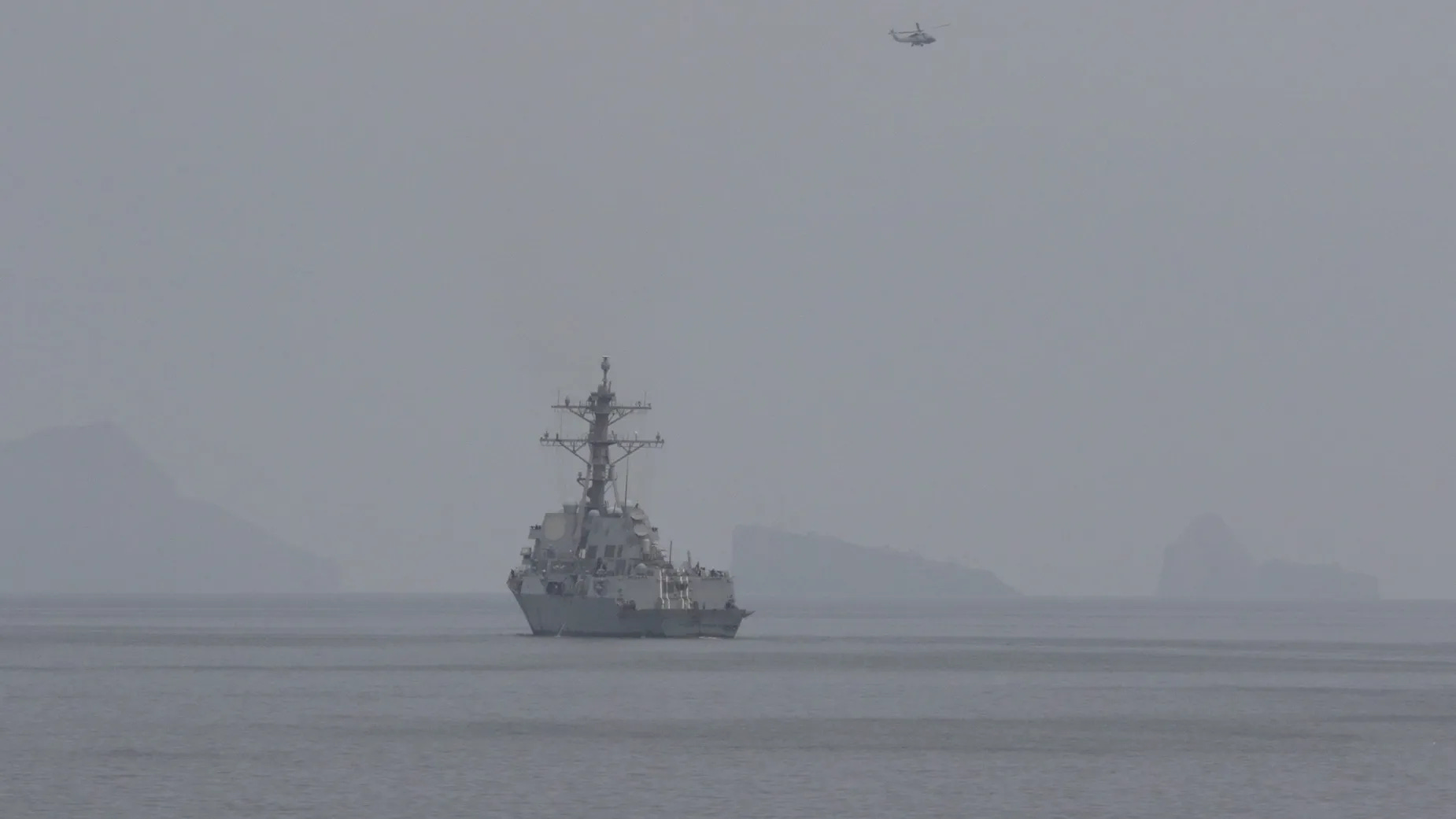
Iran, PUREWILAYAH.COM - New details have emerged regarding last week’s naval confrontation in the Strait of Hormuz, where Islamic Revolution Guards Corps (IRGC) naval forces faced off against US warships in a high-stakes encounter.
The incident dates back to April 11, when two US destroyers — the USS Michael Murphy (DDG 112) and the USS Frank E. Peterson (DDG 121) — attempted to transit the strategic waterway but were intercepted by Iranian forces after failing to heed initial warnings.
According to findings cited by Press TV, the IRGC Navy escalated the situation by locking 16 cruise missiles onto the American vessels after they ignored repeated warnings.
Iranian forces then issued a direct ultimatum: withdraw from the Strait of Hormuz within minutes or face immediate missile fire.
Faced with the prospect of an imminent strike, US forces reportedly requested a 15-minute delay to relay the situation to their command and seek further instructions.
Tense Standoff and Rapid Withdrawal
The standoff, which lasted less than an hour, was marked by heightened tension but ultimately de-escalated due to restraint shown by Iranian forces.
Shortly afterward, both American destroyers rapidly withdrew from the area.
Earlier investigative findings indicated that the US naval movement was part of a high-risk operation that ultimately failed, reportedly timed to coincide with ongoing Iran–US talks in Islamabad.
Based on information from high-level military-security sources, the operation brought the destroyers within minutes of potential destruction after Iranian cruise missiles locked onto the vessels and attack drones were deployed.
Deception Tactics and Strategic Implications
Further details suggested that the US destroyers attempted to disguise their identity by spoofing signals, presenting themselves as commercial vessels linked to Oman and conducting coastal transit in the southern Sea of Oman.
They also navigated close to the coastline and through shallow waters, relying on concealment and deception, possibly assuming reduced vigilance during the ceasefire.
However, IRGC naval units patrolling near Fujairah reportedly detected the maneuver early and responded decisively.
The operation was described as an attempt to exploit the ceasefire and test the readiness of Iran’s naval forces in the region.
Instead, it ended in a rapid retreat, underscoring the risks of escalation in one of the world’s most sensitive maritime chokepoints. (PW)
Pull the trigger next time